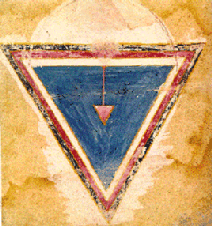

This science concerns itself with the relationship between the internal (individual) and external (universal) condition.
The loss of harmony in people today is directly reflected in the disharmony of the physical world. Thus, it is the responsibility of every human to pursue the radical changes necessary in their conciousness to bring about transformation in the physical world.
Ayurveda emphasizes the "sattvic", or harmonious lifestyle through healthy diet, peaceful life choices, love, faith and non-violence, to experience inner peace and highest potential of well-being. It strives to balance the three "doshas" - biological humors or life forces that exist in the universe and govern the body.
These three biological humors are: Vata, Pitta and Kapha.
The constitutional make-up of an individual is like his genetic coding - no two are alike. This biological code is known as one's "Prakruti". One or more of the doshas, or biological humors will predominate in every individual living entity, creating seven possible body types. By knowing which body type you are - through analyzing one's physical, mental and emotional attributes - proper diet, herbal and lifestyle treatments can be established for you.
blessed with great will power, initiative, determination, penetrating mind, enthusiasm and laughter. They are medium in size, tending toward ruddy complexions, moles and freckles, red or blond hair. Their skin is warm. They must watch out for aggression, anger, jealousy, lust. Pittas must strive to create balance by utilizing that which is cooling, soothing, and calming.
Generally speaking, most people are a combination of two humors, one dominant and one secondary, with much fewer attributes of the third dosha. Some are truly dominated by one humor, and rarely, all three doshas are equally prominent.
Ascertaining one's Prakruti (constitutional nature) and imbalances (vakruti) is the service rendered by the Ayurvedic analysis. The Ayurvedic practitioner then constructs a diet and recommends herbs and lifestyle practices which will help regain balance with one's original nature.
In Ayurveda, different people with the same disease receive different diet, herbal and lifesyle plans dependant on their constitutional make-up. The constitution, and various nuances of the development of the disease are analyzed to determine the nature of the imbalance, whether it is Vata, Pitta or Kapha in nature.
For instance, two people with chronic cough and weak lungs - one is dominated by Vata, and a Vata imbalance. This is marked by a dry, painful, hacking cough, with no mucus or phlegm being expelled. The Kapha person has a less frequent, but heavy, wet cough which expels large amounts of mucus and phlegm.
For the Kapha, hot, drying spices and herbs such as dry ginger are what's needed to dry up the mucus. Cold, heavy mucus forming foods are to be avoided, such as dairy, sugar, cold fruit juices and fats. Kapha's day can be started with a dry brushing with loofa or natural body brush to stimulate the lymphatic system and help release toxins and congestion.
The Vata, on the other hand, needs warm moistening foods such as hot milk with tumeric, to heal and sooth and calm the cough while disinfecting and moistening the hot, dry lungs.
Therefore, according to Ayurvedic constitution and imbalances - "One's man food is another man's poison". Unfortunatly, many people fail in using natural health practices, and eating healthy foods, because they are wrong for their personal constitutional dosha.
 MINI DOSHA TEST
DIET AND LIFESTYLE GUIDE FOR THE THREE DOSHAS
FOODLISTS FOR VATA & FALL GUIDE
FOODLISTS FOR PITTA & SUMMER GUIDE
FOODLISTS FOR KAPHA & WINTER GUIDE
WEIGHT BALANCE, OBESITY & AYURVEDA
'AGNI' - THE DIGESTIVE FIRE & AMA
GLOSSARY OF SANSKRIT TERMS
BAD FOOD COMBINATIONS & FOOD ANTIDOTES
SELECT RECIPES FLOWER ESSENCES FOR THE THREE DOSHAS RECOMMENDED BOOKS, PERIODICALS & RESOURCES
LINKS OF INTEREST
MINI DOSHA TEST
DIET AND LIFESTYLE GUIDE FOR THE THREE DOSHAS
FOODLISTS FOR VATA & FALL GUIDE
FOODLISTS FOR PITTA & SUMMER GUIDE
FOODLISTS FOR KAPHA & WINTER GUIDE
WEIGHT BALANCE, OBESITY & AYURVEDA
'AGNI' - THE DIGESTIVE FIRE & AMA
GLOSSARY OF SANSKRIT TERMS
BAD FOOD COMBINATIONS & FOOD ANTIDOTES
SELECT RECIPES FLOWER ESSENCES FOR THE THREE DOSHAS RECOMMENDED BOOKS, PERIODICALS & RESOURCES
LINKS OF INTEREST
