Leaking ductwork wastes energy and may cause indoor air quality
problems. Insulating ducts does not stop air leaks. You must seal ducts
before insulating.
Key Benefits
Better comfort - Duct leaks cause low temperatures at heating
supply registers in winter. If supply ducts leak to crawl spaces, garages
and attics, cold outside air is drawn inside through cracks and holes in the
building envelope. These cold leaks create uncomfortable drafts
Lower energy bills - Air leaks in ducts to or from the outside add
to heating and cooling bills. The combustion efficiency of a typical new
furnace is 80 to 90%. If duct leaks are large, they can reduce overall
heating system efficiency to below 60%.
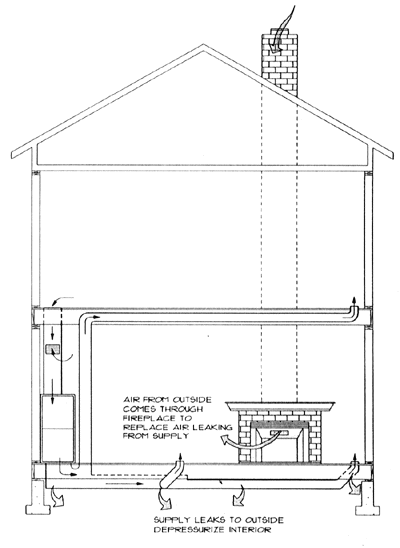
Improved combustion safety - Duct leaks can cause areas in a house
to become depressurized. If fireplaces, wood stoves, water heaters,
furnaces, clothes dryers or other combustion devices are in these
depressurized areas, combustion gases such as carbon monoxide may backdraft
into the house instead of going up the chimney.
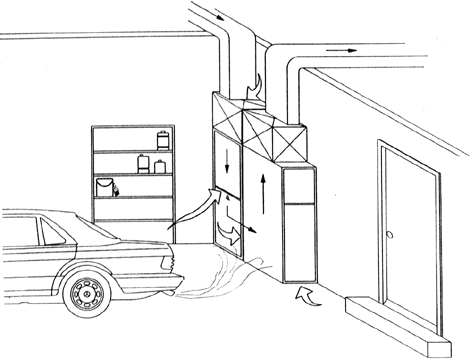
Better indoor air quality - Leaks are common in return ducts in
garages and attics. Air leaking into the return duct may contain fumes from
household and garden chemicals and solvents, insulation particles, dust and
automobile exhaust. Sealing return ducts reduces the risk of introducing
these pollutants into the home.Leaks in supply ducts depressurize the house
and force air from attics, crawl spaces or garages -- along with pollutants
in these areas -- into the house.