Welcome To My HOME PAGE
Kuwaiti Handicraft & Profession
In the pre-oil Kuwaiti society had totally different characteristics
than those prevalent today as modern civilization booms with success at threshold
of the 21st century.
You are going to see writr up for old Kuwaiti handicraft or profession undertaken
in the past to meet various needs of Kuwaiti society. All of these profession reflect
the many norms of lifestyles and traditions which prevailed during that period of
time. Some of these crafts still exist to date being closely related to the Kuwaiti character.
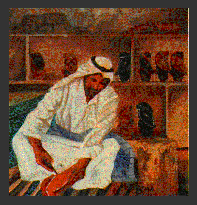
'Al-Kharraz'
This is a profession similar to the shoe-maker, except that 'Al-kharraz'
makes men's sandals. These sandals are of a simple fashion, open-backed
yet sturdy. The most popular style is the 'najdiya', which is made of
expensive lather.
To see the picture Click here
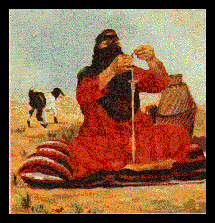
'Al-Sadu'
This is a wool-weaving craft of the Bedouin women. Both beautiful and practical,
'al-sadu' provided all of the family needs for tents, cushions, rugs and saddle bags
which were hung on the camels and horses. Bedouin women were also skilled in making
'al-karakeesh'-frilly woven pieces of sadu used to decorate the tent walls.
To see the pictiure Click here
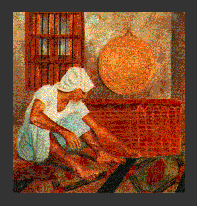
'Sandouk Al-Bahar'
Sailor's box; made of wood and wrapped tightly with ropes to facilitate
pulling it up to the deck. The ropes also added a touch of grace and beauty
to the box which was used to store the sailor's tools and supplies during the
pearl-diving trips which normally lasted six months.
To see the picture Click here
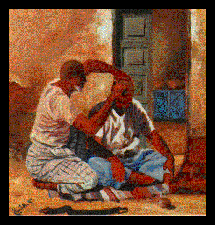
'Al-Mehassen'
The barber was frequently visited by the male residents of the district to cut and trim
the hair. private home visits could also be arranged for elderly and noble. The profession
of 'al-mehassen' was very important in keeping with the long standing Kuwaiti custom
regarding good hygiene and neat appearance.
To see the picture Click here
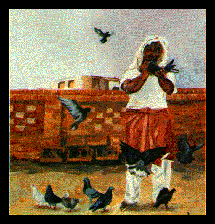
'Al-Mtayerji'
The person who breeds and flies pigeons. The pigeons were attracted first by scattering seeds
for them to pick, and later trained and flown in large flocks. Once accustomed to their roost
and food supply, the pigeons always faithfully returned home.
To see the picture Click here
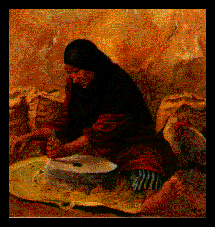
'Al-Rahat'
This is a cylindrical flat millstone, placed on top of a similar stone, used to crush grains.
The mill was operated by rotating the small wooden handle fixed on the alkaline stone, with
a center hole 'kour' to allow the grains to pass through and fall between the two stones. As
the upper millstone rotates, the grains are crushed and ground.
To see the picture Click here
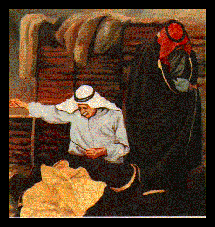
'Khayat Al-Bishout'
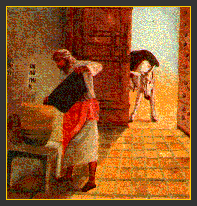
('Al Bisht', plural 'bishout'). This is the loose cloak worn by men over their 'disdasha'.
The tailoring of 'al-bishout' was done by skilled and respected craftsman. The cloaks were
tailored in several forms such as 'al-darbuya' and 'al-makasr'. The shiekhs of the ruling
family used to wear 'bishout' decorated with two stripes on the front. These stripes are
made from gold.
To see the picture Click here
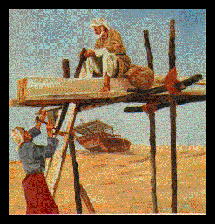
'Al-Sharrah'
This name is derived from 'sharh al-khashab' which refers to wood being sawed for
shipbuilding and other joinery works. This craftsman played an important role in old Kuwait.
To see the picture Click here
'Al-Saffar'
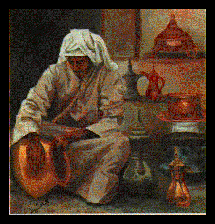
This is the man who crafted bronze cooking pots, kettles, coffee pots and other utensils.
As these utensils were used for a long periods of time, they tended to become discolored.
'Al-Saffar' therefore also cleaned and polished the wares, making them shiny new again.
To see the picture Click here
'Bayya'atal bajila wal nakhi'
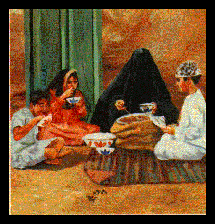
'Bajila means broad-beans and 'nakhi' means chick-peas, both being types of legumes. The
crops were planted in Kuwait in early winter and cultivated late in the spring. In the old
days , women vendors used to cook these legumes in large pots then set-up in the street with
small plates in front of her to sell 'al-bajila and 'al-nakhi'to the residents of the quarter.
To see the picture Click here
'Dashat Al-Ghous'
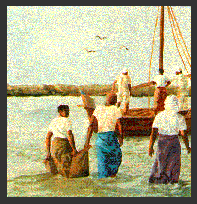
Literally "the entrance into the sea", this reflects the pearl-diving trips taken by Kuwaiti's
forefathers. Pearls harvested during these long trips were then carried to India and Africa to
be traded for other commodities needed by The Kuwaiti society such as silk, gold, incense, rice,
spices etc. Pearl diving was then considered the mainstay of the Kuwaiti economy.
To see the picture Click here
'Al-Hammar'
This refer to the men of old who led their donkeys through the streets delivering fresh water
to the homes. Fresh water was either obtained from artesian wells or brought in by ships to the
coasts of Kuwait for later distribution to the residents.
To see the picture Click here
This page, and all it's contents, are copyright 1996
1996
Designed and Maintained by Aziz
&Izzat A. Amara. Kuwait.
Last Update October 23, 1996