Ingenohl's Glory - The 1920s
1920s
Japan remains in Eastern Siberia
They establish protectorates over Tannu Tuva , Omsk (Kolchak) and Mongolia
They encourage Tadjik and Kirghiz ambitions
They also occupy/colonise Shantung and Southern Manchuria - this soon spreads into Northern and Western Manchuria
Autonomous Poland comes into being under Habsburg authority but German military control
Ukraine, Transcaucasia, Rumania, Lithuania and Finland consolidate thier borders, the boundaries becoming formalised and static (the Ukraine being forced to cede Odessa to Rumania as her army is in no fit state to contest it)
Germany remains in control of Kourland (Latvia, Riga etc)
The Arab Revolt continues in the Southern Hejaz and Arabia. The Ottoman Empire is busy dealing with it with German aid, Falkenhayn staying on with the best German units
A new dynasty, vaguely related to the Obrenovics (who ruled Serbia until the start of the twentieth century) comes to power in Serbia
Austria gradually establishes a federal system -
Kingdoms of Austria , Hungary, Bohemia , Bosnia and Poland
under an imperial government and Kaiser Karl
France remains unstable well into the 1920s with Sarrail ruling as dictator with Poincare's blessing etc. Communists and monarchists continually agitate. Revolt in the Briey ironfields against the occupation is ruthlessly put down by the Germans
Portugal becomes a mini-Mexico, virtually continuous civil war involving monarchists , republicans and communists
Within Britain Lloyd George forms the immediate post-war government in coalition with Labour
The 1920s
Germany takes advantage of Portuguese weakness to move in on Angola
Britain occupies Goa
Holland occupies East Timor and incorporates it into the East Indies
Spain intervenes in the Portuguese Civil War, backing the monarchists from their heartland in the North and aiding them in the capture of Lisbon. The republicans take refuge in the South
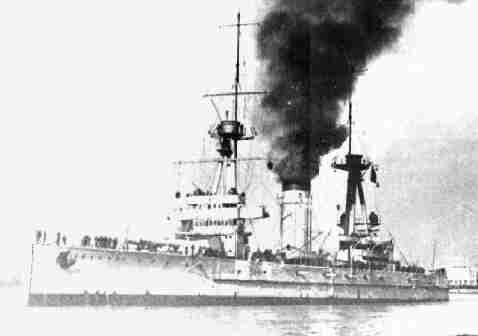
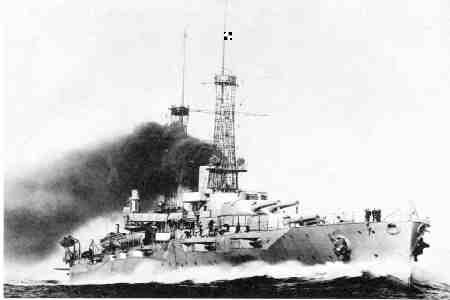
The United States has been steadily rearming and by the mid 1920s possesses the largest battlefleet on Earth, closely followed by Germany, Japan and Britain
The French navy falls into a state of disrepair
Spain modernises its older ships and after its successes in Portugal begins new construction of a new class of 3 battleships
Italy has slowly been building up its strength, completing the Carraciolos by late 1919 and in the mid 1920s a further class of state-of-the-art dreadnoughts
Austria only resumes new construction in the mid 1920s after internal difficulties and squabbles have held up the imperial budget for several years
Soviet Russia refits and does some modernisation in its only fleet (apart from a small White Sea squadron) in the Baltic
The Ottoman Empire is able to build up its naval strength with German loans
Greece is compensated by Germany for the loss of the Salamis and begins work to upgrade its fleet, ordering 2 similar but modern vessels from Germany
Finland also establishes a navy based on coast defence, looking to be able to defend itself against either Russia or Sweden though in practice she remains closely tied to Germany
Japan despite the 1923 Tokyo Earthquake completes the 8/8 Plan. She begins to exploit her possessions in Shantung and Manchuria and by the mid 1920s resources from Eastern Siberia are flowing
The USA establishes major naval bases at Pearl Harbour and in the Philipinnes. The Pacific and Atlantic fleets are both established as powerful self-contained units and the Panama Canal is increasingly fortified.
US forces remain in strategic positions in Mexico, several Central American states and parts of the Caribbean ensuring order and an American zone of control
Germany's fleet is roughly the equal of Japan's. Three further classes of battleships (blending the fast-battleship with the battlescruiser) are built during the 1920s, and a powerful Pacific Squadron established built around fast powerful modern designs
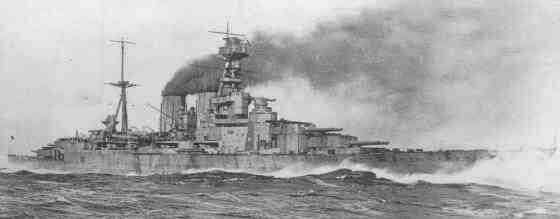
Britain consolidates its fleet, modernising the remaining Queen Elizabeths and Rs, the Hoods and building 2 new classes (N3 and G3). Thereafter expenditure on armaments is reduced as MacDonald's Labour Party takes power in the 1924 election, benefitting from the serious economic problems besetting Britain ; Lloyd George's government was also weakened by having to concede independence to the island of Ireland in the midst of his period in office.
Upon Curzon's death Sir Robert Cecil takes over as leader of the Conservatives whilst Lloyd George remains as leader of the Liberals
The dominions become increasingly independent from Britain whilst South Africa declares itself a sovereign state and agitation in India worsens under MacDonald whose ministers are completely out of sympathy with imperial politics
| 
| 
|
Into The 1930s
Soviet Russia manages to defeat the Kirghiz and Tadjik rebellions and consolidates its hold upon its own core territories
Spanish-backed monarchist Portugal is waging its final campaign against the republican/socialists in the South
Soviet Russia secures German co-operation in the West, allowing German enterprises in to run communes and state industries. Diplomacy between the two is increased. In 1931 Russia launches its major campaign against Omsk, driving Kolchak out , but the attempted follow-up reconquest of Eastern Siberia meets severe Japanese resistance and is halted with much loss
Within Italy elections restore the adventurist elements to power ; new movements are beginning to harness popular nationalism for imperial ends
In Britain MacDonald was weakened by the 'backlash' election of 1929 and forced to seek a renweal of the coalition with Lloyd George's Liberals. By 1932 serious disagreements have split the Labour Party over the issue of further co-operation and Lloyd-George takes the gamble of supporting the Conservatives in a vote of no-confidence. MacDonald's government falls and is replaced by Cecil's Conservative administration after new elections.
Prince Edward of Wales comes out strongly in favour of the new government who adopt a harsh policy against the waves of strikes affecting the country
Virtual civil war has broken out in India. It is suppressed to some extent once the Conservatives take up power in London but the imperial government cannot secure order and an increasing number of troops from Great Britain are drawn in ; both Australia and New Zealand refuse to sanction use of their own forces
The French right resurfaces in the League Nationale (LN) who begin to agitate against Sarrail in rallies, marches and increasingly violent demonstrations...