 Because of concerns about
air pollution, other clean-burning fuels can also be bought at some service
stations.
Because of concerns about
air pollution, other clean-burning fuels can also be bought at some service
stations. In California, about one-half of
ALL the energy we use goes into transportation -- cars, planes, trucks, ,
motorcycles, trains, buses. And of all the oil we use in the state about three-quarters
of all it goes into making gasoline and diesel fuel for vehicles.
In California, about one-half of
ALL the energy we use goes into transportation -- cars, planes, trucks, ,
motorcycles, trains, buses. And of all the oil we use in the state about three-quarters
of all it goes into making gasoline and diesel fuel for vehicles.As we learned in chapter 5, oil goes through a refinery where it is made into many different products. Some of them are used for transportation: aviation fuel, gasoline and diesel fuel. From the refinery and larger storage tank farms, transportation fuels are usually trucked to service stations in tanker trucks. These trucks can hold 10,000 gallons in each tank.
California has about 26 million vehicles on its roads. All the vehicles in the state use 13.3 billion gallons of gasoline each year. That's more gasoline that all other countries except for the United States and the former Soviet Union. This makes California the third-largest user of gasoline in the world!
Thirteen billion gallons of gasoline is enough to fill a line of 10,000 gallon tanker trucks stretched bumper to bumper from San Francisco to San Diego, and back!
At service stations, various grades of gasoline and other fuels are kept in separate underground storage tanks. When you pump the gasoline into your car, you are pumping it from those tanks below ground.
Other vehicles, such as trucks use diesel fuel, which is also made from oil. Burning gasoline, however, creates air pollution. That's why oil companies are creating newer types of gasoline that are cleaner than the kind we use today. Beginning in 1996, all the gasoline sold in California will be this newer, cleaner type called "reformulated gasoline."
Because of concerns about
air pollution, other clean-burning fuels can also be bought at some service
stations.
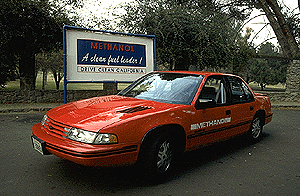
Methanol or methyl alcohol is made from natural gas and is a clean- burning fuel. It is used in race cars, such as those in the Indianapolis 500. Some cars can use methanol and gasoline from the same tank, like the car on the right.
Ethanol is another transportation fuel. It is also called ethyl alcohol and can be produced from corn or other crops. It is a fuel that is being used mainly in corn- growing states like Iowa and Illinois. As a matter of fact, some of the earliest cars ever made were designed to run on ethanol instead of gasoline.
Some service stations may sell compressed natural gas for vehicles. This is the same clean-burning fuel that we use to cook food or heat our homes. It can also be stored in cylinders on board cars and trucks to power their engines. Many delivery trucks, like those used by the Post Office, will probably run on natural gas.
Propane is another gas that can be used as a transportation fuel. There are tens-of-thousands of cars that already use propane.
Still other cars will be powered by electricity. In the future, we may drive cars powered by hydrogen. When you "burn" hydrogen (that is, combine it with oxygen), it produces only water vapor as exhaust.
All these fuels are called alternative fuels because they are an alternative to gasoline and diesel. Cars and trucks that use them are called Alternative Fuel Vehicles or AFVs.
Right now, there are only a small number of cars and trucks that are running on fuels other than gasoline and diesel. In California, in mid-1995, there were about 30,000 propane cars and trucks, 12,000 methanol vehicles, 5,000 natural gas vehicles, and 500 electric vehicles. That's a small number compared to 23 million registered vehicles in the state.
State officials hope, however, that one-quarter of all the vehicles will run on alternative fuels by the year 2015.
*****
*****