There are three basic ways to tap the ocean for its energy. We can use the ocean's waves, we can use the ocean's high and low tides, or we can use temperature differences in the water. Let's take a look at each.
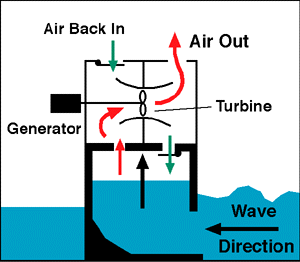 Kinetic energy (movement) exists in the moving waves of the ocean. That energy
can be used to power a turbine. In this simple example, to the right, the wave rises
into a chamber. The rising water forces the air out of the chamber. The moving air
spins a turbine which can turn a generator.
Kinetic energy (movement) exists in the moving waves of the ocean. That energy
can be used to power a turbine. In this simple example, to the right, the wave rises
into a chamber. The rising water forces the air out of the chamber. The moving air
spins a turbine which can turn a generator.When the wave goes down, air flows through the turbine and back into the chamber through doors that are normally closed.
This is only one type of wave-energy system. Others actually use the up and down motion of the wave to power a piston that moves up and down inside a cylinder. That piston can also turn a generator.
Most wave-energy systems are very small. But, they can be used to power a warning buoy or a small light house.
In order for this to work well, you need large increases in tides. An increase of at least 16 feet between low tide to high tide is needed. There are only a few places where this tide change occurs around the earth. Some power plants are already operating using this idea. One plant in France makes enough energy from tides to power 240,000 homes.
Power plants can be built that use this difference in temperature to make energy. A difference of at least 38 degrees Fahrenheit is needed between the warmer surface water and the colder deep ocean water.
Using this type of energy source is called Ocean Thermal Energy Conversion or OTEC. It is being used in both Japan and in Hawaii in some demonstration projects.
Related web site:��
Converting Wave Energy into Electricity
*****