 F l o w e r P o w e r F l o w e r P o w e r
What is indigo?
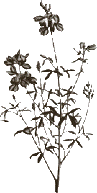
Indigo is a dyestuff that was originally extracted from a plant. Egyptian excavations have suggested that indigo was used as far back as 1600 B.C.
Natural indigo dyes were used throughout history, and have been
found in Africa, India, Indonesia, and China.
Is Indigo a natural or synthetic substance?
Until Adolf von Baeyer identified the chemical structure of indigo in 1883, the only indigo dyes used came from plants. Fourteen years after Baeyer's discovery, indigo was developed synthetically.
What makes indigo so special ?
Whether chemical or synthetic, indigo dyes never fully penetrate
fibre and the dye continually fades. If any indigo yarn is untwisted, white fibre is
found. Other dyes fully penetrate fibres.
Are indigo's dye properties available in other colors ?
Indigo is always blue although there are various casts of blue
indigo available. Dyestuff manufacturers have tried to make other colors that duplicate
indigo's special features but no other color fades or avoids full fibre penetration.
Are cotton yarns the only ones that accept indigo ?
No, wool, acetate, rayon, Tencel ®, and polyester are all fibres
that accept indigo dyestuffs (and there are more).
Does indigo have to applied to yarn only ?
Indigo may be applied to fibre, yarns and fabrics.
There are three times Indigo can hurt the environment.
i) During chemical manufacturing of dye stuff.
ii) As Indigo is applied to the yarn.
iii) During stonewashing or wet processing of jeans.

HomePage