 |
 |
 |
 |
 |
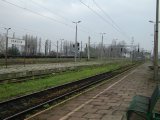
| The Oswiecim (Auschwitz in
Polish) train station where we were dropped off. It was basically
deserted and I know I felt like we just got dropped off in the middle of
nowhere. |
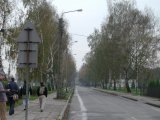
We were walking down the
street that Auschwitz is on. As we are passing by it looks just
like a normal neighborhood; houses and dogs barking. |
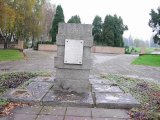
Outside the Visitor's
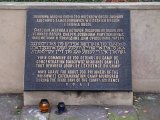
Entrance to the Camp Museum in a park, there was this memorial. |
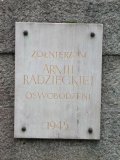
The sign on the memorial
declared that the Russian Army freed the camp in 1945. |
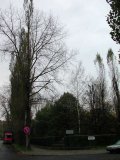
In back of the memorial
there was a small garden with some tall trees (visible two pictures
back) and this is where a mass grave is. |
 |
 |
 |
 |
 |
| The Visitor's Entrance
basically. |
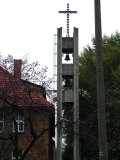
Church at the front of
Visitor's Entrance. |
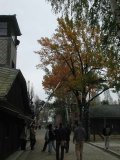
Walking up to the Main
Entrance. |
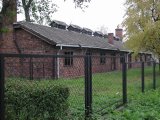
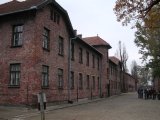
Passing by barracks inside
the camp on the way. |
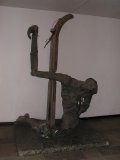
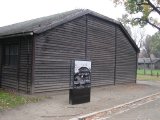
Sculpture inside the Main
Building Entrance. It depicts a man stuck in the barbed wire,
probably trying to escape the camp. |
 |
 |
 |
 |
 |
| Before the tour begins there
is a 30 minute documentary on the camp and the freeing of it by the
Russian Army and what they found. |
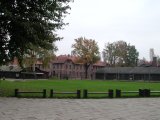
Looking at the camp from
Main Visitor's Building. |
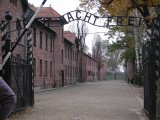
Walking up the gate. |
The official entrance to
Auschwitz and the writing says "work makes freedom." |
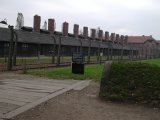
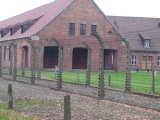
The fence surrounding the
camp perimeter with the barracks behind them. |
 |
 |
 |
 |
 |
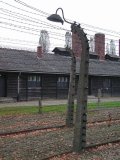
| Close-up of fence.
There were actually two layers of fence made of barbed wire and both
were electrified. |
SS Guard house and Office of
the Camp Supervisor. Other "office" buildings down the
way. |
Another view of fence. |
This spot was right in front
of the main gate. Auschwitz had a camp band that played ridiculous
music whenever new prisoners came in. They also played joyous
music whenever there was an execution. The prisoners were the ones
made to play. Just an example of the mental torture they put
people through. |
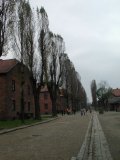
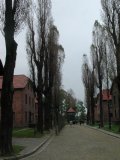
Down a row of barracks. |
 |
 |
 |
 |
 |
| Down another row of
barracks. |
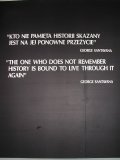
Sign as you are entering one
of the museums. All museums are housed in former camp buildings
and they have many exibitions. |
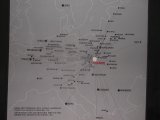
This map shows the
wide-range effect of Nazi terror. These were all the main train
routes that they brought prisoners to Auschwitz from. Even as far
away as Rome and Greece. Some of the "lucky" prisoner's
never survived the train ride, the train from Greece lasted up to 17
days in length. There was no bathroom, food, water, etc.
Most of the people were coaxed on the train by a plot of the
Nazi's. They told all of these people they would be moving to a
new home and they forged all the documents for selling them real estate
and such. So all of these people had all of their most important
belongings with them on the train. |
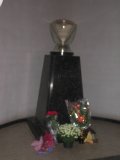
Memorial. |
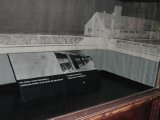
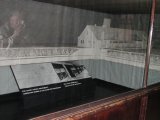
Model of the gas chamber at
Auschwitz. Starting of the left hand side, all of the prisoners
were made to undress in front of each other. Then they were moved
into the showers where they were gassed and it usually took them 10
minutes or so to die. Then make-shift elevators all manned by
other Auschwitz prisoners hauled up all the dead bodies and put them in
the incinerators. It was something like 70% of all people that
came to Auschwitz were gassed immediately upon their arrival. Of
course, they just thought they were getting a shower. |
 |
 |
 |
 |
 |
| same |
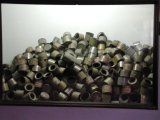
Cyclon B was what the Nazi's
used in the gas chambers and upon camp liberation thousands and
thousands of these empty cans still remained, even after the Nazis
feverishly tried to rid of all the evidence. |
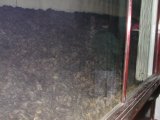
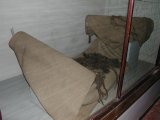
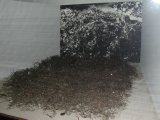
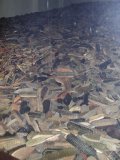
Hair |
The Nazis used everything
they could, even the hair. They would make bags and cloths out of
it, like what is shown above. |
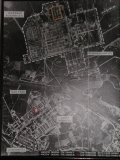
Pictures of Auschwitz and
Birkenau. The colored outlines of buildings are the warehouses
they used to store all the belongings of the prisoners. |
 |
 |
 |
 |
 |
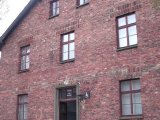
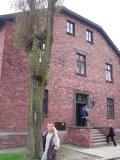
| The outside of the museum
building we just toured, the Extermination Museum. |
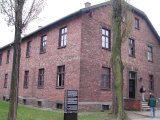
The building we are about to
go into, the Material Evidence of Crimes Museum. |
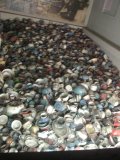
Glasses. |
People's dishes, remember
that most of them thought they were being "relocated" to a new
home. |
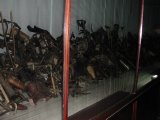
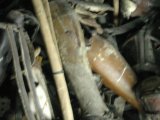
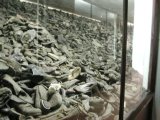
Artificial limbs. |
 |
 |
 |
 |
 |
| Close-up of a leg. |
Shoes. |
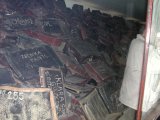
Luggage. |
Toothbrushes, hairbrushes,
etc. |
Everyday Life of the
Prisoner Museum |
 |
 |
 |
 |
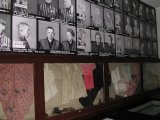 |
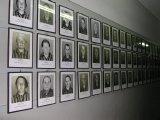
| The entrance of this a some
other buildings were lines with thousands of prisoner's pictures. |
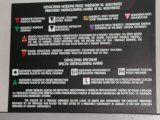
The code they used for
marking prisoner's for why they were at the camp. The camp had two
purposes: to keep political prisoners (people anti-Nazi), and to
exterminate Jews and Poles. |
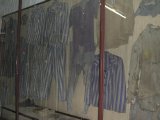
Real uniforms that someone
was wearing during camp liberation. |
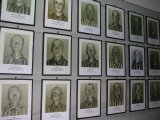
More pictures. |
The children's room.
Children were treated the same way as adults at the camp and therefore
had a much shorter life expectancy. Later the Nazis did testing on
twins. The pictures were the first form of identification.
The took a profile, portrait, and then one with a hat/scarf. They
did this until 1943 and after that they tatooed the numbers on
people. |
 |
 |
 |
 |
 |
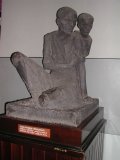
| All the art in the museums
were done by former prisoners of the camp. It was their way of
expressing and dealing with what they went through. This is an
emancipated mother and son. |
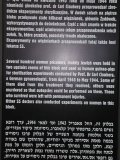
What they did to women
prisoners. |
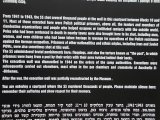
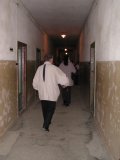
What they did at the very
feared Block 11. |
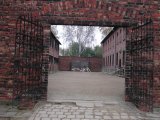
Courtyard and the wall is
straight back where all the executions took place. |
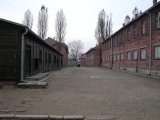
Down the row of barracks. |
 |
 |
 |
 |
 |
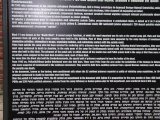
| More about Block 11. |
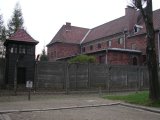
Nazi post and fence. |
Inside Block 11. |
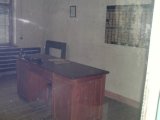
Supervisor for the building,
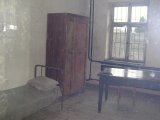
all furniture was as found. |
same room |


