History of the
F.B.I.
The Beginning
The Bureau of Investigation (BOI)
began operations with nine Special Agents (who were former Secret Service employees), 13
Peonage investigators, and 12 Examiners. At first, the BOI was
responsible for investigating about 25 different kinds of crime: antitrust, interstate
train robberies, copyright violations, land fraud, neutrality violations, peonage, crimes
on the high seas, forgery, andcrimes on government reservations.
The first major expansion of the BOI's jurisdiction came in June 1910 when the Mann
("White Slave") Act was passed - it provided a tool by which the federal
government could investigate criminals who evaded state laws but had no other federal
violations. Jurisdiction was again increased in 1917 and 1918 (after World War I
broke out) with the passage of the Espionage Act, the
Selective Service Act, and the Deportation Statute. Finally, in October 1919, Congress
passes the Motor Vehicle Theft Act, another tool used to prosecute criminals who evaded
the law by
crossing state lines.
Because of its steadily increasing investigative responsibilities, the BOI grew
substantially during this time frame - by the end of the decade, the BOI employed more
than 200 Special Agents and over 250 support personnel.
|
|
b
|
The 1920's.
At the beginning of the decade, the Bureau of
Investigation established field offices in nine United States cities. By 1924, at the time
J. Edgar Hoover was named Director, the Bureau of
Investigation had approximately 650 employees, including 441 Special Agents. Towards the
end of the decade, there were 30-some field offices.
Shortly after Hoover took over, he fired Special Agents he considered unqualified and
began to professionalize the organization. He abolished the seniority rule of promotion
and
introduced uniform performance appraisals. He began regular inspections of Headquarters
and field offices. New Agents had to be between 25 and 35 years old. He established a
formal training
course for Agents. He made it clear he preferred Special Agents with law or accounting
experience.
Even though Prohibition violations fell under the jurisdiction of the Treasury Department,
the Bureau had some limited success using its narrow jurisdiction to investigate some of
the gangsters of that period. The Bureau of Investigation also had some success against
the KKK, which had been dormant since the late 1800s but was
experiencing a revival during the 1920s
The 1930's
The Bureau's jurisdiction grew by
leaps and bounds during the decade. First, after the kidnapping of the Lindbergh baby in
1932, Congress passed the federal kidnapping statute. Then, during 1934, Congress passes a
series of federal crime bills that gave the Bureau additional responsibilities in such
areas as stolen property, extortion, racketeering, killing or assaulting federal officers,
bank robberies, and fleeing from one state to another to avoid prosecution. In the wake of
the 1933 Kansas City Massacre, Congress also gave the Bureau Special Agents the right to
carry firearms. In 1939 - shortly before the United States entrance into World War II -
Franklin D. Roosevelt issued a directive stating that the Division of Investigation (as it
was called then) would investigate all espionage, counterespionage, and sabotage matters,
along with the intelligence divisions of the War Department and the United States Navy.
Towards the latter part of the
decade, the Division of Investigation had field offices in 42 cities, and employed 658
Special Agents and 1,141 support personnel
The 1940's-60's
During the 1940s and World War
II, the FBI spent a great deal of its time working war-related investigations into
activities of subversion, sabotage, and espionage. The Bureau even augmented its Special
Agent work force with National Academy graduates for a while.
During that time, the number of Bureau "employees" rose from 7,400 to 13,000,
including 4,000 Special Agents.
A Presidential Directive created the FBI's Special Investigative Service (SIS) (forerunner
of the Legal Attache Program) in 1940. The SIS was created to provide information on Axis
activities in
South America and to destroy its intelligence and propaganda networks.
By the end of the 40s, the Bureau had 51 field offices and four Legal Attache Offices
overseas - in Ottawa, London, Madrid, and Paris. The temporary Bureau
"employees" returned to their own
agencies, and the FBI rolls dropped back a bit to 3,741 Special Agents and 5,559 support
personnel.
As it did for most of the 1950s,
the FBI's Fiscal Year 58 Annual Report to the Attorney General cited the Communist Party,
USA, as "the foremost domestic threat to our democracy." The Bureau's
work resulted in the arrest of numerous alleged spies and Smith Act violators, and the
unmasking of communist front organizations.
At the beginning of the 1950s, J. Edgar Hoover articulated his opposition to further
expansion of federal criminal jurisdiction in a speech, saying he believed state and local
law enforcement were well-equipped to handle most crime problems. Congress, however, had
different ideas; during the decade, FBI jurisdiction was expanded in several
areas--kidnappings, interstate transportation of stolen property, labor racketeering,
gambling, and bank robberies. The bank robbery epidemic during the 50s was so bad that the
Bureau sponsored more than 100 regional bank robbery conferences for state and local law
enforcement and banking
representatives.
By the end of the decade, the FBI had 53 field offices, ten Legal Attaches, 5,977 Special
Agents, and 7,217 support personnel.
Just like the 1950s, the 1960s
was a decade of tremendous jurisdictional growth for the FBI. Here's a brief rundown on
legislation passed during that time:the Civil Rights Acts of 1960 and 1964;
three separate pieces of legislation in 1961 aimed at the gambling activities of organized
crime groups; the 1961 Crimes Aboard Aircraft Act and the expandedFederal Fugitive
Act; the Sports Bribery Act of 1964; the 1965 statute which made the assassination
of a President a federal offense; the 1968 Omnibus Crime Control and Safe Streets
Act. This Act gave law enforcement the authority to use court-ordered electronic
surveillance in investigating certain specified
violations.
The 1960s was also a decade of personnel growth for the Bureau. By the end of the time
period, the Bureau employed 6,703 Special Agents and 9,320 support personnel. There were
also 58 field
offices and 12 Legal Attaches.
The 1970's-90's
The 1970s opened with new
legislation that would, in time, have a tremendous impact on organized crime groups in the
United States--the 1970 Racketeer Influenced and Corrupt Organizations (RICO) statute.
Additional responsibilities given to the Bureau during the 70s included a 1971
Presidential directive which authorized the FBI to become involved in local police
killings (when requested), and jurisdiction under the 1977 Federal Corrupt Practices Act.
Another area of investigative concern was bombing campaigns by violent extremist groups
like the Weathermen, FALN, the JDL, and the Black Panthers.
New FBI Director Clarence Kelley instituted a number of policy changes during his five
years of service that targeted the training and selection of FBI and law enforcement
leaders, the procedures of investigative intelligence collection, and the prioritizing of
criminal programs (the "quality vs. quantity" concept).
During the 70s, the number of FBI employees grew tremendously. By 1978, that number had
risen to nearly 8,000 Special Agents and well over 11,000 support personnel. The Bureau
had 59 field
offices, and 13 Legal Attaches.
The FBI solved so many espionage
cases during the 1980s that the press dubbed 1985 "The year of the spy"-spies
like Thomas Cavanaugh, Jonathan Pollard, Larry Wu Tai Chin, Randy Miles Jeffries, Bruce
Ott, Allan Davies, William Pelton, and the Walkers.
New legislation passed during the decade, as well as special authorities granted by the
Attorney General, expanded Bureau jurisdiction in several areas. For example, in 1982,
Attorney
General William French Smith gave the FBI concurrent jurisdiction with the Drug
Enforcement Agency over federal drug laws. The Comprehensive Crime Control Act of 1984 and
the Omnibus
Diplomatic Security and Anti-Terrorism Act of 1986 gave the Bureau extraterritorial
jurisdiction when Americans are victimized abroad by terrorists. The FBI also received
jurisdiction under the
1984 Product Tampering Act, and the 1989 Financial Institution Reform, Recovery, and
Enhancement Act gave us more resources to investigate fraud during the "savings and
loan crisis."
As our jurisdiction grew, so did the Bureau's workforce. By 1988, the FBI employed 9,663
Special Agents and 13,651 support personnel. There were 58 field offices, and 15 Legal
Attaches. International terrorism came to United States shores during the 1990s (World
Trade Center bombing). Terrorism from within also reared its ugly head during the decade
(Oklahoma City bombing). In response, Congress passed the Anti-Terrorism and Effective
Death Penalty Act in 1996, which gave the Bureau additional resources to "meet the
increased demands for activities of terrorism." Several Presidential Decision
Directives issued during the latter part of the decade clearly delineated the FBI's
leadership role in countering acts of terrorism.
Other crimes that caused Congress to expand FBI responsibilities during the 1990s included
economic espionage (the Economic Espionage Act of 1996); health care fraud (the Health
Insurance Portability and Accountability Act of 1996); abortion clinic violence (the
Freedom of Access to Clinic Entrances Act of 1994); and interstate stalking and spousal
abuse (part of the Violent Crime Control and Law Enforcement Act of 1994).
Despite a hiring freeze during the early part of the decade, the number of Special Agents
employed by the Bureau in the latter part of the 1990s rose to 11,453 by July 1998. The
support personnel ranks increased as well....to 16,498. While the number of field offices
remains constant at 56, the number of Legal Attaches--in response to the ever-increasing
threat of international
crime--jumped to 32 during the last 10 years.
 |
 |
 |
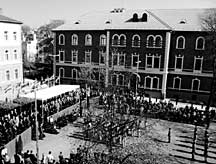
| Dedication ceremonies in 1996 marking
the opening of the International Law Enforcement Academy in Budapest |
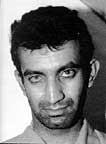
Ramzi Yousef,
mastermind of the World Trade Center bombing. |
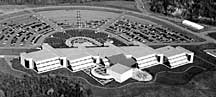
The Main Complex at the Criminal
Justice Information Services West Virginia facility was dedicated in May 1998. |
