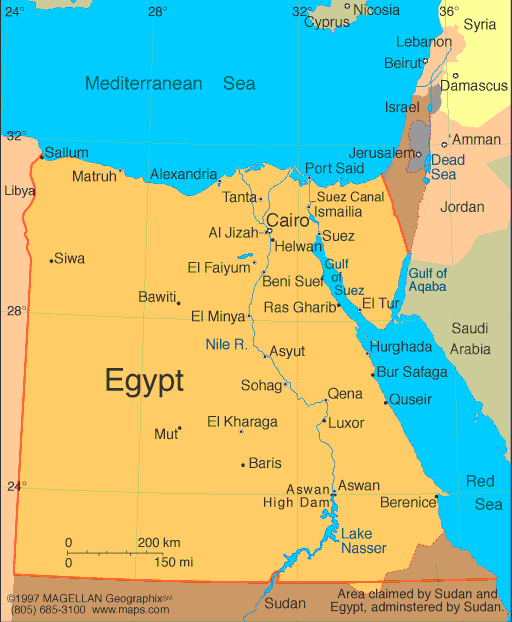
Egypt
Arab Republic of Egypt
President: Hosni Mubarak (1981)
Prime Minister: Atef Ebeid (1999)
Area: 386,900 sq. mi. (1,001,450 sq. km)
Population (1999 est.): 67,273,906 (average annual rate of natural increase: 1.85%); birth rate: 26.8/1000; infant mortality rate: 67.5/1000; density per sq. mi.: 174
Capital and largest city: Cairo: city proper (1992 est.) 6,800,000; metro. area (1996 est.) 9,900,000
Other large cities (1992 est.): Alexandria, 3,380,000; Giza, 2,144,000; Shubra el Khema, 834,000; El Mahalla el Kubra, 408,000
Monetary unit: Egyptian pound
Language: Arabic
Ethnicity/race: Eastern Hamitic stock (Egyptians, Bedouins, and Berbers) 99%, Greek, Nubian, Armenian, other European (primarily Italian and French) 1%
Religions: Islam, 94%; Christian (mostly Coptic), 6%
Literacy rate: 48%
Economic summary: GDP/PPP (1998 est.): $188 billion; $2,850 per capita. Real growth rate: 5%. Inflation: 3.6%.
Unemployment: 10%. Arable land: 2%.
Agriculture: cotton, rice, corn, wheat, beans, fruits, vegetables; cattle, water buffalo, sheep, goats; fish. Labor force: 17.4 million (1998 est.); agriculture, 40%; services, including government, 38%; industry, 22% (1990 est.).
Industry: textiles, food processing, tourism, chemicals, petroleum, construction, cement, metals.
Natural resources: petroleum, natural gas, iron ore, phosphates, manganese, limestone, gypsum, talc, asbestos, lead, zinc.
Exports: $5.5 billion (f.o.b., FY97/98 est.): crude oil and petroleum products, cotton yarn, raw cotton, textiles, metal products, chemicals.
Imports: $16.7 billion (c.i.f., FY97/98 est.): machinery and equipment, foods, fertilizers, wood products, durable consumer goods, capital goods.
Major trading partners: EU, U.S., Japan.