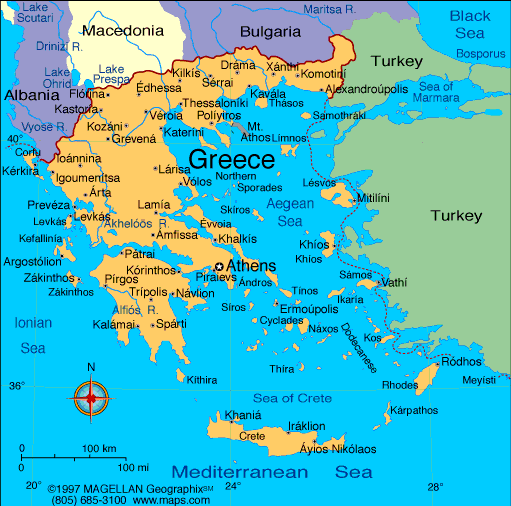
Greece
Hellenic Republic
National name: Elliniki Dimokratia
President: Kostis Stephanopoulos (1995)
Prime Minister: Kostas Simitis (1996)
Area: 50,961 sq. mi. (131,940 sq. km)
Population (1999 est.): 10,707,135 (average annual rate of natural increase: 0.01%); birth rate: 9.5/1000; infant mortality rate: 7.1/1000; density per sq. mi.: 210
Capital: Athens
Largest cities (1991 est.): Athens, 3,000,000; Thessaloníki, 720,000; Piraeus, 170,000; Patras, 155,000
Monetary unit: Drachma
Language: Greek
Ethnicity/race: Greek 98%, other 2% note: the Greek government states there are no ethnic divisions in Greece
Religions: Greek Orthodox, 98%; Muslim, 1.3%; Other, 0.7%
Literacy rate: 93%
Economic summary: GDP/PPP (1998 est.): $143 billion; $13,400 per capita.
Real growth rate: 3%.
Inflation: 3.9%.
Unemployment: 10%.
Arable land: 19%.
Agriculture: wheat, corn, barley, sugar beets, olives, tomatoes, wine, tobacco, potatoes; beef, dairy products.
Labor force (1998): 4.28 million; services 59.2%, agriculture 19.8%, industry 21%.
Industry: tourism; food and tobacco processing, textiles; chemicals, metal products; mining, petroleum.
Natural resources: bauxite, lignite, magnesite, petroleum, marble.
Exports: $12.4 billion (f.o.b., 1998): manufactured goods, foodstuffs, fuels.
Imports: $27.7 billion (c.i.f., 1998): manufactured goods, foodstuffs, fuels, chemicals.
Major trading partners: EU (Germany, Italy, U.K., France, the Netherlands), U.S.