First Battle of Bull Run
First Battle of Bull Run
| The
day after the fall of Fort Sumter, Lincoln called for 75,000 state militia
to reinforce the 15,000 man regular army to put down the rebellion. On
July 4,1862, Confederate authorized the call for an additional 500,000
three- month volunteers.
The Confederate congress authorized President Davis to take charge of military operations and to call out the states' military and accept 100,000 volunteers for one year service. The sight of large bodies of troops, even if poorly untrained, gave each side a sense of pride and confidence that it would be a short and victorious war. Union war troops poured into Washington D.C. prepared to march south and end the war by taking the Confederate capital of Richmond, Virginia. The equally confident Confederate forces moved north to defend their new capital. Both sides especially the north, were badly prepared. The officers had been promoted to positions beyond their abilities, and were accustomed to commending units as large as those who were given. The top commanders were lacking a very large portion of public and political pressure to defeat these rebels, and he had to do it quickly because a high percentage of his soldiers had had volunteered for only three months of service and those months were quickly coming to an end. In the mean time, McDowell changed his plans, and instead of marching directly toward Manassas, he sent most of his men westward. His plan was to make his main attack at Sudley Springs, a secondary attack at Stone Bridge, and a feint at Black Burns Ford. Nothing, however, worked out as he planned. Neither Beauregarde nor his subordinates were fooled by the feint at the Ford nor the secondary attack at the bridge: consequently, they shifted most of their men westward to meet the Unions main force marching south on the Manassas-Sudley Road. At Henry's House Hill the fighting became violent. Journal entry for "Stone Wall" Thomas J. Jackson
The Fighting Begins!
Bull Run was the first major battle for the armies of Virginia. ( The fighting
began because of the bombardment of Fort Sumter). On July 16, 1862, the
untried Union army ( 30,000 men) was followed by Brigade General Irvin
McDowell marching to Washington against the Confederates, which was followed
by Bull Run beyond Centreville.
Confederate Losses: Union Losses: Wounded- 1,582 1,124 Captured/Missing- 13 1,312 Estimated Causalities:
|
Authored by: Kyle Linneman, Ben Alfano & Chad Spencer
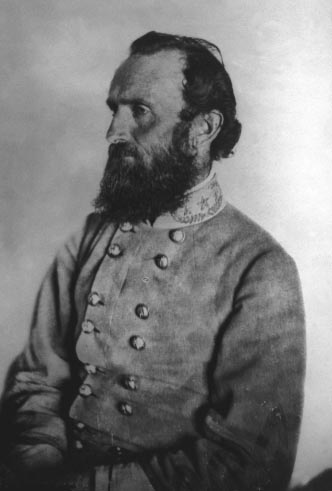 General
Beauregarde was in command of the Confederate's forces that day. He met
up with General Johnston and engaged the Yankees near Manassas-Junction.
The Yankees were giving us a pretty good fight, so I knew it was up to
the Virginias to save the day.
General
Beauregarde was in command of the Confederate's forces that day. He met
up with General Johnston and engaged the Yankees near Manassas-Junction.
The Yankees were giving us a pretty good fight, so I knew it was up to
the Virginias to save the day.