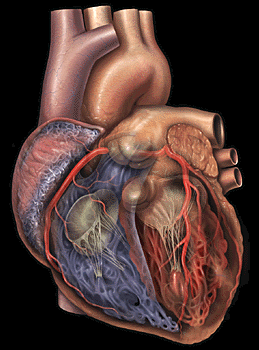
Every cell in your body needs oxygen
in order to live and function. The role
of the heart is to deliver the
oxygen-rich blood to every cell in the body.
The arteries are the passageways
through which the blood is delivered.
The largest artery is the aorta,
which branches off the heart and then
divides into many smaller arteries.
The veins carry the deoxygenated blood
back to the lungs to pick up more
oxygen, and then back to the heart once
again. Blood flows continuously
through the circulatory system, and the
heart muscle is the pump which
makes it all possible!
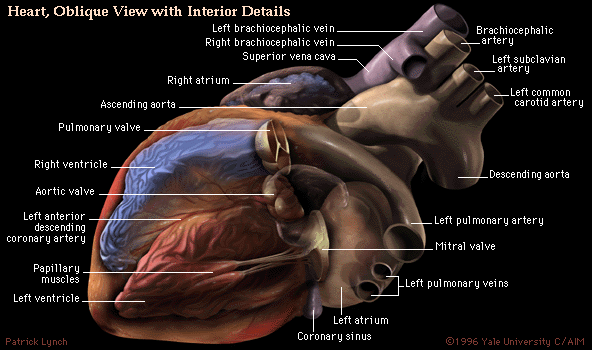
The heart is a muscular organ located just to the left of the breast bone (sternum). It is about the size of your fist, and this amazing muscle pumps 4300 gallons of blood a day. The heart has four chambers:
Atria.
The top two chambers that receive blood from the body or lungs.
Ventricles.
The bottom two chambers. The right ventricle pumps blood to the lungs to
pick up oxygen, The left ventricle pumps blood to the rest of the body
and is the strongest chamber.
Valves.
There are four valves in the heart that help to direct blood flow. As they
open and close, the valves produce sounds that can be heard with a stethoscope.
The heart sounds can often tell your doctor about your hearts function.