GOVERNMENT
 ......
 ......
Knights
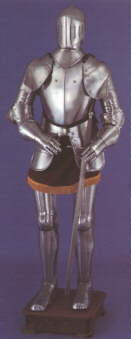
The training of a knight began at age 7 as a page. The page's training ended at age 14. Pages were taught to make themselves agreeable in public. Sometimes they were taught to play an instrument, and sometimes to read and write. They also learned to ride, hunt, and sword fight.
Harder training began at age 14 as a squire. Squires had to keep their lord's equipment in good condition . He also looked over his lord's horses, and accompany his lord in battle and in tournaments. He spent a lot of time with weapons and got used to wearing armor. A squire would do housework.
When a squire's training ended, he would be knighted on a battle field. The squire would kneel in front of his lord. His lord would pronounce him knight and give him a stout blow with his sword or hand. He would then be a knight.
Feudalism...................
Feudalism is a contract in which the kings sign land to the nobles, called vassals, in return for military service. Vassals who provided knights to the king during wartime, gave the knights some of his own fief, or land. When a vassal gave land to anyone else, he became a lord.
These vassals, in turn, would grant parts of their fiefs to still others. Many of the king's vassals became lords of their own vassals. This form of government that developed in Western Europe during the Middle Ages is called feudalism. It was a system of government, a way of life, and a distinctive kind of society.
Feudal government provided a way to settle disputes. Aside from that and providing some military protection, they didn't do much else. They didn't provide schools, hospitals, fire protection, or other services that government provided today.
Business................................
Traders traveled to many different places selling their goods in the early Middle Ages. They would get products that their customers wanted and they would exchange them. The exchanges turned into big fairs, and they would display lots of different things like pots, tools, fabric, leather goods, and much more and they would sell these at booths. The fairs became towns, and this is where crafts people and traders had their businesses. Then guilds were formed. All the businesses in a town were controlled by a merchants? guild. Each craft had its own guild like weaving, candle making, and baking.People had to belong to a guild to practice a craft. Towns became larger and stronger as business grew.
