|

|
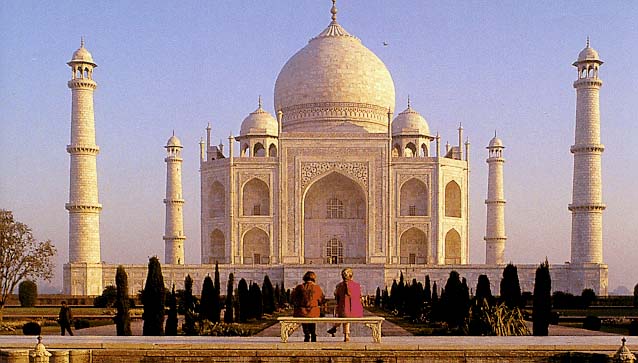
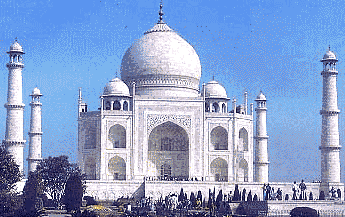
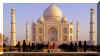
Taj Mahal, Agra- An extravagant marble monument of love, built by Shahjahan in 1653 as a memorial to his queen Mumtaz Mahal who died giving birth to their 14th child. White marble and red sandstone, silver and gold, carenelian and jasper, moonstone and jade, lapiz lazuli and coral were fashioned by 20, 000 skilled workers to make the emperor's dream a reality. It took 22 years to complete - a poignant symbol of eternal love where Shahjahan too lies buried, reunited at last with his beloved Mumtaz. |
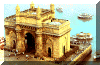 |
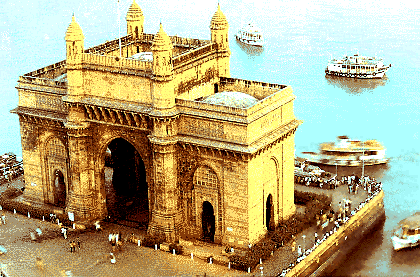
Gateway of India, Mumbai-
In the days when most visitors came to India by ship and when Bombay was India's principal port, this was indeed the 'gateway' to India. Today it's merely
Mumbai's principal landmark. The gateway was conceived following the visit of King George V in 1911 and officially opened in 1924.
|
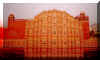 |
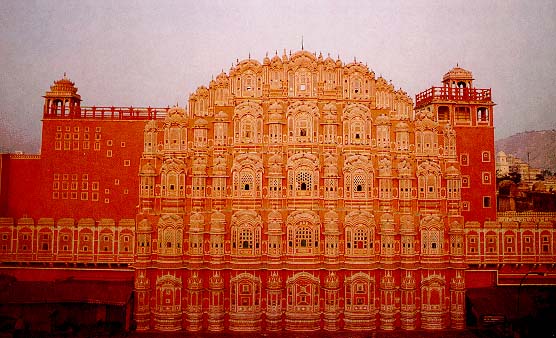
Hawa Mahal, Jaipur, made out of red
stone. |
 |
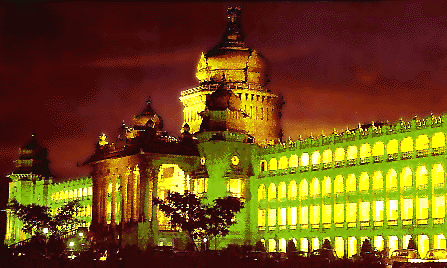
Vidhan Soudha, Bangalore- One of the most splendid architectural creations of
India, Vidhan Soudha, is located at the northern boundary of the Cubbon park, in the city of Bangalore. It is a granite structure built in the neo - Dravidian style of architecture. Conceived and executed by Kengak Hanumanthaiya, the then Chief Minister, it houses both the State Legislature and Secretariat. The massive sandalwood door of the Cabinet room is a spectacular feature of this imposing building. |
 |
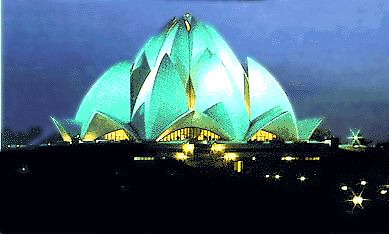
Bahai Temple, Delhi- Located in Kalkaji in the south of Delhi, the Bahai Temple or the Lotus temple is a very recent architectural marvel of the Bahai faith. It is made of marble, cement, dolomite and sand. The temple is open to all faiths and is an ideal place for meditation and for obtaining peace and tranquillity. |
 |
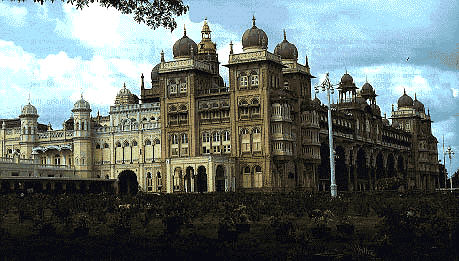
The Maharaja's Palace at Mysore-
The beautiful profile of this walled Indo-Saracenic palace, the seat of the Maharajas of
Mysore, graces the city's skyline. It was built in 1907 at a cost of Rs 4.2 million. The palace is spectacularly illuminated on Sunday nights, and during the festive season of Dussehra.
|
 |
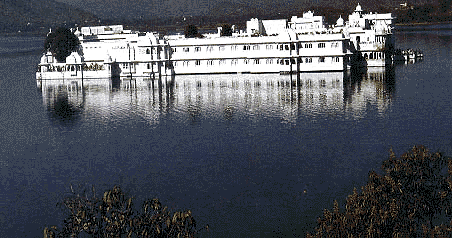
The Lake Palace, Udaipur- The Lake Palace or Jagat Niwas is a white marble summer residence of the princess of
Mewar, built in 1746 by Jagat Singh. Set on an island, the whole palace appears to float on the blue waters of Lake Pichola. The airy stucco complex with dainty balconies, terrace gardens, fountains and arched windows, reflects the brightness of the sun, sky and lake. The interiors are lavishly decorated with paintings, stained glass and
crystal. |
 |
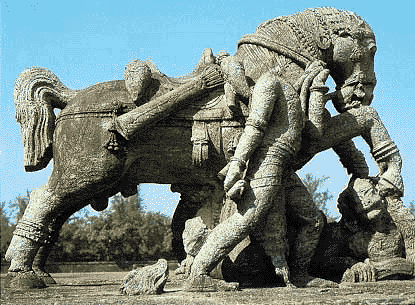
Konark, Orissa- This sculpture reveals the architectural splendour of
the Orissan builders of Konark. This carving of rearing horse trampling down men is evidence of
their ceaseless creativity. |
 |
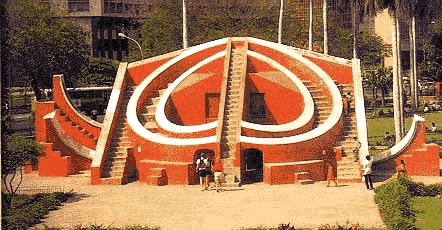
Jantar Mantar, New Delhi- An astronomical observatory designed by the astronomer - King Sawai Jai Singh II of
Jaipur, in 1724. It was believed to have been built with masonary instruments for observing the movements of the stars and the planets. |
 |
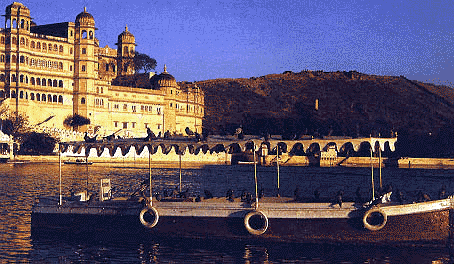
City Palace with Lake Pichola in the foreground,
Udaipur-
As the hub of Udaipur, the City Palace stands majestically on the hill guarded by crenellated fort walls. In contrast to its rough exterior, the inside presents a delicate and exquisite world of beauty with lavish use of marble, mirror work, frescoes, wall paintings, silver doors, fountains and gardens. The City Palace consists of four main palaces. The Palace of Joy, Dilkusha Mahal, is lavishly decorated with frescoes and paintings. Moti Mahal, or Palace of Pearls, Sheesh Mahal, or Palace of Mirrors, and Krishna Mahal are decorated with colours and paintings. |
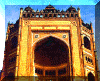 |
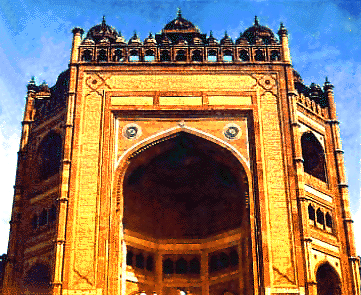
Bulund Darwaza |
 |
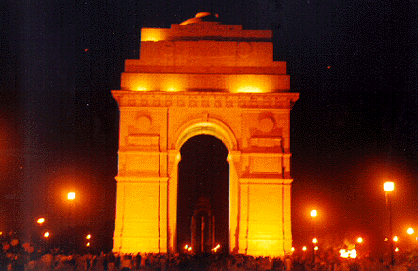
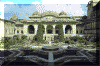
India Gate, New Delhi-
A memorial inscribed with the names of the valiant Indian soldiers who laid down their lives in World War I. |
 |
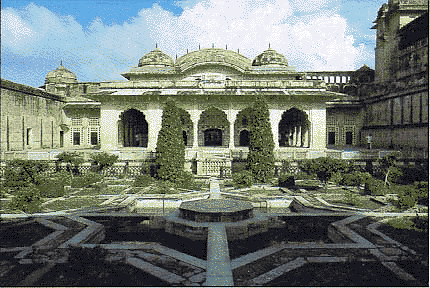
Amber Fort, Jaipur- The Amber Fort in Rajasthan built in 1592 by Raja Man Singh, is one of the finest examples of Rajput architecture. Perched high on a barren ridge, it commands extensive views over a deep narrow valley and the wider plains beyond.
The building was finally completed in the early18th century when the threat of Mughal domination was receding. |
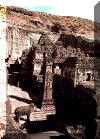 |
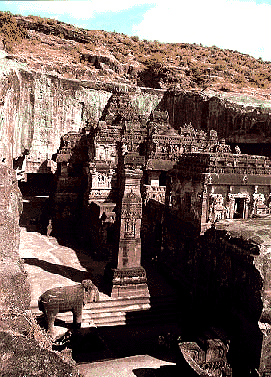
Ellora caves- The caves of Ellora constitute one of the most beautiful expressions of the
art of the Indian Middle Ages, and are designated as a UNESCO World Heritage Site. Situated outside the city of Aurangabad, 400km northeast from Bombay, it was created between AD 350 and 1000 by Buddhists, Hindus and Jains who laboured to sculpt temples from the living rock.. These breathtaking caves are remarkable for their sculptures and architecture.
|