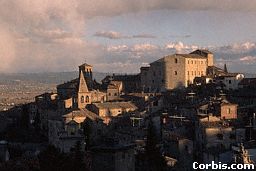
Town Life |
|
As the townspeople
became "free" citizens, powerful families, particularly in Italy, struggled to
gain control of the communes or boroughs. Town councils were formed. Guilds were
established to gain higher wages for their members and protect them from competitors. As
the guilds grew rich and powerful, they built guildhalls and began taking an active role
in civic affairs, setting up courts to settle disputes and punish wrongdoers.
The new merchant class included artisans, masons, armorers, bakers, shoemakers, ropemakers, dyers, and other skilled workers. Of all the craftsmen, the masons were the highest paid and most respected. They were, after all, responsible for building the cathedrals, hospitals, universities, castles, and guildhalls. They learned their craft as apprentices to a master mason, living at lodges for up to seven years. The master mason was essentially an architect, a general contractor, and a teacher.