


For PRC
Pre-University Scholars
Singapore is presently offering scholarships for international students, Chinese students being involved since several years ago. Both middle school and new university students in China are chosen and brought to Singapore to attend secondary schools or universities.
One important issue that
they must
consider, both before and after they come, is what course to undertake
in the university. The choice that they make is important since they are
closely related to their future. At the beginning of their stay in Singapore,
the scholars may be focusing more on their bridging course and on getting
acquainted with the environment here. But as the time goes along, and as they
find out more about the education systems in Singapore, they should start to
consider the universities. There will be a need to collect information about
the courses provided for them. We hope the introduction here may prove useful
for the new scholars regarding choosing the courses in the universities.
Some restrictions are imposed by MOE on the courses that the scholars from China may choose. They can only take courses of Engineering, Computing or Science. This may be one reason why only the students studying science subjects in China, not those studying art subjects, are chosen.
NTU is a technological university, which mainly offers engineering courses, whereas NUS is a full university whose courses are of a broader range, generally speaking.
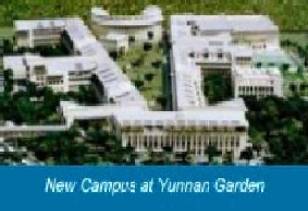
NTU has a School of Applied Science (SAS) and three other engineering schools.
The SAS consists of two departments, namely,
computer engineering and material engineering, and the other engineering
courses available in NTU are civil & structural engineering, electrical
& electronic engineering, and mechanical & production engineering.
Computer engineering is a popular course, and it is paid special attention to. Rapid advances in microelectronics and computer science have created a need for engineers integrating the skills in the design of computer systems as well as applications in technology and commerce. This need is met by neither of the computer scientists and electronic engineers. But computer engineers specialized in both software and hardware meet this need. The subjects of computer science and electrical engineering are combined in the computer-engineering course and electronics and programming are very suitable in various jobs in the IT industry.
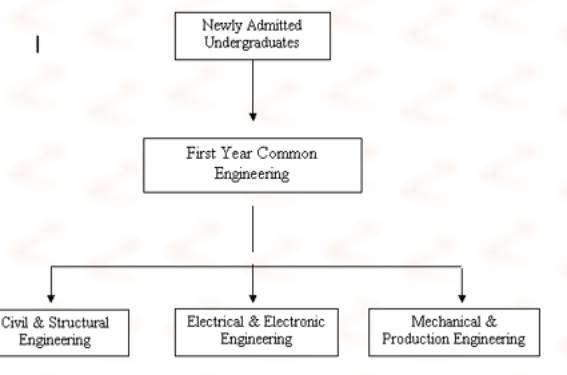
PRC SM2 & SM3 scholars may also choose from
other engineering courses in NTU. It should be mentioned that the courses of
the three engineering departments are the same at the beginning, that is, when
students are admitted into the engineering department in NTU, they must take
the common engineering courses in their first year. Which specific engineering
courses they are going to be specialized in will be determined at the end of
their first year study.
Above is a brief introduction to
the courses available for PRC scholars in
NTU. In NUS, there are
manycourses that our scholars may take as well.
Courses Provided by NUS for PRC
Scholars
The NUS is organized into eight faculties and some
graduate schools and some other departments. Our scholars can only major in
courses of the School of Computing (SoC), the Faculty of Engineering and the
Faculty of Science.
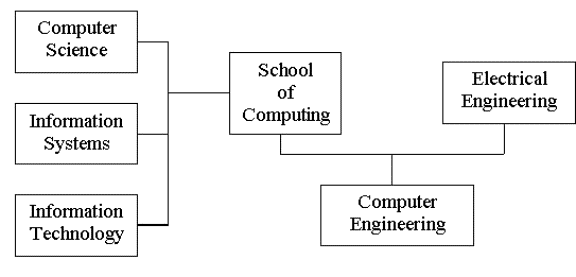
The School of Computing offers programs leading to degrees of Bachelor of Computer Science (CS), Information Systems (IS) or Information Technology (IT). The course of Computer Engineering began to be offered here since several
years ago, jointly by the Department of Electrical Engineering.
The four-year CS program has different highlights from computer engineering and
emphasizes training on software. It aims to develop graduates with strong
technical knowledge in computer science and technology, and it emphasizes the
fundamentals of computer science, including programming languages, networking,
etc. CS Graduates may be engaged in jobs like R&D engineer system
consultant and software specialist. The course of Computer Science was very
popular among PRC scholars too, and a large number of them chose to undertake
Many PRC scholars in the previous cohorts chose to
take engineering courses as well, mainly electrical engineering and chemical
engineering. Electrical engineering deals with practical and innovative applications of
electrical sciences, including communication systems, control systems,
microelectronics, computers, etc. Graduates of electrical engineering have a
wide range of career prospects.
For PRC
scholars, chemical engineering and environment engineering, which is a new
department, require that the PRC scholars take a bridging course in chemistry.
If the scholars are not offered chemistry in their pre-university bridging
course, they may not be admitted into chemical engineering department normally.
This should be noted.
The last
faculty whose course our scholars may take is the Faculty of Science in NUS. It
offers course in biochemistry, biology and biotechnology, chemistry and applied
chemistry, material science, pharmacy, physics and applied physics, mathematics
and applied mathematics, and so on. Students who are interested in pure
sciences may want to major on the courses offered by these faculties.
The
information provided here is a beginning, which we hope may give some guidance
to the new scholars. More information is available in the publications by the
universities  and on the web pages of the universities. The homepage of NTU is http://www.ntu.edu.sg and that of NUS is http://www.nus.edu.sg.