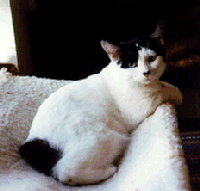
 Manx, breed of shorthaired cat whose most distinctive features are a rabbitlike
gait and the absence of a tail. The breed is native to the Isle of Man,
a British island off the coast of Great Britain; although there are many
stories about how tailless cats first came to the island, it is most likely
that the genetic mutation originated there. The taillessness is caused
by a dominant gene that affects the entire spinal column and which may,
in some specimens, cause serious defects. Some kittens, called "stumpies,"
are born with stumps of tails; others, with a rounded rump and the complete
absence of a tail ("rumpies"), are preferred by cat fanciers. Although
kitten mortality is high due to problems in spinal development, Manx that
survive the neonatal stage grow to be strong, healthy adults.
Manx, breed of shorthaired cat whose most distinctive features are a rabbitlike
gait and the absence of a tail. The breed is native to the Isle of Man,
a British island off the coast of Great Britain; although there are many
stories about how tailless cats first came to the island, it is most likely
that the genetic mutation originated there. The taillessness is caused
by a dominant gene that affects the entire spinal column and which may,
in some specimens, cause serious defects. Some kittens, called "stumpies,"
are born with stumps of tails; others, with a rounded rump and the complete
absence of a tail ("rumpies"), are preferred by cat fanciers. Although
kitten mortality is high due to problems in spinal development, Manx that
survive the neonatal stage grow to be strong, healthy adults.
In general, the Manx gives an impression of roundness, with a round head, prominent cheeks and jowls, and a compact body. The coat is double, a soft outer coat overlying a thick undercoat; the coat comes in various colors. The Manx is a polite, reserved cat, and is extremely loyal to its owners.
The Cymric, a longhaired version
of the Manx, has a semilong, double coat.
Early speculation considered the Annamite cats to be the beginning of the Manx, these cats having short tails. They were introduced into Burma. Others felt the Manx may be descended from Siam and Malaya. The Malaya Archipelago cats have kinked, knotted and short tails.
The Welsh also lay claim to
the Manx in their legends and the people considered them sacred animals
in early times. British folklore has it that mom cats bit off their kittens'
tails to keep humans from snatching them away.
Stumpy tailed cats in New
Guinea sometimes get their tails docked by their owners. If a cat is stolen
the tail is buried with certain spells to bring misfortune on the thief.
The truth is that short-tailed and tailless cat are seen the world over, the result of a genetic mutation. Japanese Bobtails have short kinked tails and a less stocky body than the Manx. Other breeds of cats occasionally produce a kitten with a missing tail. The Manx, however, is the only cat that is bred to be tailless.