Billie Sue's Bird Aviary Page


The views on this page are of the 10' x 12' x 8' outdoor aviary in my back yard.  It is build against the back of the house and the windows are above our kitchen sink.  It makes washing dishes more enjoyable if you can watch the birds while doing the chores in the kitchen.

Click on any of the images to get a larger more detailed view.

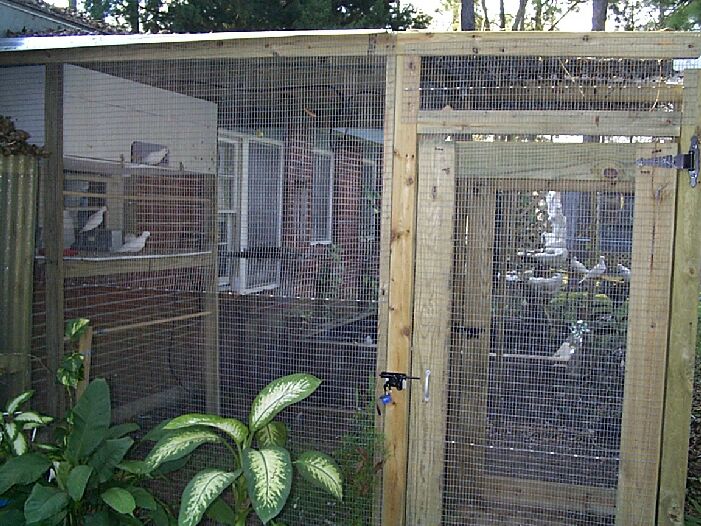
aviary1.gif (111313 bytes) The entrance area between the first and second door is large enough for me to get my wheelchair in and turn it around.  The double door entry gets me  in or out without accidentally releasing any birds. The "box" in the photographs is a cold weather shelter inside the aviary.  The aviary itself is some protection and it doesn't get really cold here in south Louisiana. We do have great swings in temperature. It may be 70 on one day and two days later, we could have 25-30 degree weather.  A dove could take the cold weather with acclimation, however, we don't have enough consistently cold weather to get them acclimated.
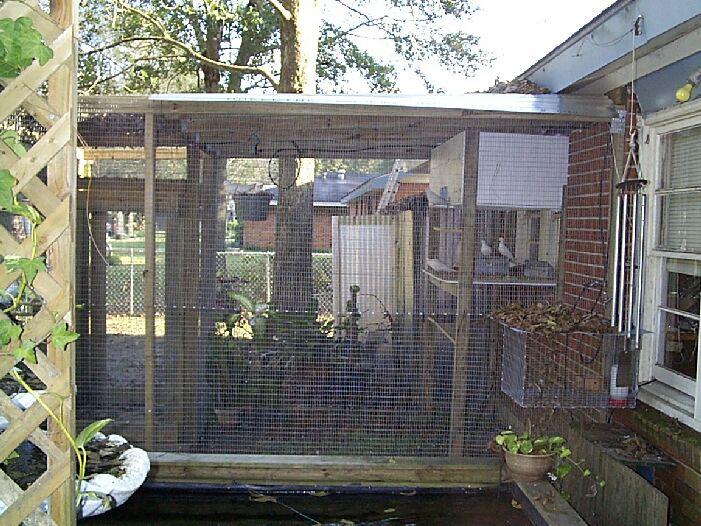
The wire frame extension near the window on the right of the picture is another  food and water station that can be accessed from inside the house.  Opening the window allows for feeding the fish or the doves from my wheelchair. aviary2.gif (51758 bytes)
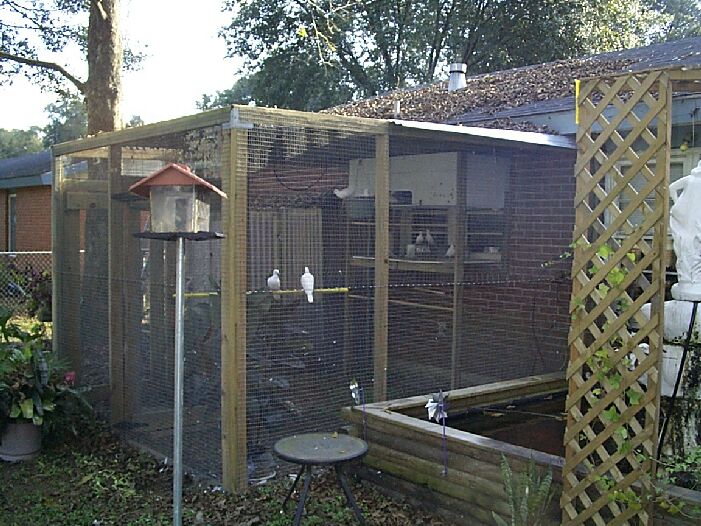
aviary3.gif (37996 bytes) The corrugated roof does not extend to the last 3 feet of the aviary.  This allows the doves to sit in the rain and "shower" if they choose.
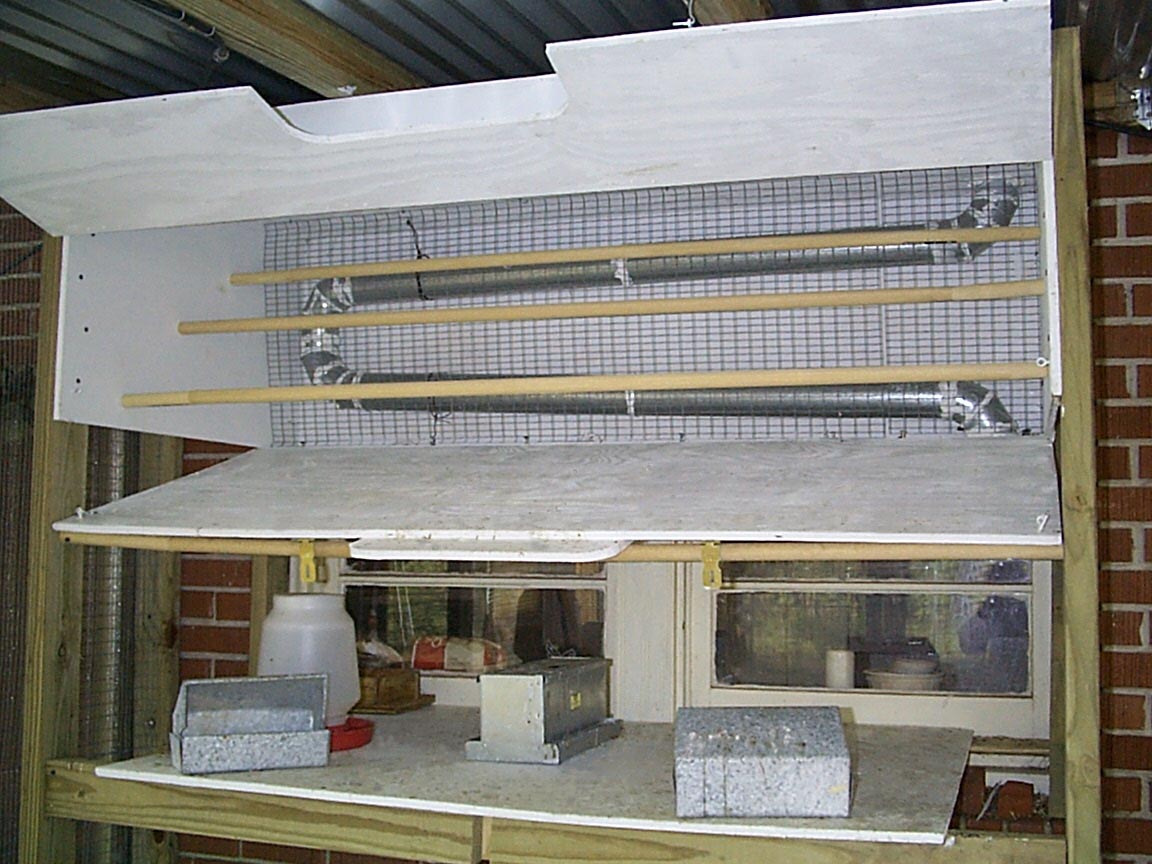
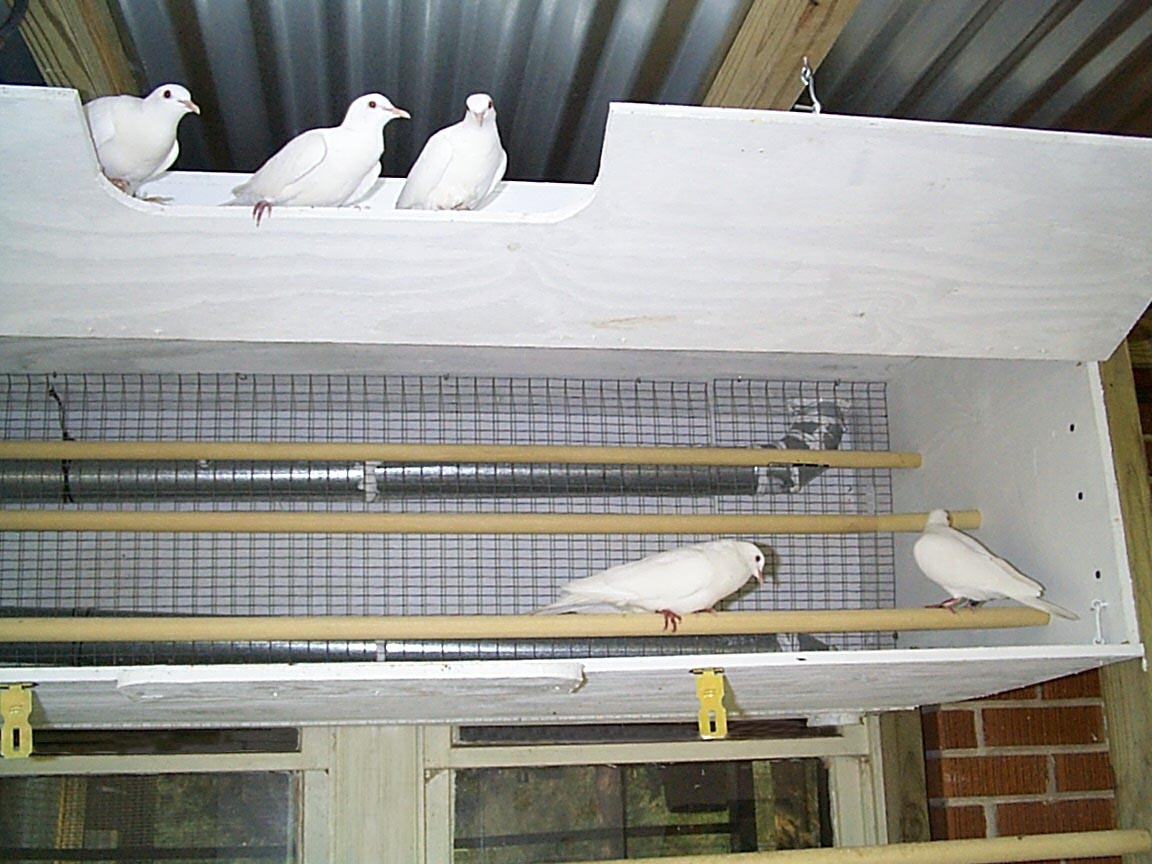
The box (left) when opened up to see inside.  It is easier to clean when it can be opened in this fashion.  I leave it open during warm weather.  In the rear there is a hot air flue that is isolated from the birds by a wire screen. During the coldest nights this 5' x 2' x 1 1/2' box is warm and protected from the wind.   There are enough roosts to handle all my doves. openbx3.gif (27146 bytes)
openbx2.gif (16316 bytes) The lower partition or floor is in place in this shot.   I use latches to secure the board in place.  There are no tools needed to open or close any part of the shelter. The front panel is secured to the roof rafter to hold it open.
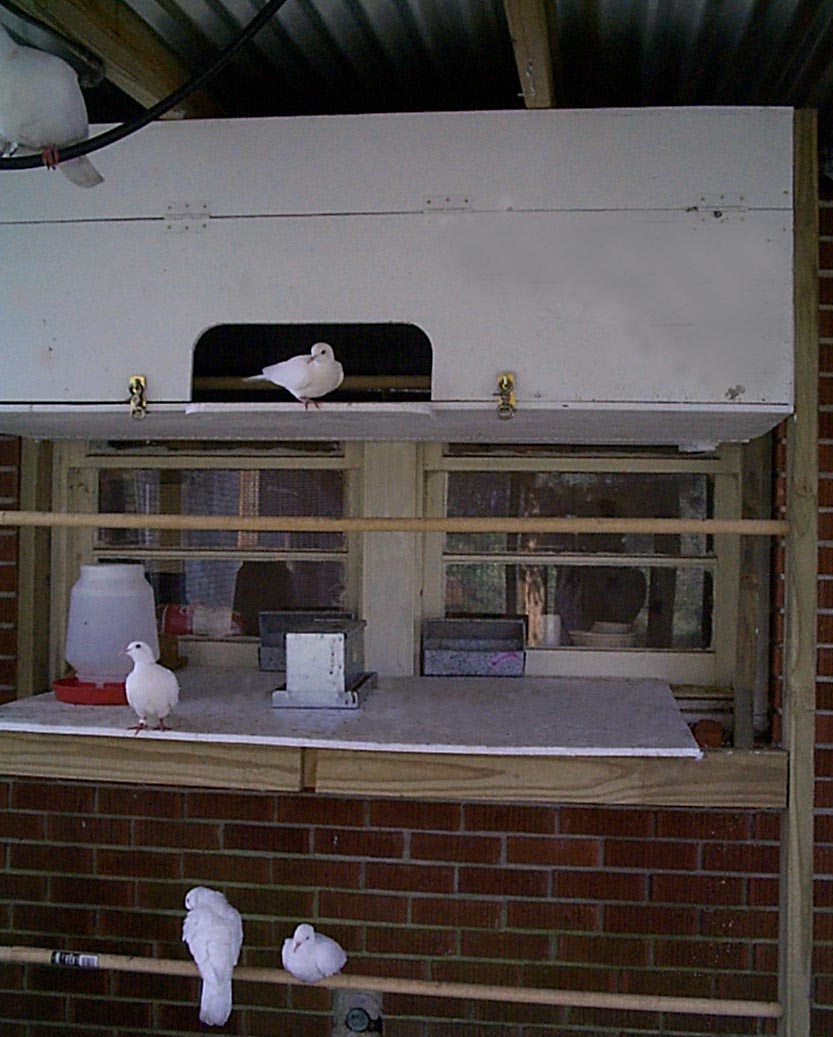
When the protective bird quarters are closed up for cold weather, there is a small entrance deck in front of the opening.  This allows a landing area so the bird can step into the opening instead of flying through it.   Note the position of the box above the lower half of the kitchen windows.  The flat 3' x 4' sheet of plywood stretching from the base of the windows is an excellent feeding and watering area.  I open the window to place saucers of crushed boiled egg onto the feeding station without going out in inclement weather.  At least one nest box is placed in front of the windows each year. We get a close-up view of the entire raising process from inside the kitchen. closebox.gif (35476 bytes)
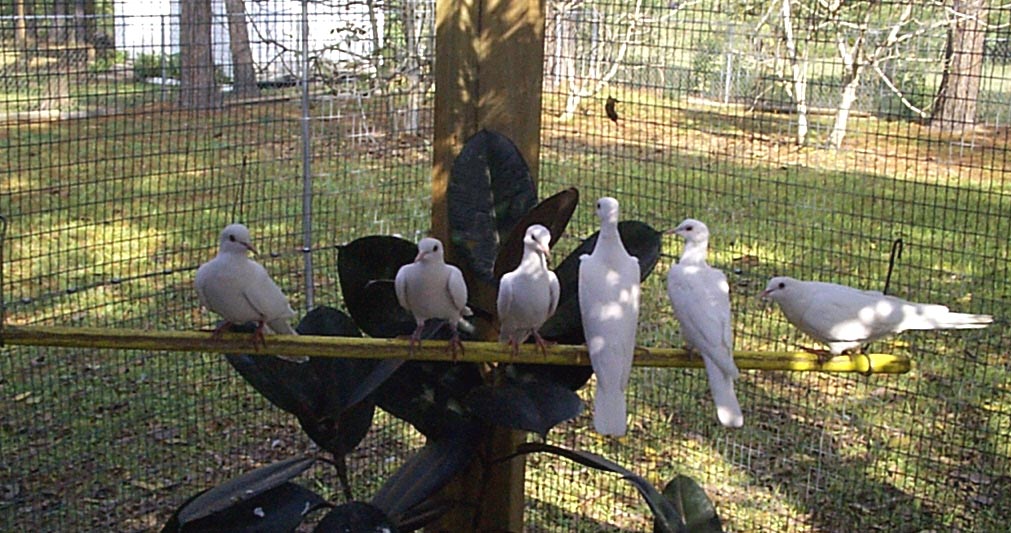
favroost.gif (23583 bytes) Some of the doves in a favorite spot out beyond the roof.  the plant behind and below them is one of our rubber trees.  During a light rain, this roost is exposed and gives the doves a place to shower and preen.
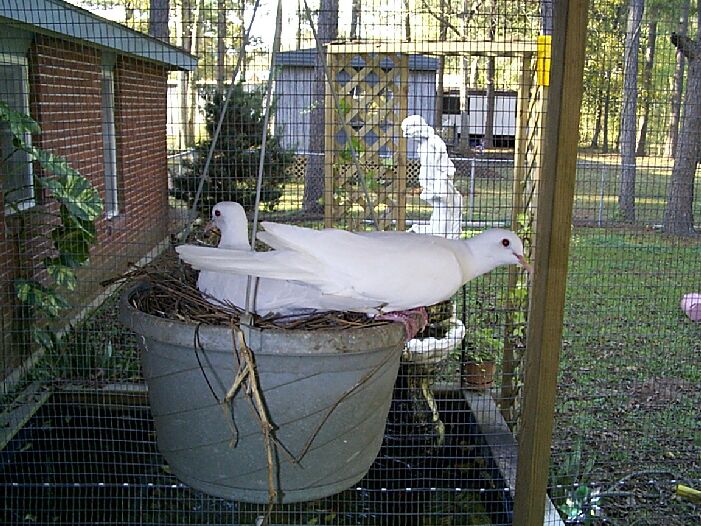
This hanging planter had a fern in it at one time, but the doves preferred it for a nest.  The female is setting on a couple of eggs while the male is guarding the area for her.  He will relieve her at times and allow her to eat drink or otherwise take a break.  He will also feed her at times. nest1.gif (30540 bytes)
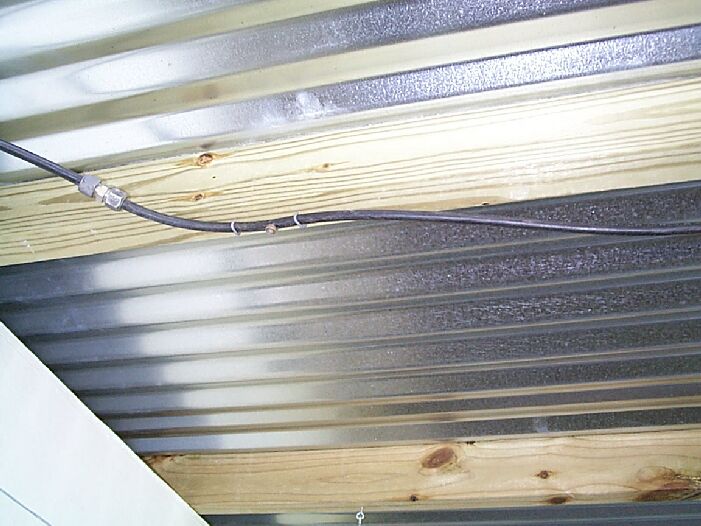
sprayer.gif (44444 bytes) During the summer temperatures can get above 100 air temp and even higher under a tin roof.  This poly tubing has small brass and stainless steel  nozzles which produce a fine mist instead of a water spray.   The on-off valve can be reached through the window.  These mist units can reduce the heat level quickly and efficiently.  I have an electronic thermometer which digitally displays indoor and outdoor temps with the minimum and maximum levels recorded.  A quick glance at this unit guides me in determining when to mist the aviary.
Visitors to this page since 9/10/98

e-mail me at: [email protected]

Return to Home page

Visit my links page to find pages related to my birds and my hobbies.   The good part is that some of the links will take you to pages that will provide you with the data needed to keep and care for many of these and other birds.


   Home Page         Bird Page            Links Page           Goldfish Pond Page            Houseplant Page