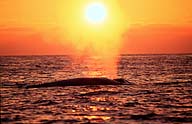
The Blue Whale is the largest animal that ever inhabited our Planet.
Status
both the Atlantic and the Pacific populations of blue whale were designated rare in 1983; in 1990, the designation known as rare was changed to a new designation, vulnerable
Description
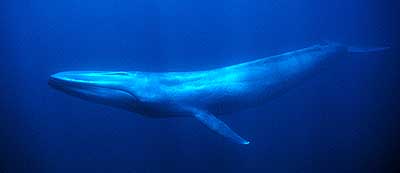
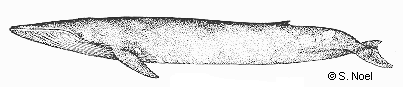
the blue
whale is the largest animal to exist on this planet; the females are larger
than the males; the longest ever recorded was 29.5 meters long
the main
color of these whales is a dark blue-grey; there are lighter oval spots
on the flanks, the back and the belly of these whales, and creamy
blotches
on the throat and navel; the dorsal fin is small and the pectoral flippers
are pointed; blue whales have 70 to 118 throat grooves
calves
measure about 7 metres at birth and weigh about 2 tonnes
Population and Distribution
the Atlantic population of blue
whales is found during spring, summer and fall along the north shore of
the Gulf of St. Lawrence, and off eastern
Nova Scotia; blue whales occur
off southern Newfoundland and in the Davis Strait during the summer
estimates for the Atlantic population
do not exist, but it is estimated that there are 60-100 blue whales in
the Gulf of St. Lawrence
the Pacific population migrates
past Vancouver Island in June and in September
blue whales migrate in small
herds
blue whales spend the summer
close to the edge of the polar ice and the winter in temperate waters
General Biology
female blue whales reach sexual
maturity between the ages of 3 and 7, while males reach sexual maturity
at 4 or 5 years of age
calves are born in April or
May
the gestation period is of ten
and a half months
births are usually of only one
calf, although twins do occur
females usually give birth every
other year
blue whales feed almost exclusively
on krill, a type of plankton
Limiting Factors
the main reason for the decline
in blue whale stocks has been commercial whaling; since this whale is now
protected from exploitation, it is hoped
that the stocks will increase
pollution, especially oil pollution,
is also a limiting factor
Protection
in Canada, blue whales are protected
under the Canadian Whaling Regulations; these regulations prohibit commercial
whaling in Canada's 200
mile fishing zone
internationally, blue whales
are protected by the International Whaling Commission
in the North Atlantic, prohibitions
against whaling, for this species, were accomplished in two stages: first,
in 1938, whaling from factory ships was
prohibited, then, in 1955, shore
based whaling was prohibited
in the North Pacific, whaling,
for this species, was prohibited in 1966 1980