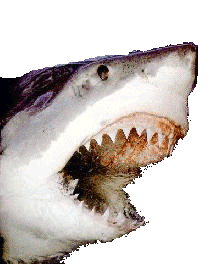
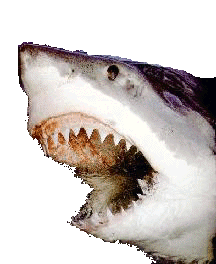
Geographic Range
Oceanic Islands, Atlantic Ocean, Pacific Ocean,
Indian Ocean: The white shark is widely
distributed throughout temperate and subtropical
regions of the world's oceans.
Food Habits
A voracious and efficient predator. Its prey includes
a wide variey of bony fishes,
including salmon, hake,
halibut, mackeral, and tunas; other sharks; sea turtles;
seabirds; and marine
mammals, such as seals, sea lions, sea otters, and
porpoises.
Reproduction
Very little is known of reproduction in the white
shark; only recently has a pregnant
female been examined.
It is presumed to be ovoviparious, and that the young
gorge on fertilized
eggs within the brood chamber (but direct evidence is lacking).
Reproductive seasonality
is unknown, although spring-summer parturition is
suggested. Litter size
was previously only thought to be about two young, but new
evidence suggests as
many as 9 to 11. Birth has never been observed, but live
birth is assumed.
Habitat
Occurs in coastal and offshore waters of continental
shelves where the sea
surface temperatures
range between 12 and 24 degrees Celsius; may come
close to shore and enter
small bays and harbors; may also occur off distant
oceanic islands. It
occurs from surface waters to depths of 1280 m.
Conservation/Biodiversity
Status:
special concern.
The world population is unknown, as is any indication
on whether total white shark
numbers are increasing or decreasing.
Many experts believe that the population of white
sharks in South Australia has
undergone a serious decline in recent years,
but there are insufficient data to adequately
estimate the the species' population size or
to assess human impact on it. In 1989, the
Threatened Fishes Subcommittee of the Australian
Society for Fish Biology added the
white shark to the Australian Threatened Fishes
List in the "uncertain status" category.
Economic Benefits for Humans
Positive
There is a considerable market for the jaws with
the teeth intact. In addition, the
flesh and fins may be
used for food, the liver for oil, the skin for leather, and the
carcass for fish meal.
It is also a popular game fish, as well as the subject of some
very lucrative movies.
Negative
None known, other than keeping tourists away from
certain beaches and feeding
on an occasional swimmer.