The Good Witch Of The North | home
WOLVES
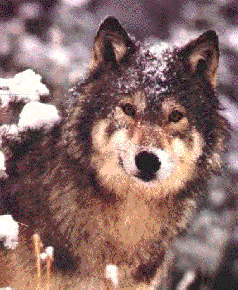
Of all the wild animals wolves are probably the most misunderstood. But for me the wolf is a symbol: A symbol of the spirit and freedom of nature. Wolves are shy, beautiful and very graceful animals.
Though the wolf is called by many names his scientific name is "canis lupis". The Sioux call him "shunk manitu tanka" which means animal that looks like a dog but is a powerful spirit. He is also known by lobo, timber wolf, gray wolf, buffalo wolf and artic wolf which is also known as the tundra wolf because they live on plains with no trees or tundra's, of extreme North America.
The gray wolf-of which there are many variations-used to run over almost the whole northern hemisphere but man has driven them back to very small sections of the country. Most of the wolves today in North America live in the forests of Alaska, Canada, upper Mich., northern Minnesota and northern Wisconsin. A wolf can live in any environment though they like to run and play through the rocks and trees. One of their most favorite type of environment is one where you find hills and flat lands with ravines, rocks and canyons. This should have a river or lake for them to use for drinking and washing themselves. They also prefer lots of trees as it makes it easier for them to hide from enemies and prey. This range of the wolf averages between 80 to 100 square miles and the wolves move over it on a regular basis.
A gray wolf stands up to 3 feet high and up to 6 feet long. The average adult wolf's tail is about 1 1/2 feet long. They weigh an average of 100 lbs but some may reach up to 197 lbs. The females are smaller, standing 1 1/2 to 2 feet tall and weighing between sixty and eighty pounds. A wolf has powerful jaws capable of exerting about 1500 pounds per square inch.
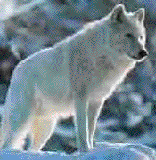
Wolves can be in many colors such as gray, brown, rusty red, cream, slate blue, ochre, and even yellow, or a combination of these colors. The most common color is gray but the most beautiful wolves found in North America are the tundra wolves who are pure white so they can hide in an environment with a lot of snow. The color of the wolves depends on their environment
.
The wolf is a highly social animal, generally living within the same pack for most of its life. The pack consists of four to twenty members mostly family. The members of a pack cooperate in hunting, killing large prey, feeding and caring for the young, defending its territory against other packs.
With each individual having fought for its placement or rank within the group, the pack functions as a strong autocratic system. The pack always has a male leader who is the "alpha male." The top female is called the "alpha female" Generally these are the only ones permitted to breed.
Wolves mate for life and are fiercely loyal to their mates staying with them even though at times it means certain death. They have a strong sense of family while maintaining individualism.. Mating season goes from January to April with the pups being born about 63 days after breeding. Six pups is usually the average litter. The little ones are born deaf and with their eyes closed and weigh about 1 pound. Between 10 - 12 days after they are born the little ones open their eyes. They start getting their teeth in when they are bout three weeks old. Soon they are learning to stand, to walk and to learn. The mother teaches the cubs to stay put and it usually takes only one lesson by 1 cub and they all learn how to stay put. She disciplines them by either rolling them over, growling or pinning them. Once they have learned their lesson, they will usually just play together until the pack returns from hunting. No need for a baby sitter.
The mother does stay close to the pups for about 2 months. Wolves are fully grown at 18 months but females don't reach maturity until age 2 and males until age 3. The pups stay with the family for about 2 years, longer if its a small pack. The average wolf lives for 10 years or so.
Wolf cubs do not instinctively know how to hunt so they are taught and disciplined by the pack. The pack discipline is basically the same as what the mother uses in her lessons.