It seems a weird title, but it is not. From now on we will guest the material of John Ashby, our Indiana Jones. He is collecting archeological materials, found in Usa, possibly related to the Book of Mormon. He will be our predator of very interesting artifacts.
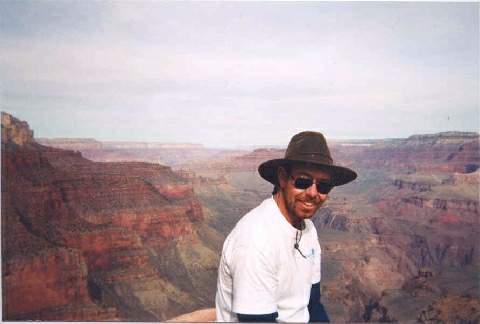
This is John INDIANA Ashby

These are samples of the material .
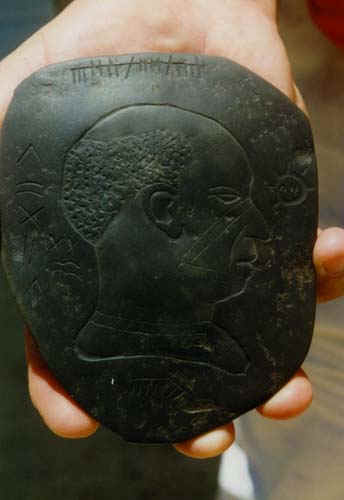
A never -before-published photograph of a portrait-stone from Burrows Cave, a southern Illinois site containing approximately 10,000 such artifacts
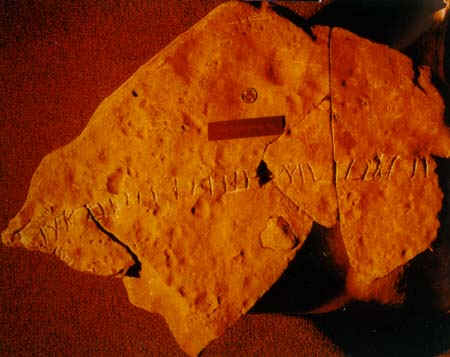
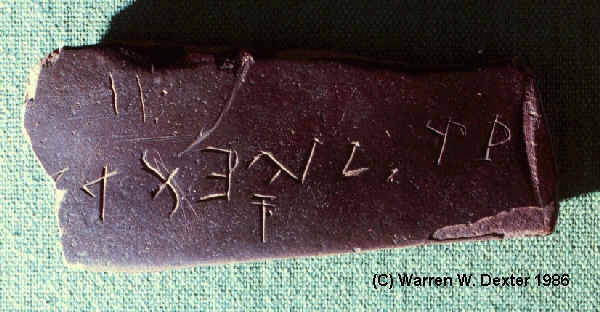
The Bat Creek Stone was discovered in 1889 in an undisturbed burial mound in Eastern Tennessee by the Smithsonian's Mound Survey project.
In 1971, Cyrus Gordon identified the letters inscribed on the stone as Paleo-Hebrew of approximately the first or second century A.D. According to him, the five letters to the left of the comma-shaped word divider read, from right to left, LYHWD, or "for Judea."
In 1988, wood fragments found with the inscription were Carbon-14 dated to somewhere between 32 A.D. and 769 A.D. These dates are consistent with the apparent date of the letters.
Today the stone resides out of sight in a back room of the National Museum of Natural History in Washington, D.C.
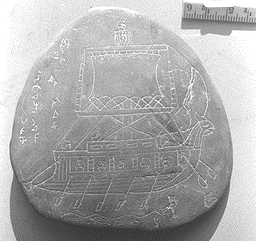
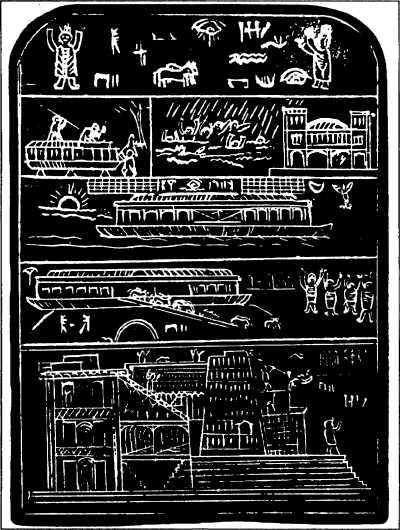
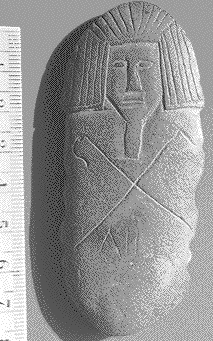
Rock Art Piece From Burrows Cave, From Southern Illinois
In 1982, Russell E. Burrows reported finding several thousand carved and inscribed pieces
of polished dark rock in a cave along waters of the
Little Wabash River.
He expected that the scientific community would welcome his find, but was disappointed by
rejection and charges of fraud, often by "experts" who never examined the rocks
themselves. But trained as a military man, Burrows persisted for years in bringing his
discovery to eyes of people who he thought might recognize what they might mean. This
home page shows a small sample of the thousands of pieces from Burrows Cave and
shares with you ongoing efforts by a few individuals devoted to deciphering how his
pieces might fit into the untold history of this continent and the world as well.
These are the Ten commandments engraved in Hebrew on this stone
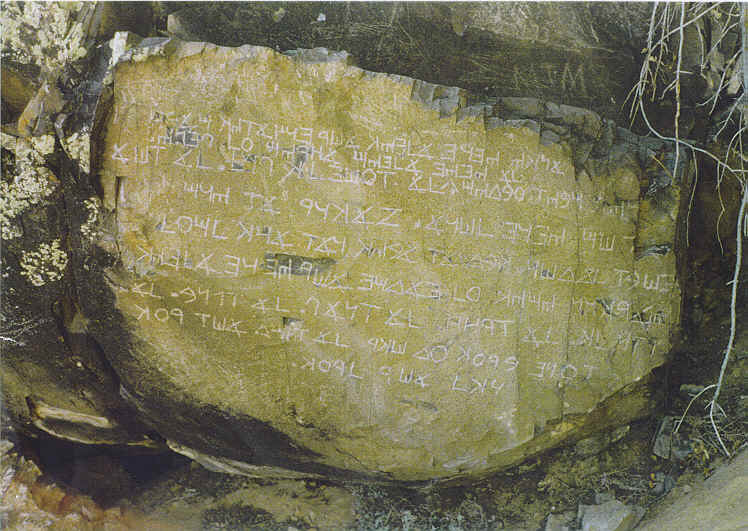
The Los Lunas Inscription is an abridged version of the Decalogue or Ten Commandments,
carved into the flat face of a large boulder resting on the side of Hidden Mountain, near
Los Lunas, New Mexico, about 35 miles south of Albuquerque. The language is Hebrew, and
the script is the Old Hebrew alphabet, with a few Greek letters mixed in. See Cline
(1982), Deal (1992), Stonebreaker (1982), and/or Underwood (1982) for transcriptions and
translation, and Deal (1992) for discussion and photographs of the setting.
George Moorehouse (1985), a professional geologist, indicates that the boulder is of the
same basalt as the cap of the mesa. He estimates its weight at 80 to 100 tons, and says it
has moved about 2/3 of the distance from the mesa top to the valley floor since it broke
off. The inscription is tilted about 40 degrees clockwise from horizontal, indicating that
the stone has settled or even moved from its position at the time it was inscribed. (The
above photograph was taken with a tilted camera.)
In 1996, Prof. James D. Tabor of the Dept. of Religious Studies, University of North
Carolina - Charlotte, interviewed Professor Frank Hibben, a local historian and retired
archaeologist from the University of New Mexico, "who is convinced that the
inscription is ancient and thus authentic. He reports that he first saw the text in 1933.
At the time it was covered with lichen and patination and was hardly visible. He was taken
to the site by a guide who had seen it as a boy, back in the 1880s." (Tabor 1997) At
present the inscription itself is badly chalked and scrubbed up. However, Moorehouse
compares the surviving weathering on the inscription to that on a nearby modern graffito
dating itself to 1930. He concludes that the Decalogue inscription is clearly many times
older than this graffito, and that 500 to 2000 years would not be an unreasonable estimate
of its age.
The inscription uses Greek tau, zeta, delta, and kappa (reversed) in place of their Hebrew
counterparts taw, zayin, daleth, and caph, indicating a Greek influence, as well as a
post-Alexandrian date, despite the archaic form of aleph used. The letters yodh, qoph, and
the flat-bottomed shin have a distinctively Samaritan form, suggesting that the
inscription may be Samaritan in origin. See Lidzbarski (1902), Purvis (1968).
Cyrus Gordon (1995) proposes that the Los Lunas Decalogue is in fact a Samaritan mezuzah.
The familiar Jewish mezuzah is a tiny scroll placed in a small container mounted by the
entrance to a house. The ancient Samaritan mezuzah, on the other hand, was commonly a
large stone slab placed by the gateway to a property or synagogue, and bearing an abridged
version of the Decalogue. Gordon proposes that the most likely age of the Los Lunas
inscription is the Byzantine period.
Skupin (1989) analyzes the orthographic errors of the Los Lunas text itself, and concludes
that it appears to have been written by a person whose primary language was Greek, who had
a secondary, but verbal, comprehension of Hebrew. He writes of the inscriber, "He
used the consonant [aleph] as if it were a vowel, like the Greek alpha, even though this
clashes with the Hebrew orthographic system .... He confounded [qoph] and [caph] as a
Philhellene who only knew kappa might do, and was sufficiently removed from Hebrew to be
unaware that he had made an irreverent slip thereby. Most amazingly, he 'heard' macrons,
the drawling long vowels that are structurally and semantically important in Greek ... and
felt compelled to indicate them even if he was not exactly sure of how it's done (and
rightly so, since in Hebrew they're insignificant).... His word order suggests a
scriptural tradition related to a Greek version produced in Alexandria, Egypt, as does his
spelling; and finally, he gives inordinate prominence to the words 'brought you out of
Egypt.'"
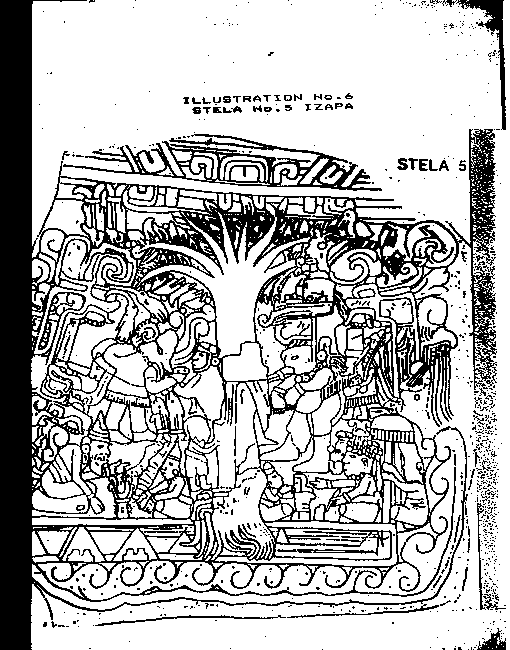
http://www.webb.net/sites/LDMA/Pratt.htm
http://www.2s2.com/chapmanresearch/user/documents/horses.html
http://www.econ.ohio-state.edu/jhm/arch/decalog.html
: http://ww2.whidbey.net/dustin
I know The Book of Mormon to be an ancient record of devine inspiration. While reading
this document for the first time, I was amazed that some people could think that this was
a product of imagination. It is just too complex. Latter I read the diary of Joesph Smith.
It was apparent on page 1 that this fine gentleman was not well educated at the time of
the coming forth of The Book of Mormon.
The following text is taken from the Collected Works of Hugh Nibley, Vol.8, Ch.11, Pg.221
- Pg.222:
"Since Joseph Smith was younger than most of you and not nearly so experienced or
well-educated as any of you at the time he copyrighted the Book of Mormon, it should not
be too much to ask you to hand in by the end of the semester (which will give you more
time than he had) a paper of, say, five to six hundred pages in length. Call it a sacred
book if you will, and give it the form of a history. Tell of a community of wandering Jews
in ancient times; have all sorts of characters in your story, and involve them in all
sorts of public and private vicissitudes; give them names--hundreds of them--pretending
that they are real Hebrew and Egyptian names of circa 600 b.c.; be lavish with cultural
and technical details--manners and customs, arts and industries, political and religious
institutions, rites, and traditions, include long and complicated military and economic
histories; have your narrative cover a thousand years without any large gaps; keep a
number of interrelated local histories going at once; feel free to introduce religious
controversy and philosophical discussion, but always in a plausible setting; observe the
appropriate literary conventions and explain the derivation and transmission of your
varied historical materials.
"Above all, do not ever contradict yourself! For now we come to the really hard part
of this little assignment. You and I know that you are making this all up--we have our
little joke--but just the same you are going to be required to have your paper published
when you finish it, not as fiction or romance, but as a true history! After you have
handed it in you may make no changes in it (in this class we always use the first edition
of the Book of Mormon); what is more, you are to invite any and all scholars to read and
criticize your work freely, explaining to them that it is a sacred book on a par with the
Bible. If they seem over-skeptical, you might tell them that you translated the book from
original records by the aid of the Urim and Thummim--they will love that! Further to allay
their misgivings, you might tell them that the original manuscript was on golden plates,
and that you got the plates from an angel. Now go to work and good luck!
Years ago I had the luck to see a LDS video on BOM ere ruins in the Americas. I was
hooked! I had a feeling that words could not describe! I had to start studing these
evidences for some reason, right away. Some of the things I found amazed me. I had
explored and studied Native American ruins and sites. Suddenly it seemed that this was
something that was my "thing".
Now we have the internet . Want to see something cool? How about The Ten Commandments
etched on a stone in New Mexico, written in ancient Hebrew ! When I first saw this I did
turn myself about!
http://www.econ.ohio-state.edu/jhm/arch/loslunas.html
I belive this to be an artifact of the BOM peoples. Want to see another carving of The Ten
Commandments, complete with a carving of Moses, AND a stone box to protect it? This is
from Ohio.
http://www.econ.ohio-state.edu/jhm/arch/decalog.html
This site also contains a section on the "Keystone" another example of ancient
Hebrew to come from the earth of America.
How about a fresh look at the thought that there could have been horses in America to aid
the people?
http://www.2s2.com/chapmanresearch/user/documents/horses.html
Let's take a look from a different perspective:
http://ww2.whidbey.net/dustin/christia.htm
Many people are finding evidence suggesting the BOM peoples may have resided in the U.S.A.
I find it interesting to note that the more compelling artifacts seem to come from this
area. It is also interesting that most of the U.S. seems to have had a disappeared culture
that left behind ruins that suggest civilized division of labor. Did Lehi live in the
U.S.A? I am not sure, but I belive that there were Nephites in the area(Alma 63:5-10,
Helaman 3:10-11).
CORN IN THE OLD WORLD?
Modern science has told us about the process that corn went through to become a staple
crop of the American natives. So read of Jesus in the cornfield and tell me what you
think. St. Matthew 12:1
A few years back I was fortunate to stumble across the books written by a gentleman by the
name of Barry Fell. Mr. Fell was a Professor who studied and understood ancient writing
and languages. He came up with some interesting ideas about ancient America. I
respectfully disagree with some of these ideas, but am fascinated by some of his
discoveries. I read that Barry Fell had died a while back, so I don't have permission from
him to mention the book titles, but they can be found at a local library. Many exciting
things can be seen here that are directly related to the BOM people. If you had these
books with you, here are some of the cool things you could read of:
Ancient writing script called "Ogam" found all over America
An iron mask uncovered in Ohio
Rock inscriptions in Nevada in "Mediterranean languages"
Zodiac symbols engraved on a gold plate found in Ecuador
An Alabaster egg from Idaho carrying the official name seal of Egyptian pharaoh
Tutankhamen
A metal urn with Egyptian style ornament discovered in New York
Greek style writing on pottery from Hohokam ruins in Arizona
A spiritual inscription in California referring to Jesus
Egyptian hieroglyphs in Ecuador(amazing photo!)
Coins found all over Eastern U.S.A.
Realistic cliff carving in Utah of a warrior with a sword and sheild
Roman style lamps found in Alabama
A bronze knife found in Michagan
Steel sword from New Hampshire with strange writting on it
A Latin inscription in Maine
A ceramic tablet from Texas
A stone tablet from Colorado
Arabic inscriptions in Nevada
Iron battle axes from various places
An elephant statuefrom Mexico
and there is more that I did not include..............
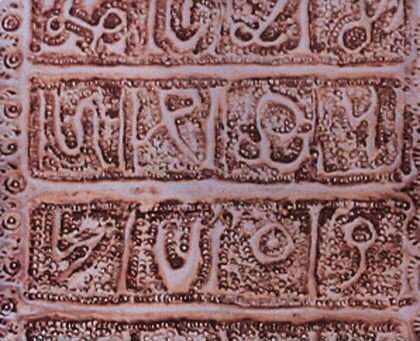
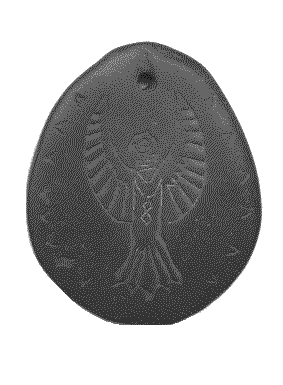
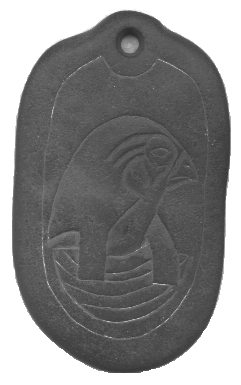 Amulets from a burial in the Mississippi River Valley
THE LOST PYRAMIDS OF ROCK LAKE
by Frank Joseph
Forty miles west of Milwaukee lies the pyramid complex of Aztalan and the
sunken ruins of Rock Lake. For years, rumors of a lost city in the lake have
circulated and finally in 1989 a side-scan sonar mapping of the lake was
done. This book recounts that expedition and gives the reader background
information on the mysteries of Wisconsin.
212 pages. 6x9 Illustrated. Footnotes & Bibliography. $14.95.
code
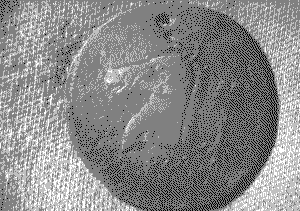
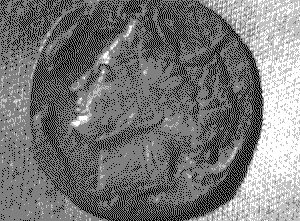
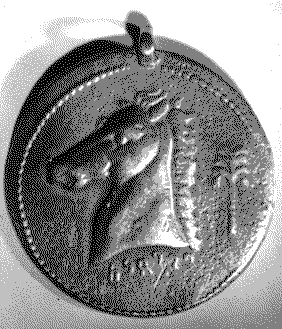
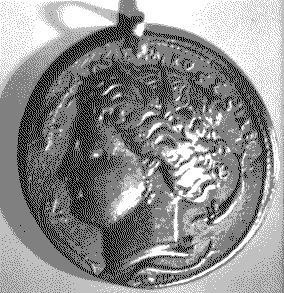
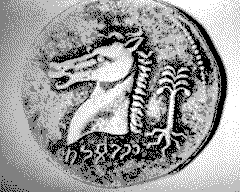
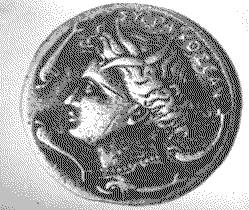
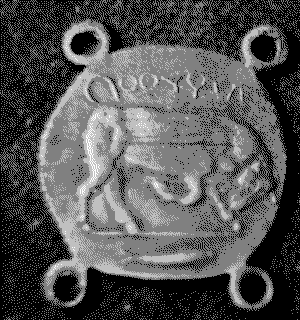
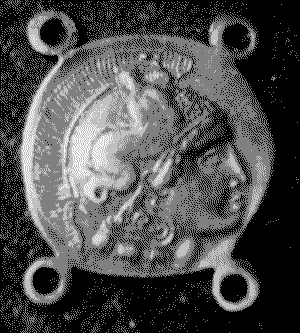
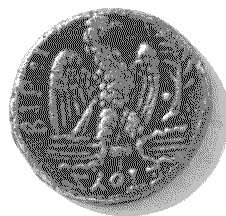
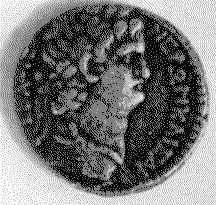 These are coins of ancient American. See how many horses are
on them? Scientists mantein that there were no horses when the Spaniard came on this
continent (btw they arrived in south America and didn't travel everywhere) anyway this
coins are a proof that they had horses or not?
These are coins of ancient American. See how many horses are
on them? Scientists mantein that there were no horses when the Spaniard came on this
continent (btw they arrived in south America and didn't travel everywhere) anyway this
coins are a proof that they had horses or not?
I read posts from people on the internet who say there is no physical proof of the BOM. I
don't know if this is what they refer to, but I have a little saying that fits well:
If it walks like a duck
And it talks like a duck,
It is not a Largemouth Bass
Please read your scriptures and endure to the end!
Jon Ashby
[email protected] Indiana Jones 2 www.massimo.bigsmart.com