 ThUniversity The
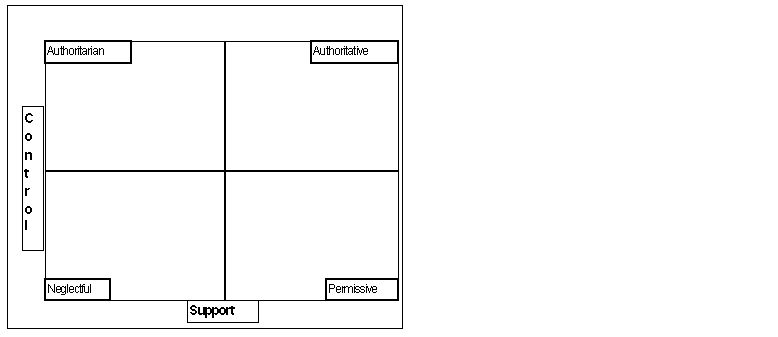
University of Minnesota did a study on the effectiveness of four common
parenting styles. The researchers found two factors to be the most influential
in parenting: Parental Control and Parental Support.
ThUniversity The
University of Minnesota did a study on the effectiveness of four common
parenting styles. The researchers found two factors to be the most influential
in parenting: Parental Control and Parental Support.
We have spent many weeks in examining the marriage relationship because it is the foundation upon which good parenting is built. Without the unity that submission to God brings to a marriage - the transparency and cleaving between a husband and wife - all we have left over is techniques wistful hopes that somehow our children will develop into wonderful people.
Christ placed such a premium value on children declaring "...of such is the kingdom of heaven."
He also gave a stern warning to us that "anyone [who] causes one of these little ones who believe in me to sin, it would be better for him to have a large millstone hung around his neck to be drowned in the depths of the sea."
Jesus taught us that children can teach us how to be in God's presence. They have an innocence, a humility, the natural willingness to trust and give the benefit of the doubt.
Matthew 18:2-4 says He called a little child and had him stand among them. And he said: "I tell you the truth, unless you change and become like little children, you will never enter the kingdom of heaven. And whoever welcomes a little child like this in my name welcomes me."
This week, we are going to talk about parenting styles and the goals
of good parenting.
Before we begin to investigate how we become good parents to our children,
we need first to realize that people aren’t perfect and that means that
we as parents will not be perfect.
Our parents weren't perfect. Sometimes they might have been downright awful. The very first step toward becoming a good parent is not vowing not to be like them but vowing to be like God is to His children.
Now what exactly does that mean to me in my situation?
· It could mean building on a foundation and heritage of faith, learning from good parents, improving upon their model.
· It could mean that you have to deal with the issue of forgiveness of a parent for some (or many) failings.
If you have unfinished or unforgiveness of a parent, YOU will be held captive by it; never really free. Forgiveness is not just the pardon of someone who doesn't deserve to get off the hook; forgiveness is the key to unlock your own self-imposed jail cell. The fact is that the people you forgive may not accept it; but it is no longer your burden.
Emancipation! Without it, everything in your life is affected, including your parenting, and you are not experiencing the true freedom that God has for you! And remember what Ephesians 4:32b says: "...forgiving one another, even as God for Christ's sake forgave you!"
Whether we like it or not, many of us pick up a lot of our parenting
style from our parents because it is part of our experience. However, we
add in the factors of temperament and level of unity in our marriage, and
we begin to see the type of parents we are.
ThUniversity The
University of Minnesota did a study on the effectiveness of four common
parenting styles. The researchers found two factors to be the most influential
in parenting: Parental Control and Parental Support.
Parental Control is the ability of parents to manage a child’s
behavior.
Parental Support is the ability to make a child feel loved.
The researchers were interested in finding out how each of the four parenting styles affected children in the following categories:
It appears that self worth is best achieved when there is high control and high affirmation. Children evidently feel better about them-selves when the parents are actively engaged in setting loving limits and consequences, and paying a lot of attention to what the children are doing right.
Permissive parents score second because children get loving affirmation but without the limits of control. This may communicate a lack of concern which might be interpreted as "my parents are not as concerned about me if they are not as concerned about setting loving limits."
The Authoritarian and Neglectful parents do nothing for self-esteem, but at least the Authoritarian parent imposes an element of control, even though it may be too severe at times.
Authoritative parents give children encouragement to submit to proper authority and children are relationally better adjusted because of it.
Permissive parents by their style do not teach submission, and fewer children from permissive families will respond positively to authority figures in their lives.
Authoritarian parents scored worst in this category because parents who are too strict without affirmation are teaching their children to despise authority figures.
Authoritarian families create children who reject the religious structures of their parents as they rebelled against the style of nurture they received at home.
1. Authoritarian and Neglectful
2. Permissive
3. Authoritative
Strict control without affirmation, or ignoring your children are the best ways to produce children who rebel against their parents’ culture.
This study showed permissive parents, even though third, had nearly as high a number of counterculture children as neglectful and authoritarian families.
Authoritative families had the fewest cases of counterculture rebellion.
I take note that Authoritative families have some incidences of rebellion showing that all parenting styles will have its successes and failures. This is a very difficult thing for some parents who have done the best they know how and despite this, their child rebels against family ideals.
We need to remember, as parents, that children are individuals in whom God has given free will. Our responsibility is to do our job in raising the children. We are not responsible for the paths our children choose if it goes against the path on which we set them. We are responsible to raise them and influence them to desire the path we choose for them. But the choice ultimately rests with the child when he or she reaches majority or adulthood..
By identifying our tendencies as parents, we can move to improve.
Are you a permissive parent? Are you an authoritarian? Is there
balance between your support and your control?
(Myers-Briggs Temperament Indicator... This is not only for enlightening
yourself about you, but also about your children, but you have to start
with you. (Pass out the MBTI questions.)
Next week:
Parenting Models.