(C) Copyright 1998 By Massimo Franceschini all the rights reserved.
Go back to the Bible and the Book of Mormon this is a new study,totally from the Bible, supporting the divinity of the Book of Mormon.
Holy Garments

One of the most sacred symbols that the man has received from the Lord is the holy
garment.
Before Adam and Eve were cast out of the Garden of Eden, God made for them a coat made out
of the skin of an animal. For most of the world, the significance of this covering is
often
overlooked and very much misunderstood. It was this covering that provided the way for
them to
be protected from the assaults of the Devil. More than that, it also provided them with
the keys to
their own salvation, which keys relate to every ordinances necessary to become exalted in
the
kingdom of God. And these keys are part of the priesthood, which is the power of God, and
the
priesthood is connected to the wearing of special garments.
Most Christians don't believe that the Bible teaches such things, but we will look at some
scriptures and analyze the important significance which special clothing symbolizes.
We read in Genesis 3:21, "The LORD God made garments of skin for Adam and his wife
and
clothed them." This was in Eden and was the last gift He gave them before they were
driven out.
Satan thought he had foiled God's designs, but that was only because he didn't understand
God's
purpose. God was not angry with Adam and Eve. In fact, everything was going according to
His
plan. How do we know this? Because of several reasons.
It was Eve who admitted that she had been beguiled, or tricked, by Satan (Genesis 3:13).
The
apostle Paul confirmed this when he said in1 Timothy 2:14 "Adam was not deceived, but
the
woman being deceived was in the transgression." Yes, Eve did eat of the forbidden
fruit but she
did so out of ignorance. She had been deceived! Eating the fruit gave her knowledge
concerning
good and evil (Genesis 3:5). That means, BEFORE she ate the fruit, she had no concept of
good
or evil. The scriptures plainly teach that it was only AFTER they had eaten the fruit that
"the eyes
of them both were opened" (verse 7).
Every parent understands this kind of a situation. When a small child disobeys, it doesn't
really
understand what it's doing. And neither did Eve until AFTER she had transgressed, so how
could
she have truly sin?
Another way we know that God was not angry is because of His reaction to their
transgression. A
careful reading will show that God did not curse Adam and Eve. The Lord told Adam,
"In sorrow
shalt thou eat of it all the days of thy life; Thorns also and thistles shall it bring
forth to thee; and
thou shalt eat the herb of the field; In the sweat of thy face shalt thou eat bread, till
thou return
unto the ground" (verse 17-19). Was that a curse? No. The curse was upon the ground,
not Adam.
But notice that the ground was cursed FOR ADAM'S SAKE! (Genesis 3:17). In other words, the
earth was cursed for Adam's good! It was good for Adam to be in sorrow. It was good for
Adam
to be afflicted with thorns and thistles. It was good for Adam to work by the sweat of his
face.
And what about Eve? Was she cursed? The Bible only states "I will greatly multiply
thy sorrow
and thy conception; in sorrow thou shalt bring forth children; and thy desire shall be to
thy
husband, and he shall rule over thee" (verse 16). Some view this as a curse, but no
curse was
mentioned. If it was good for Adam to live in sorrow, then would it not be just as good
for Eve as
well?
But there is one other curse mentioned with this story, and that is upon the serpent, who
was the
real cause of all this trouble. He was the one who instigated the situation in the first
place.
Without his enticement and without his deceit, none of this would have ever happened. So
the
true curse was upon him, not Adam and Eve.
Then there was the coat of skins that God made for them. Why would He have done such a
compassionate thing if He was truly angry at them? In comparison, did God perform any
compassionate deed toward the serpent? If He did it isn't mentioned in the Bible, so we
are left
with the impression that He didn't.
So, in reality, the expulsion from the garden of Eden was a blessing, not a cursing. And
the
wonderful gift of a coat of skins was an act of love, not hate. But why did He do this?
What was
the purpose of God covering the man and woman? God didn't seem to mind their nakedness
before their transgression, so it couldn't have been because He was disturbed by such a
sight.
Then, if it wasn't for His sake that He covered them, then it must have been for their
sake.
Before we look at this question, we need to consider something else. There is no dispute
that God
is holy. Since God made everything, is there anything He makes that is not holy? It
wouldn't
make sense for a holy person to make something unholy, except as a curse. When God first
made
the earth, it was pure and holy because there was no sin in it. When God made Adam and
then
Eve, they too were holy because they were pure and innocent. Then what about the coats of
skin
that God made for Adam and Eve? If they were made by God, then they also must have been
holy
until such time that the man or woman defiled them and made them unholy. Therefore, the
coats
of skin which God provided for His creation before sending them out into a world of sorrow
and
pain were a holy garment.
The next thing that we read in the Book of Genesis is that Cain and Abel offered up a
sacrifice
unto the Lord. It is not reasonable to assume that they offered up sacrifices but Adam and
Eve
didn't? I don't think so.
With this in mind, in Exodus 28:2 we read, "And thou shalt make holy garments for
Aaron thy
brother for glory and for beauty." And what was the purpose of these holy garments?
"The cloths of service, to do service in the holy place, the holy garments for Aaron
the priest, and
the garments of his sons, to minister in the priest's office" (Exodus 35:19). Thus we
see that these
holy garments were part of the clothing that Aaron and his sons were to wear while
performing
their duties as priests. As such, we see that the holy garments and the performance of
priesthood
ordinances were meant to go together.
Was Adam's holy garment somehow connected to the duties of a priest? At first glance,
there
may seem to be no connection, but upon a deeper look at the scriptures, we find something
rather
interesting. We know that Aaron and his sons performed ordinances in the tabernacle, but
what
were those ordinances? For one, there was a sin offering. In Leviticus 4:35 we learn,
"And he [the
priest] shall take away all the fat thereof, as the fat of the lamb is taken away from the
sacrifice
of the peace offerings; and the priests shall burn them upon the altar, according to the
offerings
made by fire unto the Lord; and the priest shall make an atonement for his sins which he
hath
committed, and it shall be forgiven him"
In Genesis 4:4 we read "And Abel, he also brought of the firstlings of his flock and
of the fat
thereof. And the LORD had respect unto Abel and to his offering." Notice that Abel
offered up
the same kind of offering as Aaron was instructed to do as an ordinance for the atonement
for
sins. We know that Aaron had to perform this ceremony clothed in a special, holy garment.
Was
this true for Abel as well? If we say "no", then we must ask ourselves why God
would change His
requirements for this ordinance from the time of Able to the time of Moses. Therefore,
unless we
can justify God changing His requirements, we are forced to admit that Able must have
performed his offering as a priest who was wearing some sort of a holy garment.
Furthermore, if
Abel was making an offering, it is unreasonable to think that Adam didn't make a offering
himself, otherwise, how would Abel know to make an offering? And we know that Adam was
given a holy garment when he left the garden of Eden.
The symbol of a garment is an ancient one. Often it represents ones "authority."
We know that
kings wore ceremonial garments as a symbol of their power. But is there Biblical evidence
that a
garment also represented spiritual authority? In 2 King 2:9-15 we read, "And it came
to pass,
when they were gone over, that Elijah said unto Elisha, Ask what I shall do for thee,
before I be
taken away from thee. And Elisha said, I pray thee, let a double portion of thy spirit be
upon me.
And he said, Thou hast asked a hard thing: nevertheless, if thou see me when I am taken
from
thee, it shall be so unto thee; but if not, it shall not be so. And it came to pass, as
they still went
on, and talked, that, behold, there appeared a chariot of fire and horses of fire, and
parted them
both asunder; and Elijah went up by a whirlwind into heaven. And Elisha saw it, and he
cried,
My father, my father, the chariot of Israel, and the horsemen thereof. And he saw him no
more:
and he took hold of his own clothes, and rent them in two pieces. He took up also the
mantle of
Elijah that fell from him, and went back, and stood by the bank of Jordan; And he took the
mantle of Elijah that fell from him, and smote the waters, and said, Where is the LORD God
of
Elijah? and when he also had smitten the waters, they parted hither and thither: and
Elisha went
over. And when the sons of the prophets which were to view at Jericho saw him, they said,
The
spirit of Elijah doth rest on Elisha. And they came to meet him, and bowed themselves to
the
ground before him."
The mantle that Elijah wore was passed to Elisha. Although it was just a piece of cloth
with no
power in and of itself, yet it represented the power of God was with the person who wore
it.
In Matthew 21:6-8 we read, "And the disciples went, and did as Jesus commanded them,
And
brought the ass, and the colt, and put on them their clothes, and they set him thereon.
And a very
great multitude spread their garments in the way; others cut down branches from the trees,
and
strawed them in the way."
There is a lot of symbolism in this. First of all, riding into Jerusalem, the capital of
Israel, on a
donkey is symbolic of a peaceful conqueror. (The opposite would be the conqueror riding in
on a
majestic steed, all arrayed in battle dress, to represent his all powerful authority over
them.) Jesus
came peacefully, riding on a lowly ass. He didn't demand their allegiance, yet they still
hailed
him as their king. Secondly, "a very great multitude spread their garments in the
way." In other
words, by throwing their garments at His feet they were symbolically throwing down their
own
personal authority before Him, thereby voluntarily submitting themselves to His rule.
The priests and the scribes and the workers of the Temple all wore ceremonial garments
that
represented their authority or power. To rend this holy garment was a symbol of great
distress,
signifying the desecration of God. Consider the story found in Matthew 26:63-65 " And
the high
priest answered and said unto him, I adjure thee by the living God, that thou tell us
whether thou
be the Christ, the Son of God. Jesus saith unto him, Thou hast said: nevertheless I say
unto you,
Hereafter shall ye see the Son of man sitting on the right hand of power, and coming in
the clouds
of heaven. Then the high priest rent his clothes, saying, He hath spoken blasphemy; what
further
need have we of witnesses? behold, now ye have heard his blasphemy."
It is clear in all these examples that the garment which one wore represented their
authority. But
is there some special garment, other than that which the priests wore, that IS holy and
has power
from God?
In the third chapter of Daniel we read about three Jewish lads by the name of Shadrach,
Meshach, and Abendnego who were cast into a fiery furnace at the direction of King
Nebuchadnezzar. Beginning at verse 20 we read "And he commanded the most mighty men
that
[were] in his army to bind Shadrach, Meshach, and Abednego, [and] to cast [them] into the
burning fiery furnace. Then these men were bound in their coats, their hosen, and their
hats, and
their [other] garments, and were cast into the midst of the burning fiery furnace." 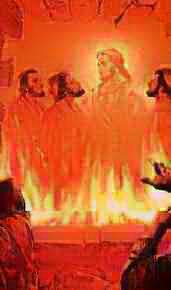
We know that instead of being burned, the king looked into the furnace "and said, Lo,
I see four
men loose, walking in the midst of the fire, and they have no hurt; and the form of the
fourth is
like the Son of God. And the princes, governors, and captains, and the king's counselors,
being
gathered together, saw these men, upon whose bodies the fire had no power, nor was an hair
of
their head singed, neither were their coats changed, nor the smell of fire had passed on
them."
Notice that it says that "neither were their COATS changed." Yet, in the verse
21, it was stated
that these men also wore other garments besides their coats, such as hats and hosen. Then
why
were only their coats specifically mentioned as not being changed, and not the other
articles of
clothing they were wearing? Could it be that there was something particularly sacred about
these
coats?
Another important clue is found in the parable of the wedding guests as recorded in
Matthew
22:11-14: "And when the king came in to see the guests, he saw there a man which had
not on a
wedding garment: And he saith unto him, Friend, how camest thou in hither not having a
wedding garment? And he was speechless. Then said the king to the servants, Bind him hand
and
foot, and take him away, and cast [him] into outer darkness; there shall be weeping and
gnashing
of teeth. For many are called, but few [are] chosen."
It must be remembered that this is a parable about the Kingdom of Heaven. The wedding
spoken
of in this parable refers to those being invited into the God's kingdom. But notice that
Jesus
makes reference to "a wedding garment" as being necessary to enter into this
kingdom. Then He
talked about someone who tried to enter the kingdom without having the proper wedding
garment. Obviously this person wanted to enter into God's grace, but carefully notice that
despite
his desire, he was still cast out because he wasn't wearing the proper garments
In Revelation 7:13-15 we read, "And one of the elders answered, saying unto me, What
are these
which are arrayed in white robes? and whence came they? And I said unto him, Sir, thou
knowest. And he said to me, These are they which came out of great tribulation, and have
washed
their robes, and made them white in the blood of the Lamb. Therefore are they before the
throne
of God, and serve him day and night in his temple: and he that sitteth on the throne shall
dwell
among them. Behold, I come as a thief. Blessed [is] he that watcheth, and keepeth his
garments,
lest he walk naked, and they see his shame."
Why did God give Adam and Eve a coat of skins before being driven out of the garden? Was
it
not to hide their nakedness so that they wouldn't be ashamed? The idea that those who
inherit the
kingdom of God also wear a garment is stated often in the Bible. But why?
Consider this: "For every high priest taken from among men is ordained for men in
things
pertaining to God, that he may offer both gifts and sacrifices for sins" (Hebrews
5:1) The duty of
a priest is to offer both gifts and sacrifices. In the law of Moses, the priest performed
his duty
while wearing a holy garment.
"Wherefore, holy brethren, partakers of the heavenly calling, consider the Apostle
and High
Priest of our profession, Christ Jesus" (Hebrews 3:1). "And no man taketh this
honor unto
himself, but he that is called of God, as was Aaron. So also Christ glorified not himself
to be
made an high priest; but he that said unto him, Thou art my Son, to day have I begotten
thee. As
he saith also in another place, Thou art a priest for ever after the order of
Melchisedec" (Hebrews
5:4-6).
Jesus Christ is a High Priest and He not only offered up Himself but he also offered up
prayers on
our behalf (Hebrews 5:7). Did He wear a holy garment? The quick answer is "no"
simply
because the scriptures don't specifically say He did. But this may not be correct.
Concerning
those who inherit the kingdom of God, Revelation 5:10 declares : "And hast made US
unto our
God kings and PRIESTS: and we shall reign on the earth" (emphasis added).
Those who have been saved in glory will be made PRIESTS! (It must be remembered that in
order to be a priest you must hold a priesthood.) And, as we've already seen, they will be
wearing
white robes. So once again, we see holy garments associated with the priesthood. Is it
reasonable
to think that Jesus Christ, our high priest, will be naked?
In Revelation 3:21 we read, "To him that overcometh will I grant to sit with me in my
throne,
even as I also overcame, and am set down with my father in his throne." Jesus is not
only a priest
but He is a king. More than that, He has promised that those who overcome the trials of
life, just
like He overcame them, they too will become, not only priests but kings and will sit in
Christ's
throne with Him, just like He now sits with His Father in His throne.
Kings wear special garments that represent their power and authority. It is unreasonable
to think
that we shall wear crowns and robes of white garments while Jesus and His Father wear
nothing
to represent their kingly and priestly authority.
When we come to better understand the importance of holy garments we see what special
significance they add to God's plan of salvation.


My suggestion is to take a look at the following pictures, if you are a member you will understand if not my suggestion is to make them bigger and meditate. The Little one is very important but to see the little detail is not easy, have fun.
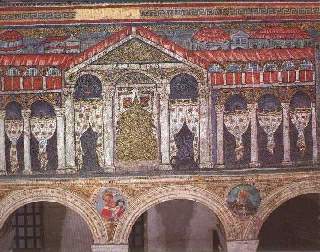
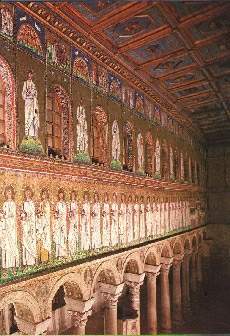
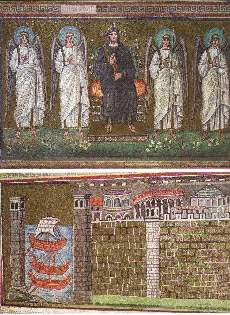
To go back to The Bible and the Book of Mormon this is a new study,totally from the Bible, supporting the divinity of the Book of Mormon.
If you like this site please send it to a friend. Click here