|
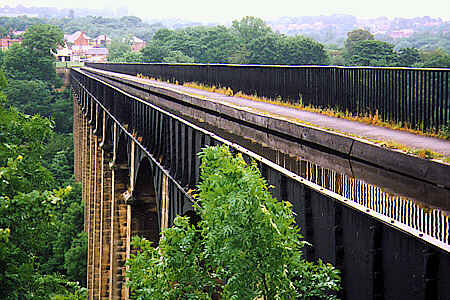
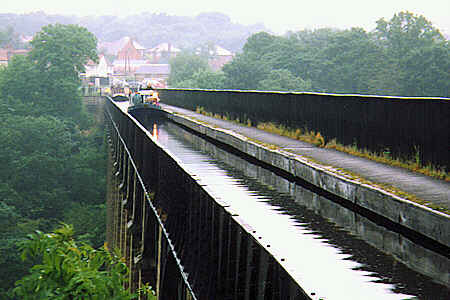
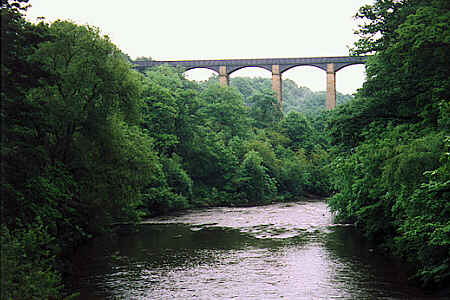
One of the highpoints (literally) of the canal system is the aquaduct
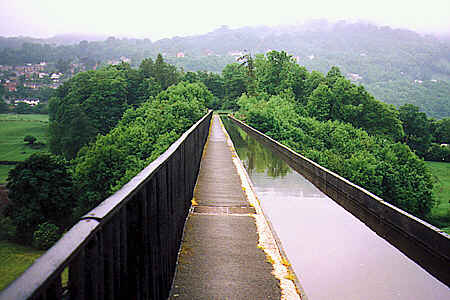
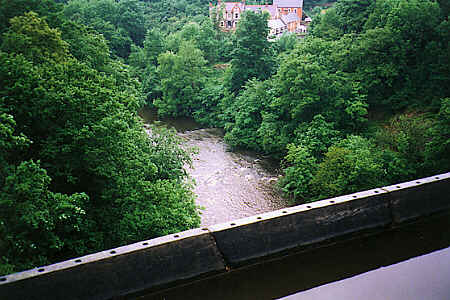
at Pontcysyllte. Completed in1805 it is over 1000ft long, with 19 piers carrying
the canal 126ft above the River Dee. The canal extends a short distance to the north of the aquaduct
and served the nearby iron works and coal mines. It was originally
intended to extend the line northwards as a shorter route to Chester
and the River Mersey estuary for Liverpool. There is also a
picturesque feeder canal - built along the steep valley side for
almost 6 miles to tap a water supply from the river.
|
The waterway is 7 feet wide, and the towpath side has railings!
|
|
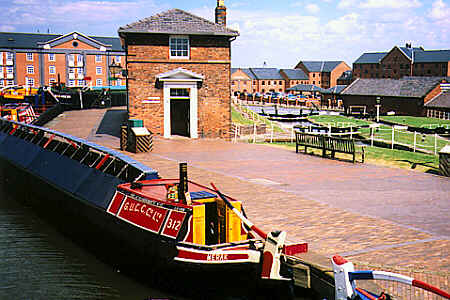
At Ellesmere Port, the terminus of the canal with the Mersey
Estuary, there are basins, and some of the warehouses still exist
where goods where loaded and trans-shipped from barges to the canal
narrowboats. The area is now a waterways museum.
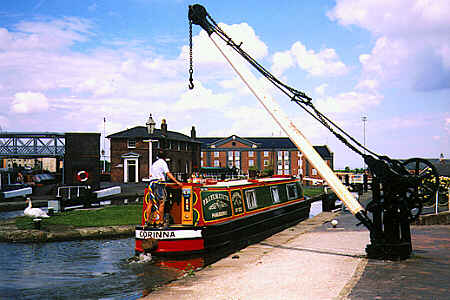
Most of the canals in Britain were built to take a vessel less than 7ft wide - hence 'narrowboats'. This was an ecomomy measure in the construction of locks and bridges. The boatman would live, often with wife and family in the tiny cabin at the stern of the boat. By tradition the cabin is brightly decorated. Before the introduction of motor power, they were pulled by a horse on the towpath.
|
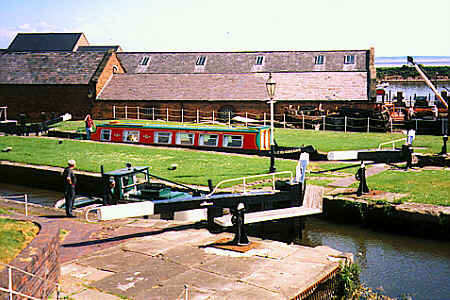
The canal enters the lower basin with two locks in parallel, one wide the other narrow.
An old working boat of the Grand Union Canal Company.
|