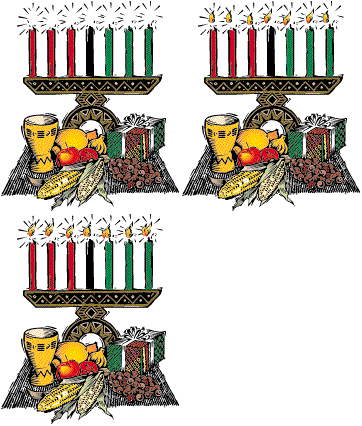
What is Kwanzaa?
Kwanzaa was created by Dr. Maulana Karenga, an important participant in the civil rights movement. Kwanzaa means first fruits in Swahili, a language spoken in much of Africa. Dr. Karenga chose Swahili words for Kwanzaa so that African Americans would remember that all of Africa is their ancestral land, not just one country.
Greetings
Many people start the nightly celebrations by asking "Habari gani?" which means "What's the news?" The response is the Nguzo Saba of the day.
When is Kwanzaa?
Kwanzaa starts on December 26th and lasts for seven days and nights, until January 1st. It is an American holiday, and occurs between the Roman Catholic and Protestant celebration of Christmas and the secular celebration of New Year's Day.
The Nguzo Saba of the seven days of Kwanzaa:
Day 1. Umoja means unity.
Day 2. Kujichagulia means self-determination.
Day 3. Ujima means working together.
Day 4. Ujamaa means supporting each other.
Day 5. Nia means purpose.
Day 6. Kuumba means creativity.
Day 7. Imani means faith, especially faith in ourselves.
How is Kwanzaa celebrated?
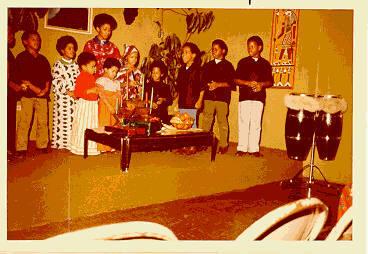
During the week of Kwanzaa, people gather in the evenings to light the candles of the kinara and share thoughts on the Nguzo Saba of the day. There are seven candles, mishumaa saba, with three red candles to the right, three green candles to the left, and one black candle in the center of the kinara. The red is for the blood of the African people, the green is for the hope of new life, and 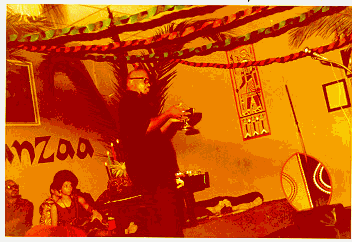 the black is for the face of the African people.
The table is set with straw mats called mkeka, reminders of traditions and starting places, and mazao and muhundi, fruits and vegetables, representing the rewards of unity. Muhundi are ears of corn, and there is one ear for each child. Children are the center of the Kwanzaa celebration.
There is also a unity cup, or kikombe cha umoja, from which all will sip.
During each night of Kwanzaa, one might stay at home with family or join other people out in the community. On the evening of Kuumba, there is a celebration called Karamu. This is the great feast of Kwanzaa, a celebration of African American heritage. There are folktales, songs, stories of the lives of famous African Americans, and plenty of food to enjoy! This is the night when people exchange gifts, too. It is a feast of the past, present, and dreams for the future.
Kwanzaa Recipe
Benne Cakes
Benne cakes are a food from West Africa. Benne means sesame seeds. The sesame seeds are eaten for good luck. This treat is still eaten in some parts of the American South.
(Warning: Cookies and baking sheet will get very hot and can burn! Always bake with a grown-up for help and safety!)
You will need:
oil to grease cookie sheet
1 cup finely packed brown sugar
1/4 cup butter or margarine, softened
1 egg, beaten
1/2 teaspoon vanilla extract
1 teaspoon freshly squeezed lemon juice
1/2 cup all-purpose flour
1/2 teaspoon baking powder
1/4 teaspoon salt
1 cup toasted sesame seeds
Preheat the oven to 325°. Lightly oil a cookie sheet. Mix together the brown sugar and butter, and beat until they are creamy. Stir in the egg, vanilla extract, and lemon juice. Add flour, baking powder, salt, and sesame seeds. Drop by rounded teaspoons onto the cookie sheet 2 inches apart. Bake for 15 mintues or until the edges are browned. Enjoy!