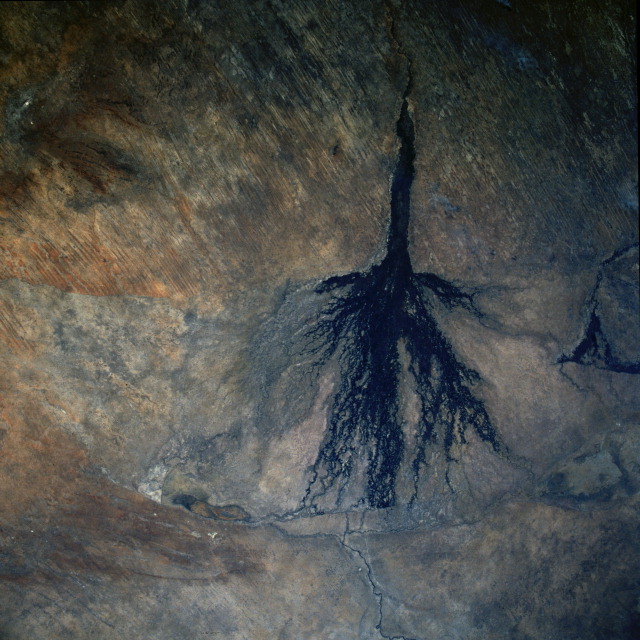
The dark broom-shaped area of this photograph indicates where the denser vegetation is found in the Okavango Inland Delta of northwest Botswana. The delta is part of the Ngami Depression, which is located at the extreme southern end of the East African Rift System and is the result of block faulting. The Okavango River, which originates in the plateau of southeastern Angola, provides an intermittent flow of water as the river enters the delta area from the northwest. East-west trending wind streaks are observed on the slightly elevated terrain west and northwest of the Okavango Delta. Because this delta is situated in a desert climate, Earth scientists have deemed this site to be one of the most ecologically sensitive areas on the planet. This sensitivity is heightened by the constant competition for specific land use among would-be users of the land, including farmers, cattle ranchers, and those who would establish a natural game preserve. Hot, humid conditions make this area an ideal habitat for the tsetse fly, a known carrier of African sleeping sickness. Because of the geographic location and the critical nature of the Okavango Delta, the surrounding countries of Angola, Namibia, Zambia, and Zimbabwe also feel their governments should participate in deciding the ultimate use of the delta.
Each summer, floods pour down from the highlands of Angola into the Okavango River and flow on through a vast network of narrow waterways, lagoons and broad expanses of the Okavango Delta. The water courses through this huge, 10 000 square kilometres of flood plain and dissipates in the sands of the Kalahari.
Okavango is frequently called a swamp, but mostly its waters are beautifully clear and blue. Most of the Okavango waters are soaked up by the desert, or evaporate. In good years, a fraction may remain to flood Lake Na
gmi in the south and feed the Boteti River, which runs into Lake Xau in the west and eventually into the huge depression of the Makgadikgadi Pan.The floods reach their peak in May, covering vast grass flats and making thousands of islands out of tree-covered ridges of land. Thick papyrus grows everywhere and, in the northern parts of the delta, chokes the waterways so that they are impenetrable except by canoes.
This wilderness is uninhabited, except for a few river bushmen
who roam there. They still work iron with primitive bellows, making knives, axes and spears. Their canoes, called mokoros, are hand-hewn from logs.In the parts of the delta where there is perennial water there are large numbers of crocodiles, hippos and buffaloes. Animals like the sitatunga, lechwe and Chobe bushbuck, which have adapted themselves to the conditions of reed and water, live on the islands.