taiwan (7)
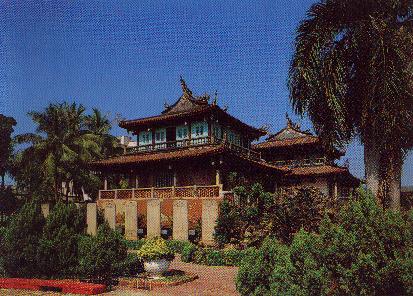
Chihkan Tower in Tainan
The historic tower was originally a fort in Tainan, built by the Dutch
in 1653. Following the Dutch surrender in 1661, Koxinga established
his military and civil administration in the fort. It is one of the
most
famous scenic spots in Taiwan.
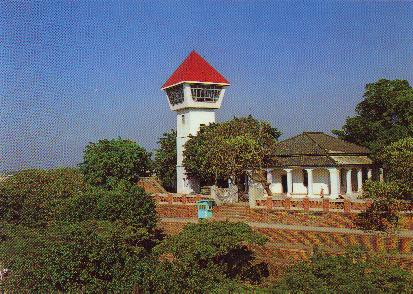
Anping Fort
Anping Fort, also called Fort Zeelandia, was built by the Dutch in
1624. After the Dutch surrender, Koxinga established his administration
in the fort. For this reason, it is also called "Wang Cheng"
(Royal Palace).
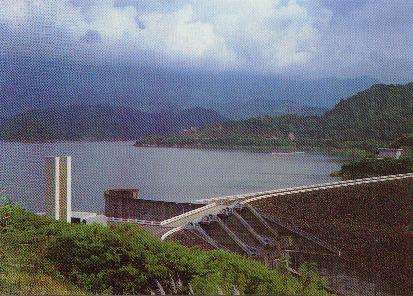
Tsengwen Reservoir at Yuching
The reservoir is located on the upper reaches of the Tsengwen River.
It provides multipurpose functions: irrigation, flood control,
hydroelectric generation, domestic water supply and recreation.
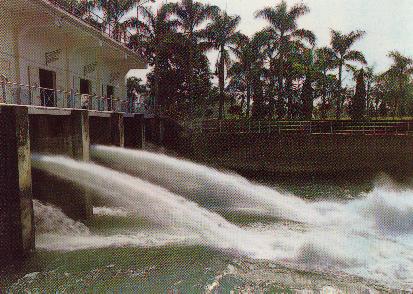
Chianan Irrigation System
The system is located on the Chianan plain. Its irrigated area is about
83,000 hectares.
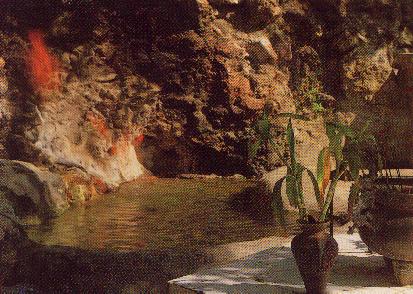
Shuihuo (Water and Fire) at Kuantzuling
Kuantzuling is southwest of Alishan. In addition to hot springs, it
has
eight scenic spots to visit. Among them, Shuihuo Cave is a place of
special interest.
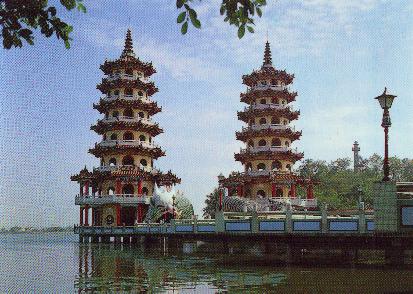
Lunghu (Dragon and Tiger) Pagodas at Tsoyin
The pagodas are situated at the Lotus Lake area, a sightseers
favourite corner of Kaohsiung. In the area are two pagodas, Dragon
and Tiger, connected by a bridge.
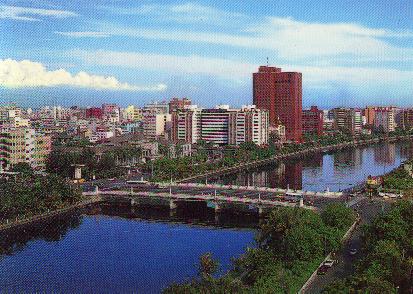
Jenai River in Kaohsiung
The river was formerly called Ai River (Love River). Coming down
from the uplands northeast of Kaohsiung, Jenai River flows through
the city to the sea. While the river is 16 km long, the main stream
is
9.2 km.
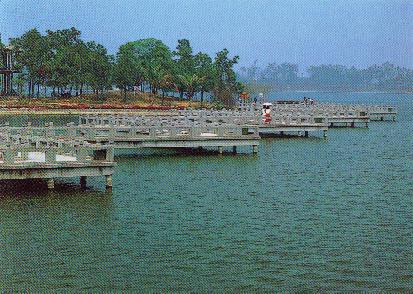
Cheng Ching (Crystal Clear) Lake at Fengshan
The Cheng Ching Lake resort area adjoins Kaohsiung city, only a 15-
minute drive from the downtown district. Among its many attractions
is a long, zig-zag bridge.
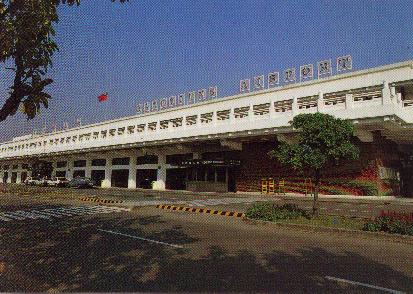
Kaohsiung International Airport
The airport was formerly called Hsiaokang Airport. In October 1972,
the airport began operating international air service.
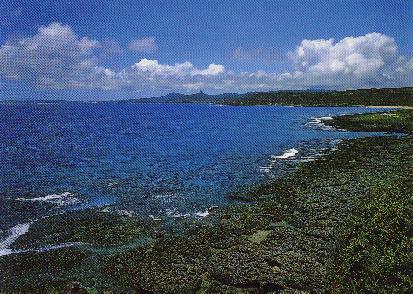
Kenting National Park
Kenting National Park, the first of its kind in Taiwan, is situated
on
the southernmost tip of Taiwan. Dramatic land formations, volatile
climate, and splendid natural scenery add to its variety of attractions.
While the land area is about 17,000 hectares, the sea area is 14,900
hectares.
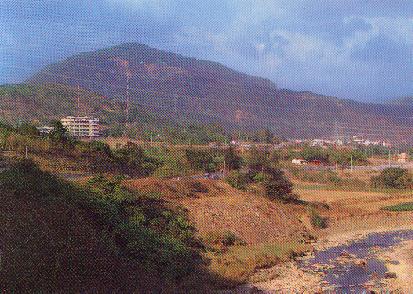
Szuchunghsi Springs
The springs are located on the island's southern tip, near Kenting
National Park. It is one of four largest hot springs in Taiwan. Waters
of the springs are good to drink and to bathe in, and can cure some
chronic skin diseases.
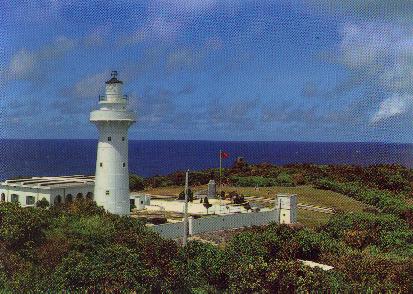
Oluanpi Lighthouse at Hengchun
The lighthouse is situated at the southernmost tip of Taiwan. Its
welcome beams are the strongest of all lighthouses in Taiwan.
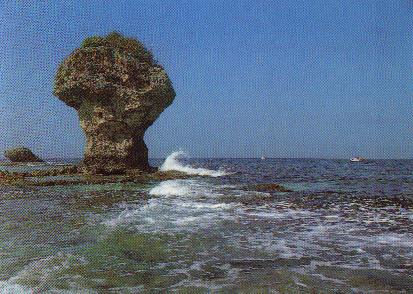
Liuchiu Islet
On this islet is a temple called Lishan. In front of the temple near
the
sea, there are two vase-shaped rocks on which ever-green trees grow.
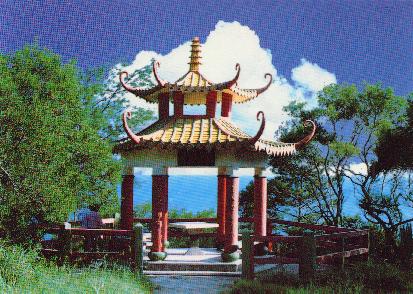
Chieh Shou Pavilion at Matsu
The Pavilion is at the foot of Mt. Meishan of Nankan, Matsu. It was
built in 1960 by the servicemen and people there to celebrate the
late President Chiang Kai-Shek's birthday.
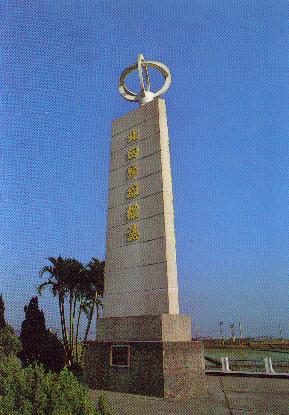
Marker of the Tropic of Cancer
The marker of the Tropic of Cancer is 120o24'45"
longitude east and 23o27'4" latitude north. It is
located at Shuishang village, about four km from
Chiayi City.
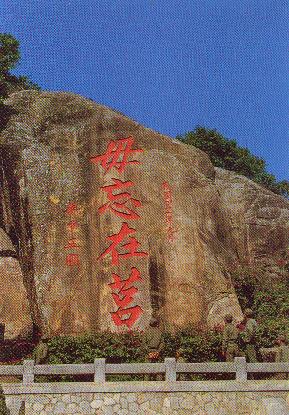
President Chiang's Inscription at Kinmen
The inscription is in inscribed on a gigantic stone
on top of Mt. Tai-wu, Kinmen. It means "Forget
not the city of Chu," that is not forget the eventual
recovery of mainland China.
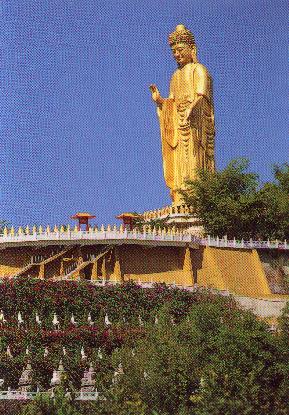
Fo Kuang Shan (Buddha Torch Mountain) at Chiuchutang
Fo Kuang Shan is located south of Kaohsiung,
about an hour's drive away. Crowning the summit
is a statue of Buddha, flanked by 480 other
images. There is also a college of Buddhism.