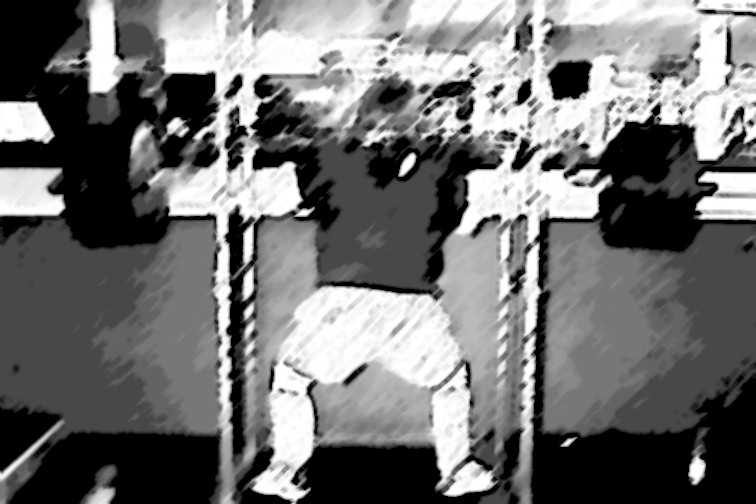
Squats
The single most important lift is the squat. People ask me; what is the best lift for my arms? I say the squat. What is the best lift for my back? The Squat. My chest? The Squat. As well as being a multiple muscle movement, the Squat involves the largest muscles in the body. Pushing all those muscle to the limit kicks off all sorts of body reactions. Hormones are released, endorphins flood the system. Big muscle, moving big weight - HOORAY.
They are several different squats. Deep, super deep, jump squats and total body squats. I use a mix of styles. All generally hit the same area; although deeper squats hit the glutes and jump squats hit the top of the quads a bit more. All Squats have one thing in common. You must have good form; from first rep until burn down. The most important part of the form is a straight back. At no time should you allow your back to bend and have the stress of the weight put too much pressure on your back. Keep your legs under you and you drive the weight up.
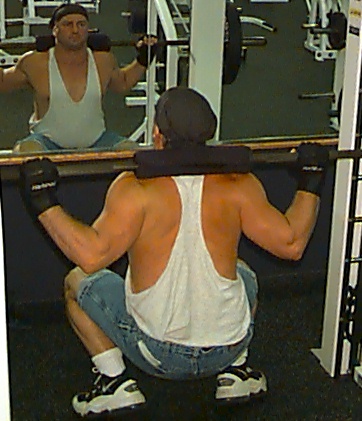 |
Squat down as deep as possible. Keep your head erect. A mirror is helpful here. Keep an eye on your self. Be sure you do not start looking at your own shoes. That will bow your back. I have also seen a guy look down and bring the weight on his neck enough to cut off blood flow and grow faint. If he had not been lifting is a squat cage I have no doubt he would be dead. | 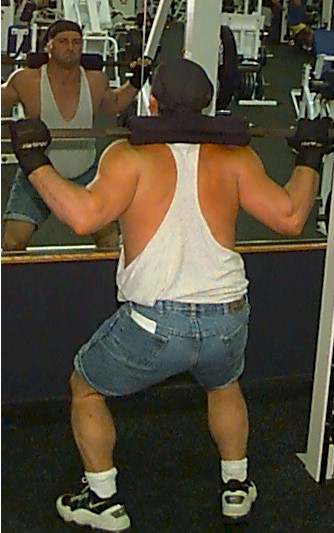 |
As you drive the weight up your feet should firmly planted. Heels driving into the ground. So guys will stand with a 2x4 or some other lift under their heels. But I feel this pushes some pressure on the knees so I avoid such aids. Keep your hands loose on the bar. Don't put a death grip on the steel as it will throw off your balance and detract focus from your legs which are responsible for the weight. Your hands just stabilize and guide. |
As you lift be sure to breath. Deep breath on the way down, long full exhale as you push up. Drive through the lift.
When doing heavy squats always lift inside a squat cage, on a Smith machine or with spotters. This is very important; since you will be doing this lift to total failure you will not have your own muscle to save you if you slip or drop the weight. Use every precaution.
How do you know when you have done enough? When you can not do any more you will know your done. What many lifter do is they get to their last set; struggle and put the weight back on the rack. The problem here is that if you can get the weight back onto the rack you must have something left. Your last rep. Should leave you at the bottom of the lift; unable to move the weight at all. You should never walk away from the squat rack; you should crawl.
Of course what if you don't have a cage, or a bar, or weights? - Then you get to do the best Squats of all. When Ken Shamrock first started he was given the 500 squat test where he had to do 500 squats - or deep knee bends. For those with concerns about back or knee injuries or who want to build muscle endurance as well as explosive power this is the exercise. Just start doing squats - do them til you drop, take a few minutes and do some more.
The Squat is primarily a leg lift; hitting all the major muscle groups of the legs. On the day when you work legs, squats should be your primary lift. Other important lifts to consider are leg curls. Calve raises, Hip abduction and induction. And the Leg press. The leg press is another multiple muscle lift that allows a lot of weight to be moved.
I would suggest wearing a weight belt and knee wraps; but only on your heavy set. The problem people run into with their knees is that your leg muscle adapt to heavier weights before your ligament and tendons adjust to the stress. Knee wraps on the heavy sets help support the joint a little better, while not wearing them on lighter sets and other lifts outside the squats helps the joint adapt to the stress. A belt can help support weak back muscles; but you should not wear one all the time as you need your low back to be stressed to force adaptation. Many weight lifter keep that belt on constantly when they lift. Not only does it interfere with their breathing; it also overly supports they back. Thus while the rest of them is ripped and strong their low back is weak. If your low back is weak your entire power base is undermined.