- House of the Deities
- I have put this page
together in the honor of the different deities that all religions worship.
You may find Angels, Gods, and Goddesses.
- Who am I you ask? I
am Lady SunFeather, lover, worshipper, and keeper of the mythology of all
deities.
- I will update
and add to this page weekly so check back often. If you have some info you
would like to see added then feel free to send it to me at
[email protected]
And I will add it as soon as I can.
- Now on to the Ladies
and Lords of our realm and beyond.
-
- AKERBELTZ
Themes:
Harvest, charity, health, thankfulness, beauty, peace
Symbols:
Rainbows, health and healing amulets
About Akerbeltz:
This Basque goddess attends the human body by protecting it from disease,
encouraging health, and offering healing when needed, especially when we
overdo summer activities. Being a goddess of earth and nature too, she
sometimes appears as a
rainbow, a bridge that takes us from being under the
weather to overcoming circumstances.
To do today:
The Tabuleiros has been celebrated for six hundred years in Portugal by
honoring the harvest, giving thanks to the goddess for her providence,
and making donations to charitable organizations. The
highlight of the day is a
parade in which people wear huge headdresses covered
with bread, flowers, and doves, symbols of Akerbeltz continued sustenance,
beauty and peace. These are retained by the wearer through the year to
keep Akerbeltz close by, warding off sickness. A simpler approach for us
might be to get a small rainbow refrigerator magnet or window piece that
reflects this goddess beauty throughout our home to keep everyone therein
well and content.
Also give a little something to someone in need today.
Doing good deeds for to others pleases Akerbeltz because it makes them
healthier in spirit. She will bless you for your efforts with improved
well-being, if only that of heart.
from 365 goddess by Patricia Telesco
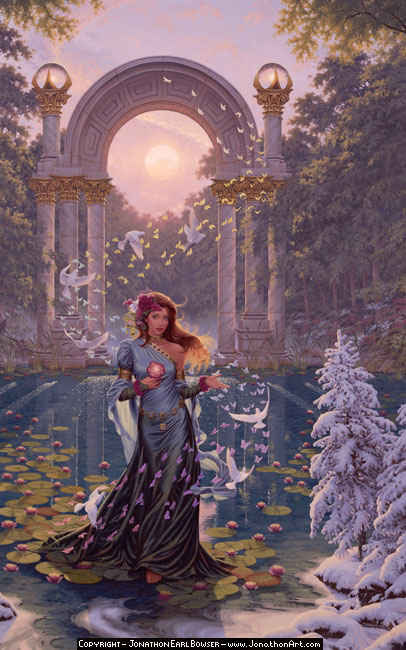
AMARI DE
Themes:
Arts, humor, relationships,
love, fertility, wealth,
beauty.
Symbol:
Light
About Amari de:
In Romania, Amari De is a
gypsy goddess who is the great mother of all things and the
personification of nature. According to lore, she bestows wealth, health,
beauty, love, fertility, and insight to those who seek
her. Descriptions say that
she was so holy that a divine light always shone from her face.
To do today:
A Transylvanian folk
festival, this fete was originally a marriage fair where young people came
looking for partners. Over time the custom faded, and now it is simply a
crafts, costume, and musical exhibition with
light hearted satire and
nightlong bonfires that glow with Amari De's light.
In keeping with this
tradition, if you're planning a wedding or engagement, today would be a
wonderful date to consider for either, as it draws Amari De's positive
energy to that relationship.
This is also a good time for
single folks to get out and mingle, carrying an Amari De love charm along
for a little extra help. Find
a little piece of luminescent cloth (like a fine silk that shines) and
wrap it around a
pack of matches. Bless this
token saying, Amari De bring love my way!
Ignite one of the matches
before going into a social situation so Amari de can light your way.
from 365 goddess by Patricia
Telesco
-
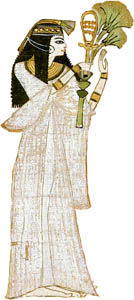
- APHRODITE
Themes: Love; Romance; Passion; Sexuality; Luck; Fertility;
Beauty; Pleasure
Symbols: Roses; Copper; Turquoise; Sandalwood
About Aphrodite: Since 1300 B.C.E., Aphrodite has been worshipped as
the ultimate goddess to inspire passion, spark romance, increase
physical pleasure, augment inner beauty, and improve sexual
self-assurance. Consequently, many artistic depictions show her naked,
with erotic overtones. Aphrodite's name means "water born" or
"foam
born", intimating a connection with the ocean's fertility.
To Do Today: Follow Greek custom and shower whatever goddess image you
have at home with rose petals, or dab it with rose-scented oil. If you
don't have a statue, poster, or painting, any visually beautiful object
can serve as a proxy. This gesture honors and entreats Aphrodite, who
responds by granting good luck, especially in matters of the heart.
Another tradition is bathing yourself in rose water to emphasize
Aphrodite's comeliness (both within and without). Rose water is
available at many Asian and international supermarkets. Or you can make
it easily by steeping fresh rose petals in warm (NOT hot) water and
straining. If you don't have time for a full bath, just dab a little of
the rose water over the region of your heart to emphasize this goddess's
love and attractiveness where it can do the most good - in your
emotional center.
-
AWEHAI
Themes: Harvest; Tradition; Growth; Longevity; Community
Symbols: Turtle; Seeds
About Awehai: In Iroquois tradition, this goddess reigns in the sky and
the heavens, watching diligently over family life and the community.
Mythology tells us that Awehai grabbed seeds and animals as she feel
from heaven, landing on the back of a great turtle. From here, Awehai
scattered the seeds and freed the animals, resulting in a growing,
fertile earth filled with beauty.
To Do Today: This festival takes place nearly in my backyard, having
been instituted by the Iroquois Indians in Tonawanda, New York. Here
people come to the longhouse to enjoy ritual dancing, chanting, and the
sounding of turtle-shell rattles, a symbol of Awehai. So, if you know
any type of traditional ritual
dances or chants, consider enacting them
outside as you scatter grass seed to the wind. This will manifest
Awehai's productivity in your life and in the earth. Another custom is
simpler and a lot of fun: consuming strawberries in as many forms as
possible. In Iroquois tradition, these pave the road to heaven, and
eating them ensures you a long life and Awehai's fertility. Share
strawberries with a loved one to inspire Awehai's community-oriented
energy in your home, and consume fresh strawberries to harvest her
powers for personal growth.
-
-
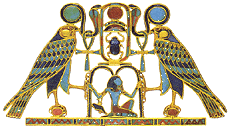
Balder
Norse (Scandinavian) god of joy, light, beauty, innocence, purity, and
reconciliation. His parents are Odin and Frigg.
Balder's mother, Frigg, took oaths from all plants, creatures, minerals,
and
elements that they would not harm him, all except the mistletoe plant for
she felt it was too young and too small to harm him. He was therefore
considered immune from harm and the other gods would throw things at him
in
sport. Loki deceived Hod (Balder's blind brother) into throwing a spear
made
from mistletoe at Baldur. It was this which killed him. This story can
easily be compared to the Greek legend of Achilles' heel.
-
-
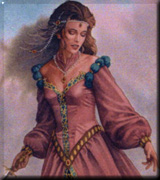
Brighid
Celtic (Irish). One of the triple goddesses of the Celtic pantheon. She is
the daughter of The Dagda, the deity of the Tuatha de Danaan, one of the
most ancient people of Northern Europe. Some say there are actually three
Brigit's; one is in charge of poetry and inspiration; one is in charge of
midwifery and healing, and the last is in charge of crafts and smiths.
She probably began as a sun goddess. According to legend, she was born at
sunrise and a tower of flame beamed from her head.
As goddess of fire and water, she is immortalized by many wells and
springs.
Most important of her monuments, though, was a shrine at Kildare where
there
was a perpetual flame burning for Brigit. It was tended by nineteen
virgins
called the Daughters of the Flame. They would not talk to men, nor could
men
come near the shrine.
When Christianity began its onset, so loved was Brigit that she was made a
saint. However, the upkeep on her flame was considered pagan by the church
and it was extinguished out of more than a thousand years of burning. St.
Brigit remains one of the most popular Irish saints today, along with
Saint
Patrick.
Identical to Juno, Queen of Heaven. Symbolizes human potential. AKA
Brigit,
Brigid, Brigindo, Bride.
Dark the bitter winter,
cutting its sharpness,
but Bride's mantle
brings spring to Ireland.
-Translated from Gaelic text.
-
-
-
- CERRIDWEN
- Cerridwen is a Welsh goddess famous
for her great cauldron of knowledge.
- She is also a moon and grain deity
with many mother and crone
- attributes.
-
- Her cauldron's name was Amen, in
which her potion of wisdom called greal
- was made, the origin of the Halloween
image of the cauldron-stirring
- witch and witch's brew.
To make her potion of knowledge, the brew had
- to simmer for a year and a day. This is a common passage of time in
- Celtic lore, and the source of the
traditional study period before
- formal initiation.
Her servant, Gwion, was sent to take care of it, but
- splashed some on his fingers. Without thinking, he licked his fingers
- and ingested three drops of the
potion. Instantly, he gained
all
- knowledge, including that of being
able to see into the future and past,
- and knew he had to flee.
-
- Cerridwen discovered this and pursued
him through many forms until, when
- Gwion became a speck of grain, she
became a chicken and consumed him.
- The grain took root and she gave
birth to him as the great bard
- Taliesin.
-
- Some Pagans believe this mystic chase
relates to various levels of
- Druidic initiation rites, and it
parallels the teaching of Merlin to the
- young King Arthur as he is allowed to
inhabit various animal bodies in
- order to gain knowledge.
-
- Cerridwen is at home during harvest
rites, in all spells for wisdom and
- knowledge, and at waning moon
festivals. She can also help
teach us
- about past lives, and aids in
divination. Her
correspondences include
- cauldrons, Vervain (herb), pigs,
hens, and the dark moon.
-
-
-
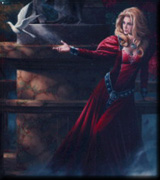
- Diancecht
Celtic (Irish) god of healing and medicine. Once saved Ireland, married to
Morrigan.
In the first battle of Moy Tura, Nuada lost his hand. Diancecht fashioned
a
new one of silver and joined it to Nuada's arm. One day, Diancecht's son
Miach took what remained of Nuada's original flesh hand, placed it next to
Nuada's arm, and spoke an incant. After three days and nights the hand was
rejoined to the arm seamlessly.
Nuada rejoiced, but Diancecht was furious that his son was a better healer
than he was. Diancecht struck Miach thrice on the head with his sword.
Miach
was able to heal each wound. Diancecht, more furious now, split Miach's
head
in two, killing him. From Miach's grave grew 365 herbs, each one with
curative powers for one of the 365 nerves in the body. Miach's sister,
Airmid, picked these herbs and arranged them according to their curative
powers.
Diancecht became so enraged that his son rivaled him even after death that
he scattered the herbs about, hopelessly confusing them. If Diancecht
hadn't
done this, man would be immortal.
- Themes:
Moon, communication, cycles, mediation
Symbols:
Lunar (silver/white items or any corresponding
plants/stones), coconut
About Hina:
This Tahitian goddess is the Lady in the moon who shines on us with
her changing faces. As the dark moon she presides over
death. As the waxing moon, she is the creatrix who made people from clay
and the moon, her home.
As the flummox, she embodies a mature woman's warrior spirit. As the
waning moon she is the ageing crone full of wisdom.
According to tradition, coconuts were created from the body of Hina's
lover, and eel god, after he was killed by superstitious locals. She
also governs matters of honest communication, and when
properly propitiated, Hina sometimes acts as and intermediary between
humans and
gods.
To do today:
On July 20 in 1969, American astronauts visited Hinha in person, landing
on
the moon's surface and exploring it. In spiritual terms this means
taking time to explore the magical nature of the noon today.
If the moon is dark, it represents the need to rest from your labors. If
it is waxing , start a new magic project and stick with it so the energy
grows like the moon.
If Hina's lunar sphere is full, turn a coin in your pocket three times,
saying "prosperity" each time so your pocket remains full.
If the moon is waning, start taking positive action to rid yourself of a
nagging problem. Eat some coconut to help this along by internalizing
Hina's
transformative powers.
from 365 goddess by Patricia telesco
-
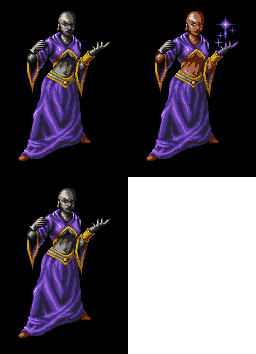
LAIMA
Themes:
Love, unity, blessing, luck, destiny, magic
Symbols: Wreaths, swans
About Laima:
The Lithuanian goddess of fate, luck, beauty, and
magic swoops into our
lives in the form of a swan, reminding us of the transformative power of
love. Traditionally, all Laima needs to change from
one form to
another is
a swan feather, alluding to her nature as a
shape-shifter who uses
magical
charms to manifest her will.
To do today:
Around this time of year, young people in Lithuania
gather in a temple
at
sunset, then go into the forest to harvest summer
flowers. From these
circlets and strings are made to crown and bind lovers
together in
Laimas
and natures beauty. Then the young people dance
together round a birch
tree
singing to the goddess and asking for her blessings.
This is a lovely
tradition that can be adapted by gathering summer
flowers and hold in
hands
around then at your family supper table. Allow Laima
to renew your
love and
unity in a moment of silence before dinner. If you
alive alone, invite
a
close friend to join you instead,
Also find a small rose-vine wreath at a craft shop.
Adhere the image
of a
swan to this somehow and hang it where you can easily
see the wreath
regularly. Each time you do, remind yourself that
love is the most
powerful
of all the goddess's magic, and that includes loving
yourself.
from 365 goddess by Patricia telesco
-
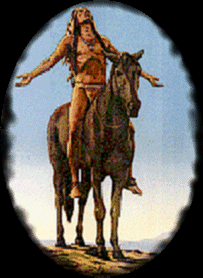
Selena
Selena, the Full Moon Goddess, is the messenger of good tidings. Wearing
a crescent crown, she rides the Night sky in Her silver chariot drawn by
horned cows. Legend tells us that Her Moonlight reflects all that is
true and eternal.
Selena's journey across the heavens determines the surging and
synchronous pulse of the blood cycle all women share. She encourages us
to become aware of the subtle, and sometimes not so subtle, ebb and
flowing currents occurring in our own bodies. She teaches us to ride the
magical rhythms and unbidden psychic gifts of our bodily functions with
instinctual awareness, trusting our tidal flows. Listen to your
delightful Lunacy. What are you yearning for most? Say a prayer facing
Her radiant Fullness and listen for Her guiding enchantments throughout
the week.
Full Moon Mania is a time for Manifesting dreams, visions and
fantasies. Whether we create "children" from our physical bodies
or from
our imaginative mind bodies, it is time to give birth to and nurture that
little something you've been thinking about all along. Now is the
perfect time for shouting out loud what you've only dared whisper.
Selena invites you to leap into the chariot with Her to broadcast your
innermost hankerings. Hold onto your horned crown! Ooh la Luna!

- Green Man
- Here is some info on the Green Man.
It comes from the book that
- accompanies The Sacred Circle tarot.
In this tarot, the Green Man takes
- the place of The Fool card;
at the end, I've included an excerpt from
- the book concerning this.
- ....................................................
-
- The Green Man is the vegetation
spirit of the wildwood. Perhaps
the
- most tenacious Pagan god of all, his
image survives in church carvings
- and pub signs all over Britain, in
which he is usually depicted in the
- form of a severed head with branches
and leaves emerging from the mouth.
- A strange figure --- half man, half
tree.
-
- At one time, most of Britain was
covered with forest, and there are many
- legends of forest spirits called wood
woses, Faery wild folk, green men,
- or wild men.
Those who saw them described them as green people,
- powerful spirits who could sometimes
be appealed to for help and had to
- be placated if they were angered ---
their elf bolts or flint arrows
- were deadly.
The wise ones knew that forest spirits used certain
- natural features of the landscape as
power places to manifest themselves
- --- such as particular wells,
streams, rocks, and trees --- and would
- leave gifts at these places for them.
These Green Spirits represent the
- raw, untamed, primal force of nature
--- a somewhat frightening concept
- to the modern mind, which prefers
nature safe, controlled, and
- "civilized".
-
- The green-clad wild men passed into
lore as fairies, often given the name
- of Hob, Robin, or Robin Goodfellow;
this is the real Pagan origin of
- Robin Hood, who has far more
mythological significance than the outlaw
- who robbed the rich to give to the
poor and fought the evil sheriff of
- Nottingham.
The clues to his identity lie in his name, his green
- clothing, his forest home, and his
deadly arrows; he was the
nature god
- of the ordinary people who could seek
him in the forest. A
depiction of
- Robin and his men at the
fourteenth-century chapter house at Southwell
- Minster in Nottinghamshire shows them
as twelve green men merging with
- various sacred plants such as
hawthorn and ivy. In the
Traditional
- Craft, the Lord is often addressed as
Robin and the Lady as Marion.
-
- The concept of the Green Man also
appears in the Arthurian story of Sir
- Gawain and the Green Knight:
-
- 'As Arthur and his court were
celebrating Yule, the great doors of the
- feasting hall flew open and in rode a
knight, entirely green from head
- to foot.
In a loud voice, he issued a challenge to the company --- was
- anyone brave enough to take the axe
he carried and chop off his head,
- which compliment he would return in a
year's time?
-
- Puzzled by his request, the knights
merely stared and the mysterious
- Green Knight chided them as cowards.
Stung by this, Sir Gawain leaped
- up, seized the axe, and cut off the
knight's head. To everyone's
- amazement, the Green Knight merely
picked up his head and bid Gawain to
- meet him in a year's time at the
Green Chapel.
-
- A year passed and Gawain rode off
with a heavy heart in search of the
- Green Chapel.
He traveled far and wide, but was unable to find anyone
- who had even heard of it.
Eventually, he came to a castle that was
- preparing to celebrate the Yuletide
season. The Lord of the
manor, a
- big, jovial, red-headed man, made him
welcome and admitted he knew where
- the chapel was --- a short ride from
his estate. However, as there
were
- still three days to go until the
appointment, he invited the knight to
- remain with his wife and himself
until the time should come. Gawain
- readily agreed.
-
- Each day Gawain hunted with the Red
Lord, but each night the Lord's wife
- came to his room to try to seduce
him. Being an honorable
knight,
- Gawain refused.
But on the last night, the lady came to him with a
- magic green garter, which she said
she would exchange for a kiss. She
- claimed the garter had the quality of
protecting its wearer from any
- kind of weapon.
Seeing a chance to save his life for no more than a
- kiss, the bargain was made, the lady
kissed, and the garter taken.
-
- The next day, Gawain set off to the
Green Chapel, a cave in the
- woodlands.
The Green Knight stepped out to meet him and asked if he was
- ready to lose his head.
Gawain meekly kneeled before him and bowed his
- head.
The Green Knight raised the axe high and brought it down, but
- stopped just short of the neck of
Gawain, who couldn't help flinching.
- Ashamed of his cowardice, he
apologized and bid the knight strike again.
- Once again the axe came down and
stopped short, but Gawain held himself
- steady.
Raising the axe once more the Knight struck, merely nicking
- Gawain's neck.
-
- Gawain looked up, and instead of the
Green Knight, there stood his host,
- the Red Lord.
The Lord praised his courage in meeting the challenge and
- said that the two blows that didn't
touch him were in reward for his
- constancy in refusing the seductions
of the Lady of the castle. The
- third blow, which had cut him, was
for giving in to temptation and
- kissing the lady.
Embracing each other, they returned to the castle to
- celebrate the twelve days of Yule,
and it was a strange tale that Gawain
- had to tell when he returned to
Arthur's court.'
-
- This is a very ancient story, with
the Green Knight representing the
- power of Nature and the Old Religion.
He is the Holly King, anciently
- believed to fight a twice-yearly
battle with the Oak King for the hand
- of the Goddess and the rulership of
six months of the year, the Holly
- King ruling the waning year and the
Oak King the waxing.
-
- The Vegetation Spirit makes an
appearance to this day in folklore
- festivals associated with May Day.
Here he is Jack-in-the-Green or the
- May King, played by a man wreathed in
oak and hawthorn with only his
- face showing.
In pantomime, he enacts a death scene before springing to
- life to dance with the May Queen,
symbolizing the death of winter and
- the yearly renewal of fertility with
the coming of the warm days of
- summer.
-
- Here's an explanation from the book
as to how the Green Man replaces the
- Fool in this tarot.
-
- The Major Arcana is sometimes
described as "the journey of the fool",
- charting the progress of the spirit
toward initiation. The Green
Man is
- the force that triggers the process,
arising from discontent and soul
- searching, the primal force that the
seeker encounters and recognizes at
- a subconscious level.
He guides the neophyte through the initiation of
- the seasons and the Wheel of the
Year, an unfolding spiral of knowledge
- and experience.