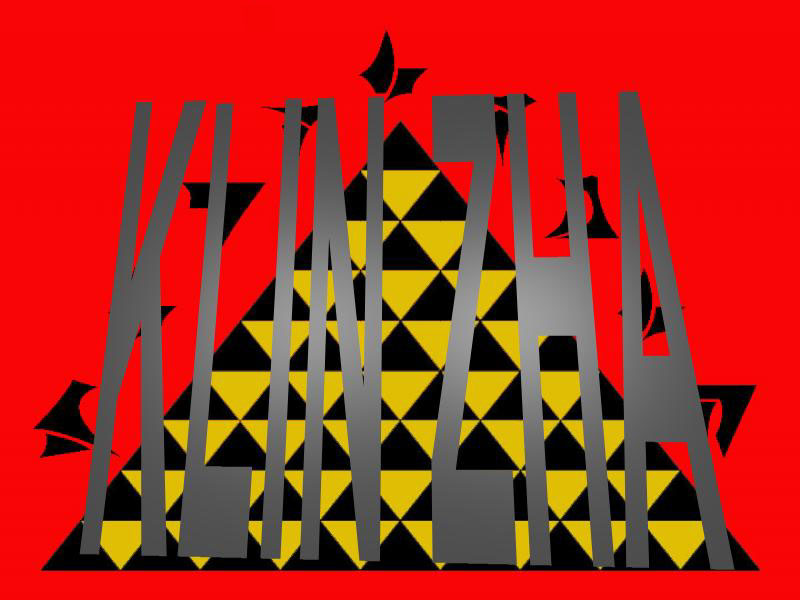
The concept of a simple, but challenging, game that will endure for generations is one that is present in both the Human and Klingon cultures. The game is first seen and talked about in John M. Ford's book, 'The Final Reflection.' The game itself originated long ago on Qo'noS, its true beginnings now lost among the many myths and legends of Klingon history.
The main difference between Klin Zha and the human game of Chess is that whereas Chess is more the 'civilized man's' game and reserved for those of higher learning, every Klingon worth his salt knows the ins and outs of Klin Zha. It is considered the ultimate game of mental skill and an excellent tactical exercise. Klin Zha is a game of war, and, for Klingons, the Perpetual Game - the Game of Life. Because Fate has decreed we must all play against ourselves and others to succeed, survive, and conquer, this is the perfect simulation of, and preparation for, the Perpetual Game we all play.
The object of the game is to control the goal, either by capturing the opponents goal, or by removing all of the opponent's pieces that can take your goal. The game ends when one captures the opponent's goal, removes the opponent's goal taking pieces, or when a player finds it impossible to make a legal move.
When victory is noted, the winner says, "Zha riest'n, teskas tal tai-kleon." Translation: "A pleasant game. My compliments to a worthy opponent."
There are nine pieces and one goal per side, the traditional colors for each side being green and gold. The pieces include: 1 Fencer,, 1 Lancer, 1 Swift, 2 Fliers, 3 Vanguards, 1 Blockader, and the Goal, the game's important 'non-piece.' A pair of spindles, two hexagonal rods, white with gold lettering, numbered on the sides 1 through 6, are also used, but a six-sided cube may be substituted for them when necessary.
The Spindles are thrown, determining first and second placement of pieces. The winner of the throw decides who will place first and second. To set up and move first reveals your thoughts and is a disadvantage.
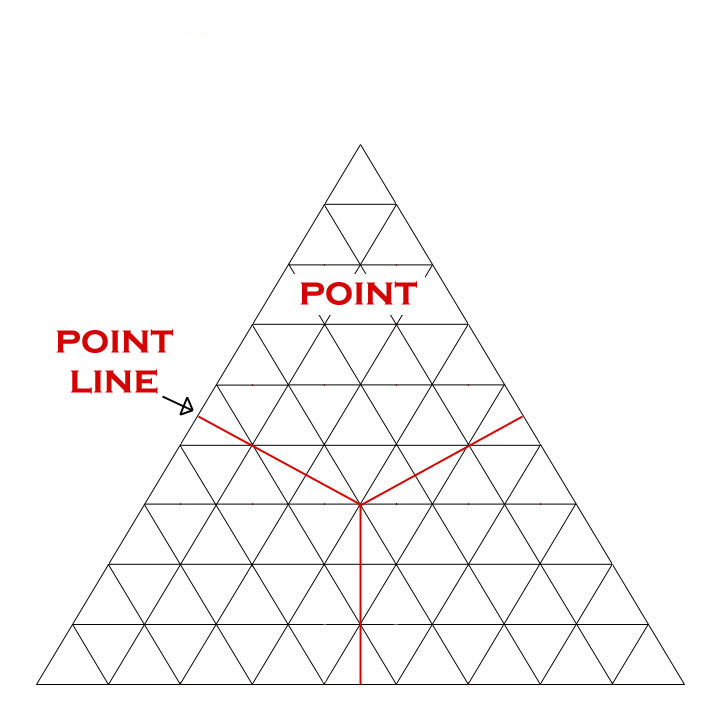
First, one player sets up his entire set of pieces within one of the 'points' of the board. Then the other player does the same within one of the two remaining points, leaving the third point open. The action of the game will expand out into the third point as play progresses.
After both sides have placed their pieces, the Goals are placed with their 'carrier' pieces.
The player who placed first, moves first.
A piece is captured when an opponent's piece moves into its square.
The game is ended when one: captures the opponent's goal with a Fencer, Lancer, or Vanguard; removes the opponent's Fencer, Lancer, and Vanguards; makes it impossible for the opponent to make a legal move.
 THE FENCER (1): The squad leader. Quick, agile, the strongest piece on the field. Moves 1, 2, or 3 unobstructed spaces in any direction and combination.
 THE LANCER (1): A mounted warrior with heavy shock attack, but not much maneuverability. Moves 1, 2, or 3 unobstructed spaces straight in any direction.
 THE SWIFT (1): Moves rapidly to the attack. The Commando. A hero-type for quick strike harraying actions. It, like the Fliers, cannot carry the Goal, but can attack the Goal-carrier. Cannot attack any adjacent square, but can move 2, 3, or 4 spaces in any direction and combination.
 THE FLIERS (2): Warriors equipped with anti-gravitational units for long range forays on the battlefield. The only unit that can jump over pieces. Cannot carry the goal, but may attack the Goal-carrier. Moves 3, 4, 5, or 6 spaces in any direction.
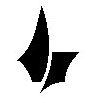 THE VANGUARDS (3): The forward patrol - advance field troops. Stodgy, foot-slogging front line infantry. Moves 1 space in any direction.
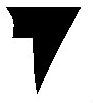 THE BLOCKADER (1): A warrior carrying a field portable force-field generation of limited range, to protect areas of the battlefield from missiles or ground assault troops. The Blockader moves 1 or 2 unobstructed spaces in any direction, and no Enemy piece can come within 1 space of the Blockader, nor may the Blockader move within 1 space of any enemy piece. The Blockader cannot carry the Goal, nor may another piece carrying the Goal move within its protective area. NOTE: Opposing Blockaders may not move within 2 spaces of each other.
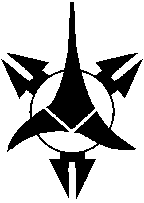 THE GOAL (1): The game's important "non-piece." It does not represent a soldier, but instead stands for the Klingon's personal goal - the spirit and ideal of military cunning and accomplishment - the Klin itself. The Goal is represented by a small disk and cannot move by itself. It can be carried about by a warrior or even abandoned on a space by a piece that moves away. When left unattended on a space, the Goal does not pose an obstruction to the movement of the warrior pieces.
The Goal cannot be carried by the Fliers, or Swift, nor may it be carried within the protected area of the Blockader.
Remember, this is a Klingon game. You must expose and flaunt your spirit of combat and valor, not hide it without honor. True Klingon courage and militarism must constantly present an open challenge to an opponent.
REGULAR BOARD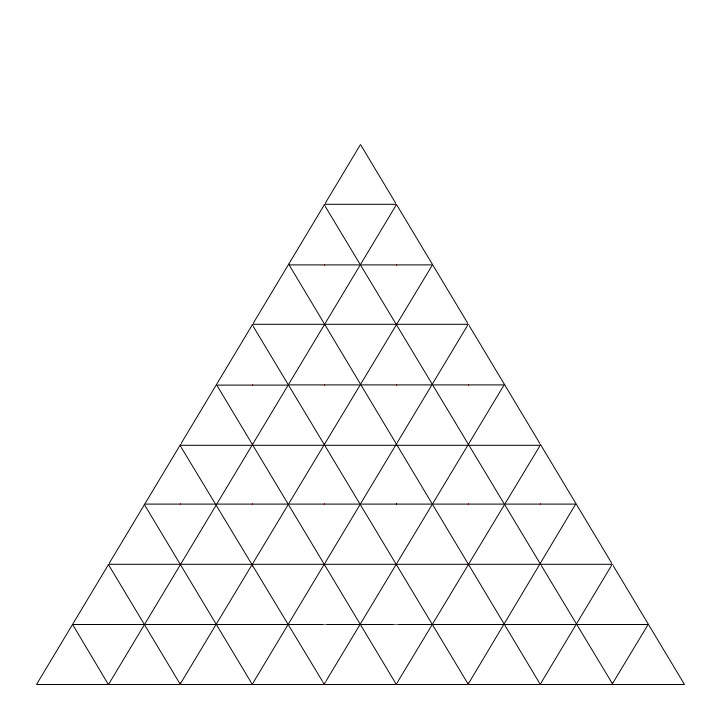
BOARD W/POINT LINES SHOWN