The Guitar
Body Material:
The common woods used in guitar bodies are mahogany, alder, ash, basswood, and poplar. Gibson solid bodies have traditionally favored mahogany construction while most Fender bodies are made of ash or alder. Gibsonuses mahogany to get a "fatter" sound while fender uses ash or alder.
Body Classification:
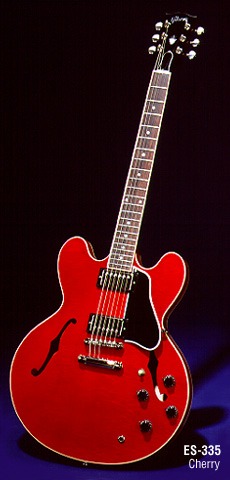
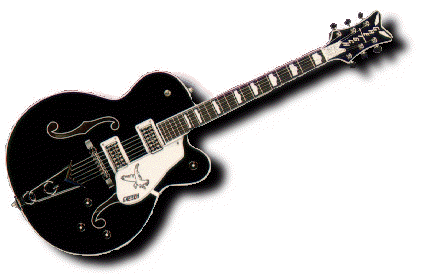
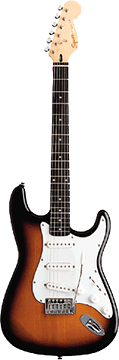
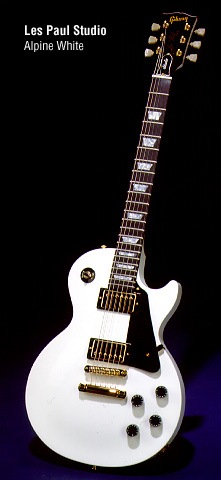
Guitars are split into three types: hollow, semi-hollow, and solid body. Hollow bodies like the Gretsch are acoustic. The Fender Stratocaster and Gibson Les Paul Studioare solid bodied electrics, and guitars like the Gibson ES-335 have semi-hollow bodies.
Necks:
Most electric guitar necks are made of mahogany or maple. They must be stiff because if they vibrate too much, sustain and tuning become unstable. Fender uses rock maple, which gives it a sharp sound. Laminate neck, those using many strips of wood, are used by Gibson to increase stability and consistancy. Composite necks, using alternate materials with or without wood, are used in bass guitars to eliminate the loss of sustain.
Frets:
Gibson usually has 22 frets, while Fender has 24. More frets mean more notes, and lets people show off by playing solos high up on the neck. Width of frets range from 2.1 mm to 3.3 mm.
 Fingerboards:
The fingerboard affects sound and playability. Fender uses a one piece maple neck which allows their guitars' to sound snappy. Ebony emphasizes treble while Rosewood is less dense and sounds smoother.The thickness of the fingerboard could also affect the sound. Gibson uses a 12" radius, and Fender uses a 7 1/4" radius.
Pickups: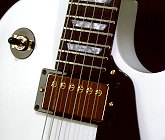
The
two types of pickups are single coil and humbuckers. Fenderuses
single coil which is a coil of copper wire wound around six
magnets. The vibration of the strings causes a current in the
wire. Gibsonuses humbuckers which have one
pickup with the coil wrapped in a clockwise direction and the
other in a counter clockwise direction. Most guitars have a
switch which can be used to combine pickups or use one of them at
a time.
Neck Joints:
There are bolt on necks and glued in necks. Gibson uses glued on necks which are higher quality. Fender uses the cheaper bolt on necks.
Headstock:
The
headstock can also affect the sound of a guitar. Fenderuses
a flat headstock which improves tuning. The 14 degree back angle
used by Gibsonincreases string tension.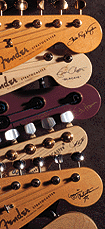
 Nuts:
Nuts:
The nut affects the tone of the open string. The traditional material is bone, but metal, grapite, and teflon are also used.
Machine Heads:
Locking machine heads are common in many guitars and minimizes string wrap around, stretching, and stabilizes tuning.
Bridge:
The Bridge anchors the string and allows people to adjust its height and intonation. Some Gibson guitars use the wrap around bridge, the Fender Telecaster uses through body, and the Gibson Les Paul Standard uses the tune-o-matic bridge.
Tremelo Bridges:
The
Bigsby limits vibrato, but the pitch can be altered with heavy
use. Stratocaster is better than bigsby and stabalizes pitch. The
Floyd Rose is based on the Strat but uses a clamp at the nut.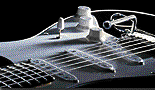
Circuitry:
Simple circuitry is prefered with passive volume and tone controls.
Scale Length:
Scale length is measured from the nut to the break point of the bridge. Gibson's is 24 3/4" and Fender's is 25 1/2". The scale length can affect the sound.
 Guitar Finish:
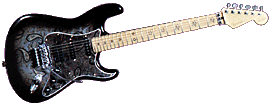
The finish on a guitar definitely affects its sound. Gibson and Fender have used thiner cellulose based finishes. Thicker finishes reduce a guitar's resonance. Polyester or Polyurethane based finishes are very glossy. Oiled finishes require maintenance.