|
|
1st Wave (Jamaica) |
Roughly
speaking, first-wave ska began in late 1960 in Jamaica and lasted until
the late 1960s in Jamaica and England (as blue beat), by which time its
popularity had declined in favor of ska's offspring rock-steady and reggae.
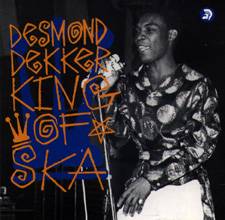
Seminal first-wave Jamaican ska artists include instrumentalists like the
Skatalites, Baba Brooks, Ernest Ranglin, Jackie Mittoo, and Bobby Ellis,and
vocalists like Laurel Aitken, Prince Buster, Derrick Morgan and Desmond
Dekker.
|
 |
Second-wave
ska flourished in the late-1970s and very early 1980s and saw the emergence
of popular groups such as TheSpecials, the (English) Beat, Madness and
the like in England. Second-wave ska is strongly associated with the 2
Tone scene[1979--1981] in the UK, as shown in the movie Dance Craze, although
American bands like Her Majesties Secret Servicebrought the 2-Tone sound
to the States in the early Eighties. Two-tone ska is faster and tighter
than first-wave ska andincorporates some elements of punk rock and British
reggae. Certainly, through the first and second waves, ska was a music
forthe man-in-street, the working people.
|
2nd
Wave (a.k.a.
2 Tone) (UK) |
 |
| 3rd
Wave (The World) |
Third-wave
ska is a late-1980s/early- 1990s revival of ska, involving such bands as
Less Than Jake, the Allstonians, Heft, Link 80, the Voodoo Glow Skulls
and The Toasters. Many popular rock/hardcore/funk bands, such as The Mighty
Mighty Bosstones, are strongly influenced by ska sounds. In the last few
years, some bands, like Hepcat, Steady Earnest, the Allstonians, Skavoovie
and the Epitones, have recovered a roots ska sound. Another exciting trend
in third-wave ska is swing-ska, or as it is called by some, swank. Swing-ska
marries more or lesstraditional ska and big band swing, as in the work
of The Cherry Poppin' Daddies, The W's, A Dream I Had, Seven Foot Politic
and others. |
 |
|
|
SKA-SKA-SKA-SKA |
|