Extensive Chicago V comments / PS (Lee and Walter's
abilities)
By Paul Hofmann
Saturday, 13-Jun-98
Here are some comments on what I believe to be one of the all-time classic recordings of our rock era: Chicago V.
[Before I begin, my thanks to Larry Launstein for prompting these comments some weeks back. Part of this was originally written in response to a very good review of Chicago V of Larry�s that he had posted; in fact, I encourage you all to read it . Larry, I planned to post that part of this message back then but this was when you were beginning to have problems with your board�s operations. So here�s a shorter version, rewritten and reconfigured so it reads a little better.]
(NOTE: Larry's Chicago V review: http://www.fortunecity.com/tinpan/kurtwood/270/chi5.html)
To my ears, Chicago V is the best Chicago album ever, on many levels: the expert performances; the thrilling vocals; the quality of the arrangements; the depth of the sentiments expressed; you name it. Even the packaging.
In fact, this is one instance where Columbia got this right. I remember distinctly back in the 70s, buying my 4th or 5th copy of V (ah, how vinyl used to wear out -- especially when as a young teen I used to play this thing constantly! At least I still have multiple copies of the posters...), and seeing Columbia�s black square promotional sticker on the shrink-wrap:�Chicago�s #1 album.� In fact, I think I must have this sticker somewhere in some old box.
The one bonafide hit single from Chicago V, �Saturday in the Park,� sounds like it was just made for early-70s AM radio. But the other songs are decidedly album tracks -- as opposed to singles -- all the way. Including �Dialogue� (counting �Dialogue Parts One and Two� as one song, which I think makes sense, just as �Brand New Love Affair Parts One and Two� from Chicago VIII also surely comprise one song -- this kind of �labeling by sections� always seemed more than a bit silly to me; too confusing), the remaining eight songs average more than five minutes each. In contrast, try Chicago X for a �singles album�: Eleven songs; average time right around 3:30.
The songs and the sequencing on Side I of Chicago (II) reminds me very much of Side One of Chicago V, in that although none of the songs were hits (unless you count the mangled version of �Dialogue� that was released as a single and unfortunately wasn�t able to crack the top twenty), the four tracks both stand alone as individual songs while also fitting wonderfully within the overall sequencing of their respective sides.
Politically speaking, Chicago V was probably the last gasp of their heart-on-your-sleeve, consistent liberal pandering -- all the talk about �revolution,� et al. In general, as people grow older, we become less liberal. Indeed, I think this transformation may have happened to Chicago. Or perhaps they later made a conscious decision, for commercial reasons, to �tone down the political rhetoric�. I don�t know the real deal here, but I�ve read and heard several interviews by band members over the years to suggest that these views were primarily Bobby�s., and that even he has disavowed some of this (or credited Guercio for the inclusion of these views ... whatever). Well, Bobby did write most of Chicago V -- and what a masterpiece it turned out to be.
OK -- TO THE SONGS:
�A Hit By Varese�: With its �organized yet free� soloing by the entire horn section, this is meant to be cacophonous (reminiscent of some of Varese�s works) ... and Danny propels the band so expertly underneath all this. A marvelous track; one of the all time classic Chicago tunes. I also like the fact that the meter can either be heard as a very fast waltz (3/4 or 3/8) or in a slow two (6/8) or four (12/8) -- it�s the listener�s call. Was this another influence by Edgar Varese? Probably not...
�All Is Well�: This is another tune whose meter can be heard in different ways (either as a slow waltz or in 6/4) -- except for those sections of the song (including the line �There was a time...�) where it goes clearly into four (that great horn section in the middle, as well). Throughout this tune (and this album as a whole), the way the horn arrangement is integrated into the rhythm section arrangement is truly a work of art. Wish I had more time to analyze this here -- it actually had a big influence on my own musical development.
�Now That You�ve Gone�: Jimmy�s sole contribution to the album, but what a classic ... again, another waltz. What other rock band would dare to open an album with three consecutive tunes �in 3�? This may be the one and only time this has happened in rock, would be my guess. Terry sounds so gritty and soulful on this. And Bobby and Peter blend in so well throughout their vocal parts as well. Another incredible performance.
�Dialogue (Parts I & II)�: Musically, �Dialogue� is a masterpiece, but just as much for the singing and playing as the writing. The vocals throughout are FABULOUS. Also, Peter�s little bass solo at the end of Part One is really a good one. And the mixed-meter stuff throughout Part Two (three bars of 4/4 followed by one of 7/4) don�t throw the band off at all; this is one well-rehearsed tune, and Danny in particular is at his most creative and fiery best. And that ending...dynamite.
�While The City Sleeps�: This great, hard-edged song is yet another tune with a good portion in 7/4. It�s quite impressive how throughout Chicago V the band made all these unusual meters sound so natural (so �normal�) that most casual listeners miss the subtlety -- which is how it should be.
�Saturday In The Park�: Again, this was the one bonafide hit single from Chicago V; it sounds like it was just made for early-70s AM radio. A terrific, catchy tune with hooks galore, and expert playing -- especially going into the shuffle during the bridge. What a classic...
�State Of The Union�: Peter Cetera sounds fabulous on this! This is gutsy; gritty, real rock �n roll. What a voice...and not just for ballads (though he�s certainly the king of that...). I also love the instrumental accompaniment to the trumpet solo -- how �alive�; how �organic�. And Terry�s soloing over the ending vamp is something ELSE. I think his funky wah-wah stuff was never captured as well on record, except perhaps on the Live in Japan album (and again on �Ain�t It Blue?� from Chicago VIII).
�Goodbye�: This musically creative tune also features some great lyrics throughout. The soaring vocals on that ending section (Peter tops it off SO beautifully) still give me chills. This is yet another musical masterpiece (geez, how many can be fit onto one single album? Amazing...) -- and another excursion into 7/4 for much of this. Rock meets jazz, for sure. Love it. Danny once listed this as one of his favorite Chicago songs (the others being �Beginnings� and �Poem for the People�). Bobby Lamm -- what a writer.
�Alma Mater�: Although I like the song (and LOVE Terry�s voice here), personally I don�t think this tune is as up to snuff (musically) as the rest of the project -- but it doesn�t need to be, you know? It certainly is a very nice, reflective way to end one of the most stunning albums in the history of pop and rock music.
So then, along with CTA, Chicago (II) and Chicago VII, Chicago V is IT. Almost thirty years later I�m still awed by the tremendously sophisticated writing (the mixed-meter stuff), the fabulous arranging (how the horn parts integrate with the rhythm section parts) and the inspiring playing (especially from Danny and Terry).
A final comment: IS IT NOT LUDICROUS THAT THE BAND THAT PRODUCED ROCK MUSIC OF THE SOPHISTICATION AND POWER OF CHICAGO V ISN�T DEEMED �FIT� TO BE INCLUDED IN ROCK AND ROLL�S HALL OF FAME?
Sorry to scream, but...
Best to all
 PS There�s been some heated debate recently on several Chicago
boards about Lee�s and Walt�s playing abilities; I�d like to lower the decibel
level a bit and offer here my two cents on the subject -- especially since
both fine musicians were given ample room to improvise on Chicago V. To those
Chicago fanatics who thing these musicians can do no wrong, please hear me
out! I�m choosing my words as carefully as I can here. Thanks; I�m certainly
as big a Chicago fanatic as anyone. Here goes (I�ll keep my remarks in the
context of Chicago V).
PS There�s been some heated debate recently on several Chicago
boards about Lee�s and Walt�s playing abilities; I�d like to lower the decibel
level a bit and offer here my two cents on the subject -- especially since
both fine musicians were given ample room to improvise on Chicago V. To those
Chicago fanatics who thing these musicians can do no wrong, please hear me
out! I�m choosing my words as carefully as I can here. Thanks; I�m certainly
as big a Chicago fanatic as anyone. Here goes (I�ll keep my remarks in the
context of Chicago V).
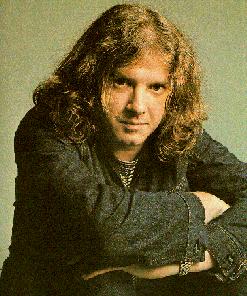
With all due respect to Lee (pictured at left), his two improvised solos on Side Two of Chicago V (�State of the Union� and �Goodbye�), while not marring these great songs, are arguably the weakest parts of these particular recorded versions. The band remained terrifically tight underneath, but the sloppy -- even �clammy� -- work from Lee surely doesn�t help things here.
Having said this, it�s surely not a put-down to say that Lee�s great strengths have always lay in other areas (section work; writing and arranging; even singing). And he HAS created some wonderful improvisations as well over the years; surely better than these two from Chicago V (�Little One� from Chicago XI, for instance)! I bet he�d agree with me on this.
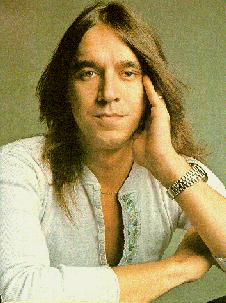
Even Walter�s (pictured at right) tenor solo at the end of �Now That You�ve
Gone�, while certainly fiery, is nothing particularly special. Indeed, he�s
probably always been -- and probably still is --the weakest improviser in
the band.
 Again, having said this, this is not a personal criticism of
the man! Like Lee, there�s no doubt that his greatest musical strengths lie
elsewhere.
Again, having said this, this is not a personal criticism of
the man! Like Lee, there�s no doubt that his greatest musical strengths lie
elsewhere.
In a nutshell, I�m saying: The great cohesiveness of all the songs on Chicago V occurs in spite of (and is not helped by) the ad-libbed solos by the horns. Yet even this is not a put-down. Jimmy Pankow is a master improviser, to be sure -- yet for different reasons I also happen to love both Walter�s and Lee�s soloing. Confused? Well, I find their solos refreshingly �honest� ... an important part of the nature of improvisation is allowing for spontaneity, even mistakes (�looseness�), whatever you want to call it. The great Miles Davis comes to mind here, and that gentleman was arguably one of the great musicians of the century.
Hope I made myself clear here!
Please click on your browser's back button to return to the previous page.