The first electronic computer
The term computer today
refers to a digital computer one that has become common in offices and
homes as a desktop, laptop, or notebook. It has an internal microprocessor
that accomplishes an amazing number of tasks, considering the size and
capabilities of the earliest machines.
The first fully automatic
large-scale calculator was built by Howard Aiken of Harvard with engineers
from IBM. It was called the Harvard Mark I and was completed in 1944. Data
were entered on punched cards, and output was on punched cards or processed
on an electric typewriter. It was a large machine 50 feet (15 meters) long
and eight feet (2.4 meters) high.
The first generation of
what can be called a real computer, not just a calculator, was the Colossus,
put in operation in 1943 in London, England. It was used to decipher German
codes in World War II. The Colossus, however, was built only for this task.
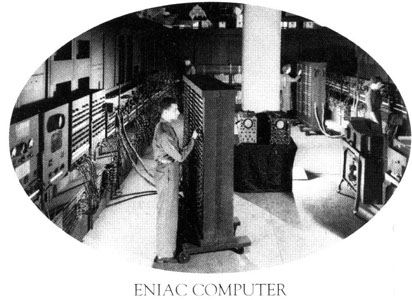
The distinction of the first general-purpose computer goes to a machine
known as ENIAC Electronic Numerical Integrator and Calculator designed
and built in Pennsylvania in 1946. These machines were enormous by today's
standards, but they were less powerful than today's computers. They used
hundreds of vacuum tubes. The invention in 1948 of the more efficient and
much smaller transistor, which does the same work as the vacuum tube, helped
make today's personal computers possible.
Only 20 years
later, Nomi was making extra cash working with those punch cards. She would
bring home boxes of those cards and sometimes hired her kids & their friends. They were always thrilled to make
extra cash. Nomi is some entrepreneur!!!
Next...