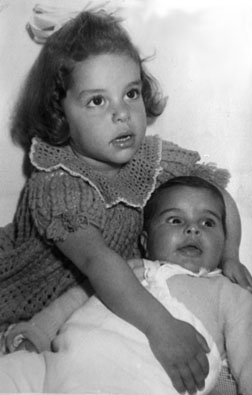
1956
Nomi’s second daughter Mirav, is one year old.
Nomi is busy placing black curtains over her windows, and goes through her second war in Israel…
the Suez crisis…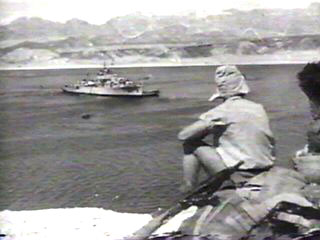
The main purpose of the British presence in Egypt for so many years was to guard the Suez Canal, a vital link on the water transportation route to India and the Far East. The loss of India in 1947 had somewhat diminished the value of the canal to Britain, but it was still considered one of the world's major commercial waterways. On July 26, 1956, the president of Egypt, Gamal Abdel Nasser, nationalized the canal; before then, it had been owned by a corporation dominated by Great Britain and France. Nasser's action was a response to British and American reluctance to provide financing for his major project, the Aswan High Dam, on the Nile River. Nasser seized the Suez Canal Company, intending to use the canal tolls to pay for constructing his dam. Fearing he might close the canal to international traffic, France and Great Britain made secret military plans to regain control of the canal, and if possible get rid of Nasser. Israel quickly allied itself with this plan and sent 10 brigades into Egypt on Oct. 29, 1956. Egyptian forces were defeated. Britain and France sent a peacekeeping force. Their plans then fell apart. Public opposition within France and Britain, combined with threats from the Soviet Union, stopped the intervention. British and French troops withdrew, as did the Israelis. Nasser became a hero to Arab peoples throughout the Middle East for standing up to the West, and Britain's prime minister, Anthony Eden, resigned.
Regardless, technology was moving ahead… the First transatlantic phone cable is layed
Lee De Forest invented the three-element vacuum tube, or triode, in 1915. This electron tube made long distance telephone calls possible, because it could serve to amplify sound intermittently over distances. The system of relays, or repeaters, also opened the way for undersea telephone cables. In 1950 a cable was laid between Miami, Fla., and Havana, Cuba. The success of this cable prompted the laying of two transatlantic cables between Scotland and Newfoundland in 1956. The cables had a series of 51 repeaters on each line. International telephone connections have more recently been much improved by the use of communications satellites, such as the relay station Telstar of 1962. Not to mention that today Nomi is making video calls with her daughter in the US.
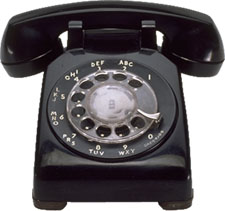
Nomi's first phone looked like this
Click here