
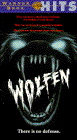
Wolfen
Warner Brothers Pictures
CAST: Albert Finney, Diane Venora, Edward James Olmos, Gregory Hines, Tom Noonan and Dick O'Neill
DIRECTOR: Michael Wadleigh
RATING: R
RUNNING TIME: 115 minutes
1981
 |
 |
 |
One of the most infamous and baffling disappearances in American history occurred in the spring of 1590. The tranquil setting was Roanoke Island, located several miles off the coast of North Carolina. Three years previous 112 British colonists had established a small village on the island, which eventually became an important supply post for the British fleet. But all that was to end in 1590 when explorer John White landed on Roanoke Island and made a frightening discovery: the entire settlement had disappeared without a trace. The colonists had left behind food, clothes, guns … but no clue as to where they had gone. Four separate expeditions were mounted to find the missing colonists, but the search ultimately proved futile. The fate of the 112 colonists remains a mystery to this day.
One of the more outlandish theories presented during this time centered around the Hatteras Indian tribe. It was widely believed that the Hatteras had mastered the art of shape-shifting, which is the ability to transfer the soul of a human into the body of an animal. Various terrified explorers had documented in their journals that the most fearsome Hatteras warrior could shape-shift at will into an eagle, a bear… or a wolf.
The modernistic urban jungle of New York is the setting for Wolfen, a supreme (and criminally underrated) horror film that examines America not as the great melting pot of yore, but as an ugly receptacle of human debris. Simply the best werewolf story ever filmed, Wolfen is a terrifying parable on corporate greed and societal excess.
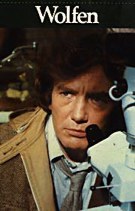
Albert Finney portrays Dewey Wilson, a quirky and embattled NYPD homicide detective investigating a series of brutal murders that resemble animal attacks. He's partnered with eccentric forensic expert Whittington (an effective Gregory Hines), and together they begin to realize that the murderer they seek may not be human at all.
In an intelligent masterstroke, Wolfen tantalizes the audience with the concept that Indian shape-shifters are the film's murderous culprits. The idea is that these spiritual killers live in the slums of every big city, preying on the weak of society. These shape-shifters refuse to conform their culture, choosing instead to strike back at the very progress that destroyed so many of their people. Unlike other werewolf movies, the antagonists of Wolfen aren't designed to be mere bookstops of morality. These wolves aren't confined to full moons or stopped by silver bullets, but are horrific vigilantes protecting an ancient way of life. In this regard, the Wolfen pack is perhaps the screen's most chilling anti-heroes.
Although 1987's Predator popularized the heat-recognition vision of the antagonist, it was actually the multiple POV attacks in Wolfen that first brought this concept to fruition. A dazzling cinematic effect created by the film's DOP Gerry Fisher, the subjective wolf attack sequences are some of the most frightening imagery contained in any horror film. Special recognition must also be given to steadicam operator Garret Brown, whose stunning contribution to the clever Wolfen POV's cannot be overstated.
At turns gothic, poignant, horrifying and funny, director Michael Wadleigh's Wolfen is truly one of the greatest achievements in the history of horror cinema. Like the Roanoke colonists themselves, this overlooked masterpiece begs to be discovered.
--Yim Kip
WRITE YOUR OWN OPINION
Copyright © With All The Trimmings Newsstand Distribution
|