
TuMa's Herbal Health - Medicinal Herbs in the Native American and Folk Medicine Traditions. | home


Echinacea
Echinacea
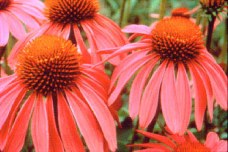
Echinacea purpurea
E. pallida
E. angustifolia
FAMILY: Compositae
SYNONYMS: Purple Coneflower, Rudbeckia, Black Sampson, Sampson Root.
NOTES OF INTEREST: Here we have a species of medicinal herb that has different names, different uses and should be explained. This is where it's important to know what it is you are buying and or taking. Each of the Echinacea species has different properties and different uses. The Native Americans use Echinacea angustifolia root and herb both internally and externally. We'll start with the most easily available Echinacea purpurea.
THERAPUTIC USES:
Echinacea purpurea herb - The herb indicates the leaf and stems and sometimes the flowers of a plant and many times the root and the leaves have different medicinal properties, so be sure to ask or look for what you purchase. Echinacea purpurea herb is indicated for the following:
 Common ColdCough/bronchitisFevers and coldsInfections of the urinary tractInflammation of the mouth and pharynxTendency to infectionWounds and burns
Echinacea purpurea herb is usually taken internally to help the body fight off bacterial and viral infections.
Echinacea purpurea root - Is often used for acute and chronic respiratory infections and I often recommend it for building up the immune systems for those who have a chronic condition. Bronchitis is a good example.
Echinacea pallida root - Is indicated for supportive therapy for influenza-like symptoms.
Echinacea angustifolia herb and root - Externally used for wounds, burns and even snakebite. Applied as a poultice to infections and leg ulcers. Internally, used for pain associated with swollen lymph nodes, stomach aches, coughs, and the list can go on forever. A very distinctive Native American medicinal herb.
MEDICINAL PARTS: Root, rhizome and leaves.
SOLVENTS: Boiling water and alcohol.
ACTIONS: Antiviral, antibacterial, stimulating and warming alterative; diaphoretic; reduces hypersensitivity reaction (i.e., allergies).
PARMACOLOGY: Actually, each species has it's own list of volatile oils, flavonoids, alkamides, and polyynes, etc. Generally Echinacea activity is directed towards the body's immune system. This medicinal herb exerts an influence on inflammation and wound healing. The main active principle is, however, immunostimulating, antibacterial, and antiviral actions.
CONTRAINDICATIONS: Echinacea is not the miracle plant we would like it to be. Echinacea should not be taken if you have multiple sclerosis, AIDS, tuberculosis, leukemia, and other autoimmune disorders like rheumatoid arthritis and lupus. I also would not recommend it for those with Diabetes.
You should never take Echinacea for longer than 8 weeks and it should never be combined with the prescription drug Neoral (given with organ transplants).
DOSAGE: Typically, an alcohol tincture of Echinacea is most effective. The daily dosage should not exceed 900 milligrams, or the root tincture should not exceed 30 to 60 drops daily.
Echinacea purpurea leaf dosage is about 1-1/4 teaspoon to 1-3/4 teaspoon of expressed juice.
No overdose information is currently available.