Geothermal Energy has been around for as long as the world existed. "Geo" means
earth, and "thermal" means heat. So, geothermal means earth-heat.
 Have you ever cut a boiled egg in half without peeling the shell? The egg is what the
earth looks like inside. The yellow yolk of the egg is like the core of the earth. The
white part is the mantle of the earth. And the thin shell of the egg is like the earth's
crust.
Have you ever cut a boiled egg in half without peeling the shell? The egg is what the
earth looks like inside. The yellow yolk of the egg is like the core of the earth. The
white part is the mantle of the earth. And the thin shell of the egg is like the earth's
crust.
Below the crust of the earth, the top layer of the mantle is hot, liquid rock called
magma. The crust of the earth floats on this liquid magma mantle. When magma
breaks through the surface of the earth in a volcano, it is called lava.
 For every 100 meters you go below ground, the temperature of the rock increases
about 3 degrees Celsius. Or for every 328 feet below ground, the temperature
increases 5.4 degrees Fahrenheit.
For every 100 meters you go below ground, the temperature of the rock increases
about 3 degrees Celsius. Or for every 328 feet below ground, the temperature
increases 5.4 degrees Fahrenheit.
Deep under the surface, water sometimes makes its way close to the hot rock and
turns into hot water or into steam. The hot water can reach temperatures of more
than 300 degrees Fahrenheit or 148 degrees Celsius. This is hotter than boiling
water.
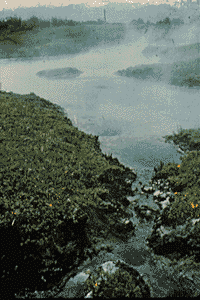
When this hot water comes up through a crack in the earth, we call it a geyser or hot
spring like the one to the right. Sometimes people use the hot water in swimming
pools or in health spas.
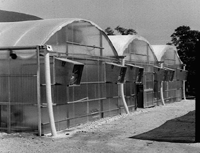 The hot water from below the ground can warm buildings, like the green house on
the right, for growing plants.
The hot water from below the ground can warm buildings, like the green house on
the right, for growing plants.
In some places, like in San Bernardino in Southern California, hot water from below
ground is used to heat buildings during the winter. The hot water runs through
miles of insulated pipes to dozens of public buildings. The City Hall, animal shelters,
retirement homes, state agencies, a hotel and convention center are some of the buildings
which are heated this way.
In Iceland, many of the buildings and even swimming pools in the capital of
Reykjavik and elsewhere are heated with geothermal hot water. The country has at
least 25 active volcanoes, and many hot springs and geysers.
 In California, there are 14 areas where we use geothermal energy to make electricity.
The red areas on the map show where there are known geothermal areas. Some are
not used yet because the resource is too small, too isolated or the water temperatures
are not hot enough to make electricity.
In California, there are 14 areas where we use geothermal energy to make electricity.
The red areas on the map show where there are known geothermal areas. Some are
not used yet because the resource is too small, too isolated or the water temperatures
are not hot enough to make electricity.
The main spots are:
- The Geysers area north of San Francisco
- In the northwest corner of the state near Lassen Volcanic National Park
- At the Mammoth Lakes area -- the site of a huge ancient volcano
- In the Coso Hot Springs area in Inyo County
- In the Imperial Valley in Southern California.
 Some of the areas have so much steam and hot water that it can be used to generate
electricity. Holes are drilled into the ground and pipes lowered into the hot water,
like a drinking straw in a soda. The hot steam or water comes up through these
pipes from below ground.
Some of the areas have so much steam and hot water that it can be used to generate
electricity. Holes are drilled into the ground and pipes lowered into the hot water,
like a drinking straw in a soda. The hot steam or water comes up through these
pipes from below ground.
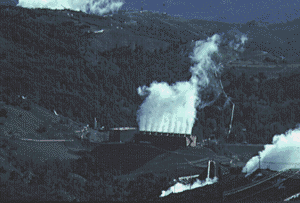
You can see the pipes running to the geothermal power plants in the picture at the
right. These power plants are located in the Geysers Geothermal area of
California.
Like in a regular power plant, where a fuel is burned to heat water into steam, the
steam in a geothermal power plant goes into a special turbine. The turbine blades
spin and the shaft from the turbine is connected to a generator to make electricity.
The steam then gets cooled off in a cooling tower.
The white "smoke" rising from the plants in the picture is not smoke. It is steam
given off in the cooling process. The cooled water can then be pumped back below
ground to be reheated by the earth.
California's geothermal power plants produce about one-half of the world's
geothermally generated electricity. The geothermal power plants produce enough
electricity for about two million homes.
The electricity then goes to huge transmission wires that link the power plants to
our homes, school and businesses. If you want to learn about transmission lines, go
to Chapter 11.
Here's What We Learned
- This inside of the earth has a core, a hot liquid mantle and a crust...just like the
inside of a hard boiled egg.
- The upper portion of the mantle is hot, liquid rock called magma.
- In some areas of the earth water seeps below ground and is heated by the hot
rock.
- This hot water or steam can be used to turn a turbine that drives the generator
to make electricity in a geothermal power plant.
- Geothermal means "earth-heat."
- California generates one-half of the world's geothermal electricity.