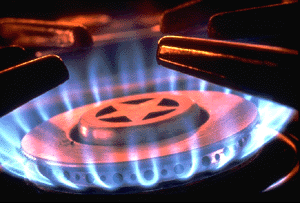
In some homes, natural gas is used for cooking, heating water and heating the house in a furnace.
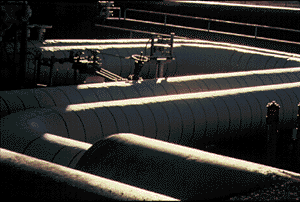 We learned in chapter 5 that
natural gas is found under ground. Wells are drilled to tap into natural gas
reservoirs. But the gas has to get to us somehow. There is a huge network of
pipelines that delivers the natural gas from the gas fields to us. Some of these pipes
are two feet wide.
We learned in chapter 5 that
natural gas is found under ground. Wells are drilled to tap into natural gas
reservoirs. But the gas has to get to us somehow. There is a huge network of
pipelines that delivers the natural gas from the gas fields to us. Some of these pipes
are two feet wide. Natural gas is sent in larger pipelines to power plants to make electricity or to factories because they use lots of gas. Bakeries use natural gas to heat ovens to bake bread, pies, pastries and cookies. Other businesses use natural gas for heating their buildings or heating water.
From larger pipelines, the gas goes through smaller and smaller pipes to your neighborhood.
In businesses and in your home, the natural gas must first pass through a meter. A gas company worker would read the meter and the company will charge you for the amount of natural gas you used.
In some homes, natural gas is used for cooking, heating water and heating the
house in a furnace.
In rural areas, where there are no natural gas pipelines, propane (another form of gas that's often made when oil is refined) or bottled gas is used instead of natural gas.
Cars and trucks can also use natural gas as a transportation fuel, but they must carry special tanks to hold the fuel.
When natural gas is burned to make heat or burned in a car's engine, it burns very cleanly. The blue flame when you burn natural gas means that less unburned materials are being given off. Unburned materials, like carbon dioxide and carbon monoxide and other particles, cause air pollution.
That's why many people feel natural gas would be a good fuel for cars because it burns cleanly. Natural gas-powered cars are up to 90 percent cleaner than a gasoline-powered car.
*****
*****