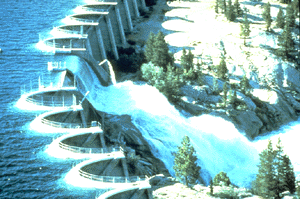
Hydro means water. Hydro-electric means making electricity from water power.
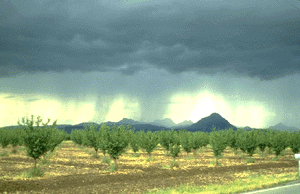 When it rains in hills and mountains, the water becomes streams and rivers that
run down to the ocean. The moving or falling water can be used to do work.
Energy, you'll remember is the ability to do work. So moving water, which has
kinetic energy, can be used as a source of energy.
When it rains in hills and mountains, the water becomes streams and rivers that
run down to the ocean. The moving or falling water can be used to do work.
Energy, you'll remember is the ability to do work. So moving water, which has
kinetic energy, can be used as a source of energy.For hundreds of years, moving water was used to turn wooden wheels that were attached to grinding wheels to grind flour or corn. Today, moving water can also be used to make electricity.
Hydro means water. Hydro-electric means making electricity from water power.
Hydroelectric power uses the kinetic energy of moving water to make electricity. Dams can be built to stop the flow of a river. Water behind a dam often forms a reservoir. Dams are also built across larger rivers but no reservoir is made. The river is simply sent through a hydroelectric power plant.
The water flows through a pipe called a penstock and pushes against blades in a turbine, causing them to turn. The turbine is similar to the kind used in a power plant that we learned about in Chapter 3. But instead of using steam to turn the turbine, water is used.
The turbine spins a generator to produce electricity. The electricity can then go to your home, to your school, to factories and businesses.
Hydro power today can be found in the mountainous areas of California where there are reservoirs and along major rivers.
*****