
Independence
Hello friends. This is a small step taken by me which will guide you through a small but exiting journey about the Indian Independence Movement.
Given below are some personalities who paved our way to Independence
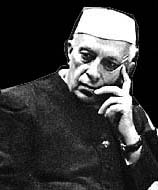 Jawaharlal Nehru, the first Prime Minister of Independent
India and Architect of India's forgein policy, grew from a anglirized child into
a dedicated nationalist par excellence. He was born on 14th November 1889, now
celebrated as Children's Day.
Jawaharlal Nehru, the first Prime Minister of Independent
India and Architect of India's forgein policy, grew from a anglirized child into
a dedicated nationalist par excellence. He was born on 14th November 1889, now
celebrated as Children's Day.
On the aspicious occasion of India's Independence from the British rule on 15th August 1947, Pandit Nehru gave this speech during the Flag hosting at Lal Quilla (Red Fort), Delhi:
" Long years ago we made a tryst with destiny, and now the time comes when we shall redeem our pledge, not wholly or in full
measure, but very substantially. At the stroke of midnight hour, when the world sleeps, India will
awake to life and freedom. A moment comes which comes but rarely in history, when we step out from the old to the new, then an age ends, and when the soul of a nation, long suppressed, finds
utterance. It is fitting that at this solemn moment we take the pledge of dedication to India and her people and to the still larger cause of
humanity.
At the dawn of history India started on her unending quest, and trackless centuries are filled with her striving and the grandeur of her successes and her failures. Through good and ill fortune alike she has never lost sight of that quest or forgotten the ideals which gave her strength. We end today a period of ill fortune and India discovers herself again.
The achievement we celebrate today is but a step, an opening of opportunity, to the greater triumphs and achievements that await us. Are we brave enough and wise enough to grasp this opportunity and accept the challenge of the future?
Freedom and power bring responsibility. That responsibility rests upon this assembly, a sovereign body representing the sovereign people of India. Before the birth of freedom we have endured all the pains of labour and our hearts are heavy with the memory of this sorrow. Some of those pains continue even now.
Nevertheless, the past is over and it is the future that beckons to us now.
That future is not one of ease or resting but of incessant striving so that we might fulfill the pledges we have so often taken and the one we shall take today. The service of India means the service of the millions who suffer. It means the ending of poverty and ignorance and disease and inequality of opportunity. The ambition
of the greatest man of our generation has been to wipe every tear from every eye. That may be beyond us but so long as there are tears and suffering, so long our work will not be
over.
And so we have to labour and to work, and work hard, to give reality to our dreams. Those dreams are for India, but they are also for the world, for all the nations and peoples are too closely knit together today for any one of them to imagines that it can live apart. Peace has been said to be indivisible, so is freedom, so is prosperity now, and so also is disaster in this one world that can no longer be split into isolated fragments.
To the people of India whose representatives we are, we make appeal to join us with faith and confidence in this great adventure. This is no time for petty and destructive criticism, no time for ill-will or blaming others. We have to build the noble mansion of free India where all her children may dwell."
Pandit Jawarharlal Nehru, also known as Chacha Nehru by the childrens, died on 27th May 1964.
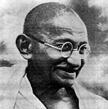
Mohandas Karamchand Gandhi, popularly called Mahatma (Great Soul) Gandhi, was the main architect of the Indian nation and is rightly called the Father of Nation. He was born on 2nd October 1869 at Porbander, Gujrat, India.
He was a lawyer by profession. He fought with the British in South Africa where he experimented with his principle of Ahimsa (Non Violence). He was the first man who taught the Indian people the real meaning of Ahimsa, which later on became the main weapon of the Indian people fighting for the country's freedom.
On 30th January 1948 Gandhiji was shot dead by a Hindu fanatic named Nathuram Godse, while he was holding a Prayer Meeting at Birla House, Delhi.
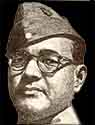 The gripping account of India's renowned revolutionary leader, Subhash Chandra Bose, brings alive the tempestuous times of India's struggle for
Independence. He was a great patriot and a determined freedom fighter. He
was an admirer of Mahatma Gandhi but strongly believed that an armed rebellion was necessary to wrest independence from the
British. He was born in Bengal on the 23rd January 1897.
The gripping account of India's renowned revolutionary leader, Subhash Chandra Bose, brings alive the tempestuous times of India's struggle for
Independence. He was a great patriot and a determined freedom fighter. He
was an admirer of Mahatma Gandhi but strongly believed that an armed rebellion was necessary to wrest independence from the
British. He was born in Bengal on the 23rd January 1897.
He fought the British army during the II nd World War with the help of the Nazi leader Adollf Hitler. He gathered "The Azad Hind Fauz" ("The Independent Indian Army") from the Indian soldiers who were the prisoners of war. The first gathering of the army was at Rangoon, Burma where he gave the famous slogan "Tum Mujhe Khoon Do, Mein Tumhe Azzadi Doonga" ("You give me your blood, and I will give you your FREEDOM"). He is beleived dead in the year 1945 in an air crash.
Here are given some original photographs during the period of Indian
Independence. To see those just press the ENTER button
below.
 |
 |
 |
Want to know more? Click here.