    |
|
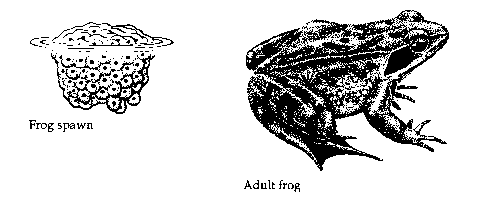
Common frog Rana temporaria Description The most
familiar of our amphibians, the common frog can attain an adult
length of up to around 10cm. Frogs are very variable in their
colouration and markings; most are greenish, brown, or grey,
but yellow, orange and red frogs do occur. Unlike toads, there
is a dark "mask" immediately behind the eye, and the skin
is smooth and moist. Frogs are widespread across the UK and
Ireland, are the commonest of our amphibians, having undergone
increases in some areas, probably due to colonisation of new
garden ponds. However they are probably declining in the wider
countryside where pond loss continues.
[NOT
TO SCALE] Life
history Frogs
lay clumps of eggs in ponds in February-March. Tadpoles hatch
out and feed on algae, progressing to a diet of plant and dead
animal matter. The rear limbs develop first, and metamorphosis
finishes when the tadpole possesses all four limbs, leaves the
water and the tail is resorbed. The process of development from
egg to froglet takes around 12 weeks but depends very much on
temperature. Males can reach maturity after two years, females
after three, and often return to the same pond to breed. Adult
frogs are carnivorous, feeding on almost any small invertebrate.
Hibernation occurs from around November to February.
Critical Factors - frogs require:
(Provided by and reproduced with permission of: English Nature) |

|
|