Common
toad Bufo bufo
Description
The common toad can attain an adult length of up to around 13cm
(females) or 8cm (males). Toads are more consistent than frogs
in their colouration; they are generally brown but can be orange
or almost black. The skin is warty, and there are two obvious
glands on the top of the body just behind the eyes. The legs
are relatively shorter than in frogs, and they walk or hop rather
than leap. Toads are widespread across the UK but absent from
Ireland), but have showed declines in many areas due to the
loss of breeding ponds and terrestrial habitats.
Legal protection: sale and trade prohibited.
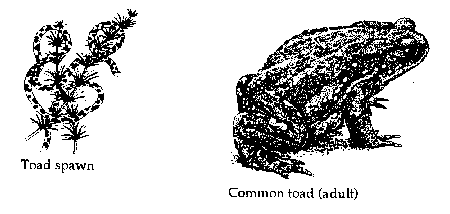
[NOT
TO SCALE]
Life
history
Toads lay strings of eggs in ponds in March-April. Toads favour
larger, more permanent ponds or lakes than other amphibians
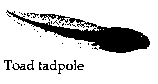
and their tadpoles are distasteful to fish. Tadpoles hatch out
and feed on algae, progressing to a diet of plant and dead animal
matter. The rear limbs develop first, and metamorphosis finishes
when the tadpole possesses all four limbs, leaves the water
and the tail is resorbed. The process of development from egg
to toadlet takes around 12 weeks but depends very much on temperature.
Males generally reach maturity after three years, females after
four, and usually return to the same pond to breed. Adult toads
are carnivorous, feeding on almost any small invertebrate. Hibernation
occurs from around late October to early March.
Critical factors - toads require:
- Ponds
for breeding - generally large, deep, permanent ponds.
- Aquatic
vegetation and invertebrates to feed tadpoles
- Easy
exit from the pond for emerging toadlets and adults (i.e.
no steep sides)
- Damp,
vegetated areas around the margins for cover for emerging
toadlets
- Areas
of rough grass for foraging and cover
- Daytime
refuges such as logs, rocks and shrubby vegetation
- A
lack of barriers to movement (e.g. roads), as they may move
2km from hibernation sites to breeding pond
- Areas
of woodland or similar habitat for hibernation.
.
(Provided
by and reproduced with permission of: English Nature)
|
|