    |
|
Great
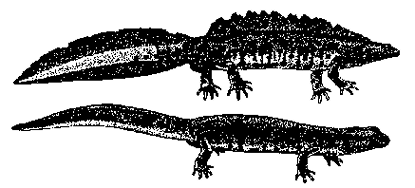
crested (or warty) newt Triturus
cristatus Adults can reach a maximum length of around 16cm, and have a dark brown or black, warty appearance. Males have a high, jagged crest down the back, and another on the tail; this, along with their colouration, Tadpole becomes more pronounced in the breeding season. Females lack the crest. Both sexes have a bright orange belly with black blotches. The great crested newt has a widespread distribution in lowland England, but is rarer in the southwest. It is less common in Wales (apart from the Flintshire area) and Scotland. The great crested newt has declined more than any of the other widespread amphibians in recent decades.
Legal protection: 'Fully protected' - killing, injuring and handling, disturbing, damage to habitat and sale prohibited. A European protected species. [NOT
TO SCALE]
Life
history Great
crested newts breed in the spring, from around March through
to June. Males court the females with an elaborate dance. The
females lay eggs individually on the leaves of aquatic plants.
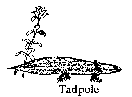
The eggs hatch out after around three weeks and the newt larvae
take a further two months to transform into juveniles, at which
point they leave the water. Unlike frogs and toads, newt larvae
are entirely carnivorous (as are the adults), the front legs
appear before the rear ones, and they have large, feathery gills.
Adult newts only return to the water to breed. Hibernation occurs
from around mid~October to mid-February; however, sometimes
newts (including larvae) will remain in the water overwinter.
(Provided by and reproduced with permission of: English Nature) |
|
|