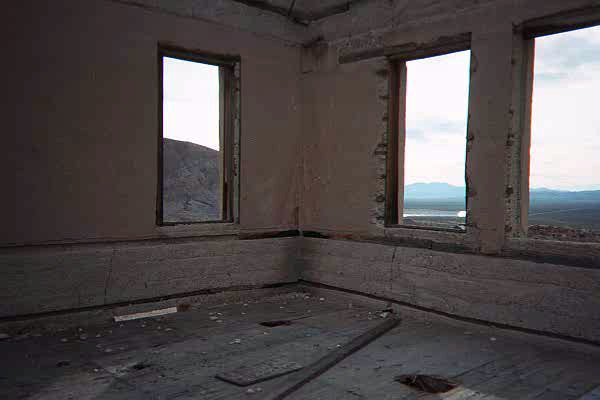
 High School
RHYOLITE is a ghost town located on the east side of Death Valley National Park. The road to the site is paved and interpretive signs show visitors what the town used to look like.
She was called the Queen City of Death Valley and at one time boasted a population of 10,000 people.
Her birth was brought about by Shorty Harris and E.L. Cross, who were prospecting in the area in 1904. They found quartz all over a hill, and as Shorty describes it "...the quartz was just full of free gold...it was the original bullfrog rock. This banner is a crackerjack" declared Shorty! "The district is going to be the banner camp of Nevada. I say so once and I'll say it again." At that time there was only one other person in the whole area: Old Man Beatty who lived in a ranch with his family five miles away. Soon the rush was on and several camps were set up including Bullfrog, the Amargosa and a settlement between them called Jumpertown.
The ghost town of Rhyolite A townsite was laid out near by and given the name Rhyolite from the silica-rich volcanic rock in the area.
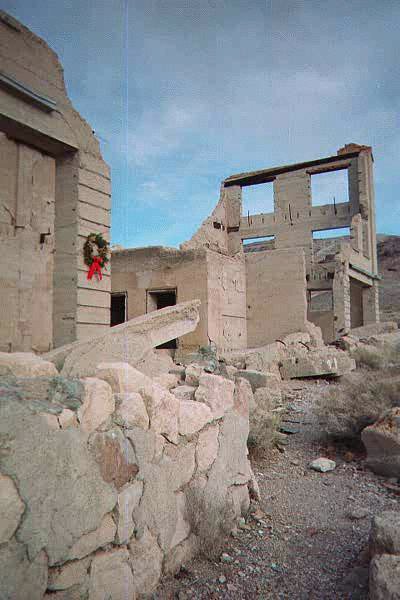
The financial panic of 1907 took its toll on Rhyolite and was seen as the beginning of the end for the town. In the next few years mines started closing and banks failed. Newspapers went out of business, and by 1910 the production at the mill had slowed to $246,661 and there were only 611 residents in the town. On March 14, 1911 the directors voted to close down the Montgomery Shoshone mine and mill. In 1916 the light and power were finally turned off in the town.
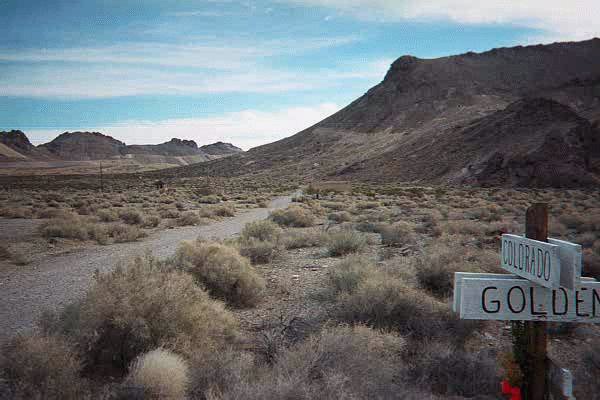 Colrado and Golden in beutiful downtown Rhyolite. Bullfrog hills.
Mining talus from Acid leaching works are visible in the background. Some people never give up, do they?
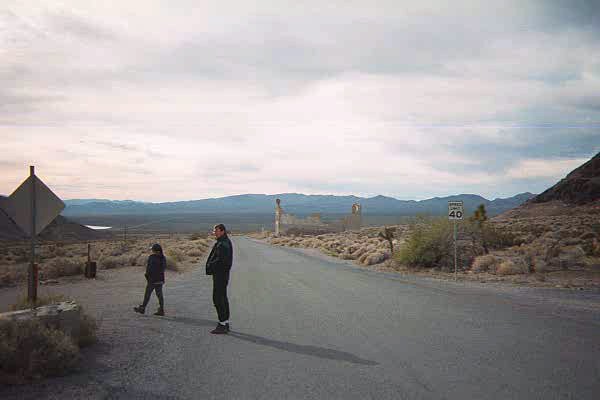
END
Return to First Page