|
||||||||||
 |
 |
|||||||||
 |
 |
 |
 |
 |
 |
 |
 |
|||
|
||||||||||
|
|
|||||||||
|
|
|
|
|
|
|
|
|||

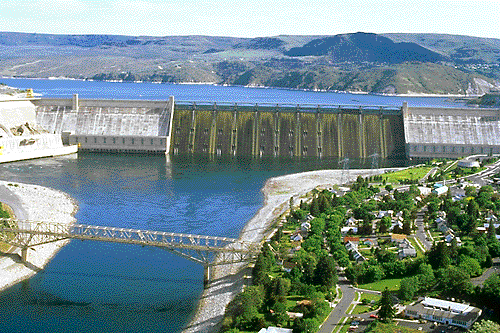
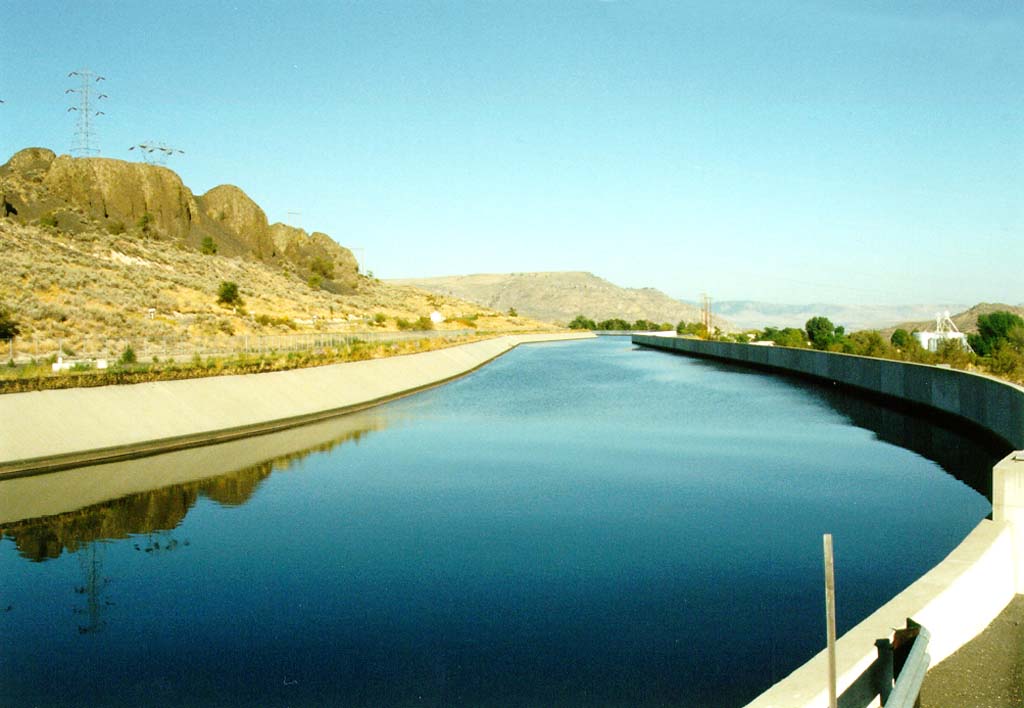
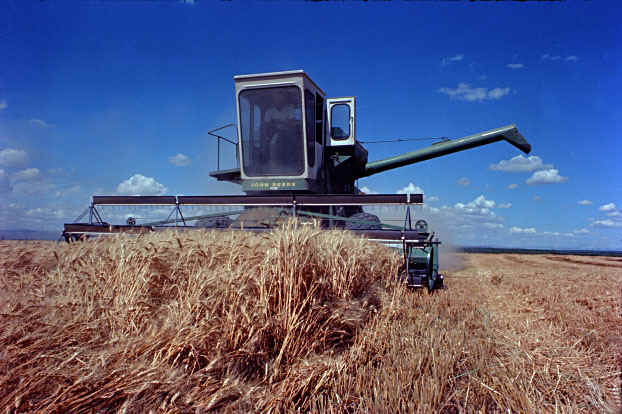
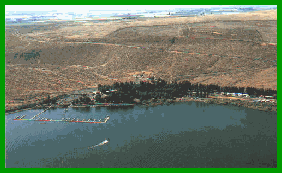
Most people think of Washington as the "Evergreen State" But Central Washington contains a large desert called the Columbia Basin. Before irrigation water was brought there from Grand Coulee Dam nothing much grew but sagebrush and other desert plants that most people associate with the Southwestern part of the United States. It is still pretty barren around there with few trees except close to a the few natural lakes in the area. Where water has been brought in there is a lot of wheat and potatoes grown and more recent years wine grapes have been added. The Columbia Basin is now the home of the second largest wine industry in the United States.
The croplands of today's Columbia Basin are serviced by a complex system of reservoirs and waterways that take advantage of the unusual geologic features of the area.
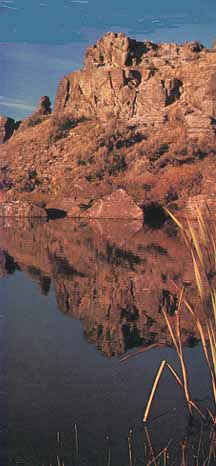
The geology of the Columbia Basin accounts for its compatibility with both agriculture and outdoor recreation. The granite found in the Basin is approximately 60 million years old, but became exposed after 30 million years of adjustments in the earth's crust and erosion. Basalt (a dense crystalline lave) may also be seen. Floods, fire, ice and volcanoes all played into the historical shaping of the area. This shaping continues even today. Mt. St. Helens provided the latest major change when it erupted on May 18, 1980. The eruption and prevailing winds out of the west deposited as much as 6 inches of volcanic ash over most of the basin.
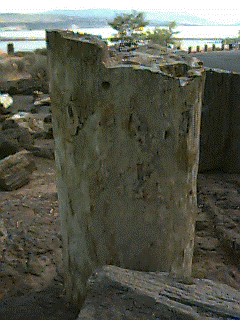
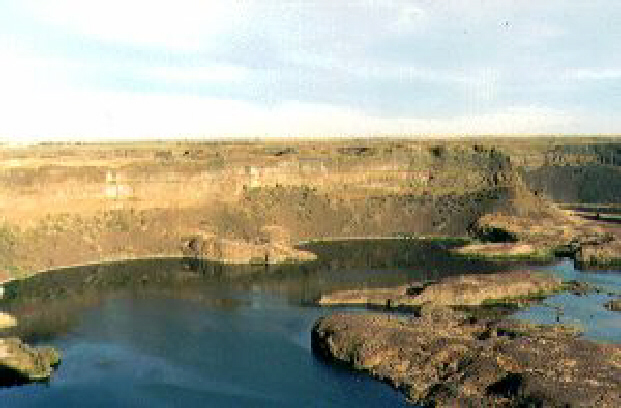
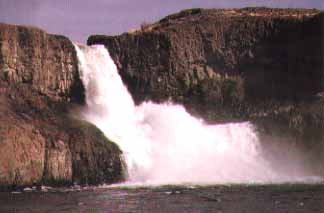
Over the years the Columbia like all rivers has taken many different paths. At one time many thousands of years ago it had a more north and south route through the state of Washington then it does today. During that time the river flowed over the largest waterfall in what is now the USA. Today the river has been diverted by natural causes leaving behind Dry Falls as seen below.
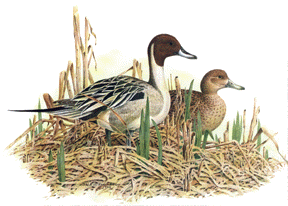
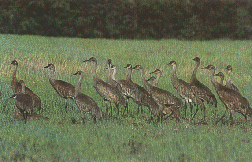
With the abundance of water and habitat, the Moses Lake area is home to a diverse and abundant bird population. Water fowl populations reach peaks of over 100,000 birds during the fall season. The nearby Columbia National Wildlife refuge, located just south of Moses Lake, has had over 200 different species observed. The lakes, marshes and sloughs are home to various water fowl. Hawks, owls, ravens and cliff swallows can be observed in the cliff areas. Local wetlands provide shelter to herons, American avocent and other shore birds. Pheasants, quail
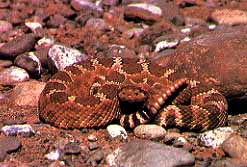
The Columbia Basin is teaming with desert wildlife, wild rabbits, kangaroo rats, prairie dogs, lizards, tortoises and of course a snake or two here and there. Well what did you expect, this is a desert after all.
With over 247,000 surfaces acres of water on or near Moses Lake, fishing is a favorite activity. Please refer to the state fishing regulation book for specific requirements. Many local lakes (including Moses Lake) are open for year-round fishing. Local waters offer walleye, trout, bass, perch, crappie, catfish, and more.
You can enjoy the fun and excitement of "conquering" a sand dune and more! The Grant County ORV area (one of the largest in the region) is located just four miles outside Moses Lake city limits in the sand dunes. It is rustic (no developed facilities) camping is permitted. The sand dunes area is located on the southern tip of Moses Lake with rolling sand dunes and great fishing and water-skiing opportunities available!
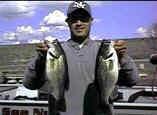
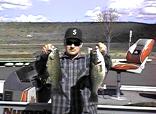
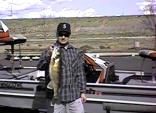
ZSPOOK claims that on 3/25/98 and in only three hours time by the clock that he and a friend caught 3 large mouth bass, 3 small mouth bass and a 71/2 pound walleye on the Cascade Valley branch of Moses Lake. See his fish below.
Why not visit ZSPOOK's homepage and learn more about him, see his great animations and learn more about the Columbia Basin?
ZSPOOK'S Homepage

Other Great Columbia Basin Links
Columbia Basin
Ginkgo
Petrified Forest State Park
Grand Coulee Dam Photo
Gallery
Grand Coulee Dam - Columbia
Basin Project
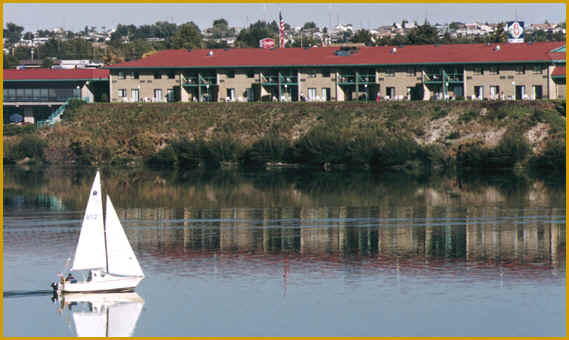
Mar Don Resort
Moses Lake - Washington's Great Escape
 |
 |
 |
 |
 |
|

United States Navy- Digital Images

This page was lasted updated 05/29/99