|
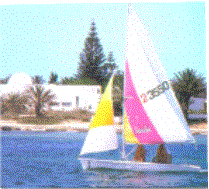
Situated in the Gulf of Gabes off the southern coast of Tunisia, Djerba is an escapists' paradise of white sands and waving palms |
|||
|
The island has been referred to as 'the Land of the Lotus Eaters' since the time when Homer wrote the tale of the Odyssey of Ulysses. Today, whilst tourism has encroached on a way of life unchanged since the search for the Golden Fleece, The magic of Djerba remains very much the same.
Largely undiscovered by Ukrainian holidaymakers, but those who do visit
return year after year. Although the island measures 30 by 20 kilometers at
its longest and widest points, its dazzling beaches extend for a
staggering 150 kilometers and the 'tourist zone' includes the best of
them. Djerba is linked to the mainland both by terry and causeway,
giving easy access to both the Sahara Desert and the Tunisian mountains. Houmt Souk, 'market quarter' in Arabic, is the capital of the island and its one real town. The bustling center is a network of tiny alleys, shaded squares and colorful markets. Dotted around the square pleasant cafes and restaurants to relax in after the hustle and bustle of the market place to sample some of the excellent local cuisine. The markets are ideal for shopping for souvenirs and if you looking for typical Djerbien pottery, make sure you the village of Guellala, famous for its terracotta pottery Traveling around the island is easy. The roads are good and buses and taxis are efficient or you can usually catch a Noddy Train. You can explore the island independently or take a guided tour. And for some excellent sightseeing, why not sample a one, two or three day land cruiser trip to the mountains and deserts of the mainland And when you return, what better then those wonderful golden beaches
|
. |
||
|
|
|||