WSaTC | Links | Phils Page | Speed Cameras | Free Ads | News, Reviews and Rally's | Gallery | Photos | GigaBikes



   A NORTH Wales driver was unaware last night he had escaped a motoring ban, after a legal loophole was discovered by a court clerk.
Police fear it could open the floodgates to thousands of motorists across the UK,
caught by speed cameras and laser guns, also escaping driving bans.
Last night North Wales police admitted that a change in the law is needed to plug the loophole.
It was discovered by a magistrates' clerk dealing with speeding charges against Phillip Dennis, of Whitford, near Holywell, in his absence. Magistrates said that they had no option but to find the case against him not proved.
The loophole involves a form sent by police to the registered owner of a car caught on speed cameras.
The form asks who the driver was at the time.
It is an offence not to fill in the form and name the driver - but significantly there is no requirement to sign it.
However, for it to be used as evidence in court, the form has to be signed, otherwise a court cannot take any notice of it.
Flintshire magistrates' clerk Paul Conlon realised Mr Dennis's form was filled in but not signed, and so could not be used as evidence.
It was, said Mr Conlon, a loophole in the law. Magistrates said they were not happy but had no option but to find Dennis, 34, of Gwibnant Farm, Downing Road, Whitford, not guilty.
Chairman John Beard suggested police should go back to defendants and ask them to sign the form.
But he was advised that as the law now stood, the only requirement was to stipulate the name of the driver and that there was no legal requirement to sign it even if police did go back and request a signature.
One legal expert said later: "Yes, I can confirm that vehicle owners asked to confirm the name of the driver must complete the form but there is no legal requirement to sign the document.
"On the other hand it is true that it cannot be admitted as evidence unless it is signed.
"This will need a change in the law. Some people simply pay the fixed penalty and that is the end of it.
"This only affects those people whose cases go to court and where the prosecution are asked to prove their case.
If the form is not signed then they cannot do so.
"It would be unfair for the police to go back and ask people to sign the form
without first cautioning them that the law does not require them to sign it."
A spokeswoman for North Wales Police said later that there was no one available to comment at present.
But one police source said that the loophole had been known about for some time and there was concern that once it became known
"it could open the flood gates."
"The police generally have been waiting for someone to appeal against a conviction on this point but no one had yet.
"We have basically been keeping our heads down.
Some of my colleagues say we should just make sure people sign the forms but others are a bit concerned that to do that is tricking people into something they do not have to do.
"The trouble is when this is highlighted they will all be sending the forms back unsigned."
|
SPEEDING DRIVERS TO GET LESSONS
Motorists caught speeding may soon be able to choose to go on a driving course instead of getting points on their licence.
One in 10 drivers - around three million people - are expected to get a ticket next year, and the government is considering ways in which it can reduce that figure.
They also hope that giving drivers better skills will reduce the number of deaths caused by speeding - currently estimated at around 1,000 a year.
A pilot scheme is already operating in Northampton and it could soon be extended across the country.
Drink driving
The idea of allowing drivers to go on courses rather than giving them points has been welcomed by the AA.
Its head of road safety, Andrew Howard, said there had already been a drift away from using fines alone as a deterrent for drink driving and careless driving.
Mr Howard said putting people on courses so that they learnt not to make the same mistakes again had become increasingly important.
He said: "It's much better if we can get someone to pay to come to learn the difficulties of speeding than it is if we jus penalise them and take the money away and give them points."
Mr Howard said the courses would wake people up to the peculiarities of the British speed limiting system and sort out the people
"who are ignorant from the people who are not innocent".
'Speed kills'
One of the drivers on the pilot course, Shirley Goodman, said it had helped her learn more about road safety.
She said it had taught her to be "more aware and concentrate more on what I'm doing when I'm in the car than things that are going on outside the car".
Brian Henderson, of Northamptonshire Police, said officers hoped the lessons would bring about a complete change of attitude about speeding.
He said: "It's unsocial to drink and drive now, maybe in about five or 10 years time speeding will be unsociable to do as well.
"People will realise that speed kills.
Source: BBC News - Web site, Sunday, 29 December, 2002.
Proposed New Road Traffic Penalties
The Home Office have issued a consultation document on more severe penalties for road traffic offences.
It makes worrying reading, in the consultation paper they cover many new issues and new penalties for speeding.
23 in a 20 limit will get you 7 points and a £60 fine.
76 to 85mph on a 70mph motorway will get you 15 points and a £90 fine
20 points will result in an automatic ban.
"It is quite clear that too many of the proposals are not about road safety at all,
but represent the most extreme anti-car and anti-driver measures yet threatened by this government.
It clearly attempts to put minor technical infringements on a par with malicious criminal activity.
The high penalty points proposed are a blatant attempt to intimidate safe drivers and force people out of their cars." (ABD)
1,000 TRAFFIC-LIGHT CAMERAS ALTERED TO TRAP SPEEDERS
More than 1,000 traffic-cameras used to catch drivers jumping red lights are to converted so they can also trap speeders.
The latest blitz on hard-pressed drivers means the number of fixed-site speed cameras on Britain’s roads could leap from 4,500 to 5,500.
A number of police forces are already testing dual-use cameras.
The Home office is understood to be ready to approve manufacture of such units, with the first ones going ‘live’ within months.
Experts say that more than 1,000 traffic-light cameras – many in the London area – could soon be dual-purpose.
Currently, cameras sited at junctions are designed to record the licence plate of drivers who jump a red light.
But police want them to also trap those that break the speed limit at junctions as they accelerate to beat the lights change from green to red.
The dual-purpose camera scheme, first adopted in mainland Europe and revealed in the motoring magazine Auto Express, was attacked by motoring groups representing the UK’s 26 million drivers.
They said it was a ‘stealth’ move which would do little for road safety but would mean millions more motorists faced a £60 fine and three penalty points on their licence.
A spokesman for the Association of British drivers said: ‘Drivers will be staring down at their speedometers instead of watching the road for fear of straying over the limit. The fear of getting a ticket could do more harm than good.’ Of the present 4,500 fixed-site speed cameras on the roads, some 1,037 are in areas which belong to the Government’s ‘cash-for-cameras’ scheme.
Police forces have applied to increase the number of such units to 1,534 by the end on 2003.
This in addition to the increasing use of mobile speed cameras in vans.
Experts say the number of motorists caught by cameras is on course to double from one million to two million a year.
However, police chiefs predict the number could top three million.
One in 15 motorists has been caught under the ‘cash-for-cameras’ scheme, which allows ‘partnerships’ of police forces and local authorities to keep most money raised by speeding fines.
However, the cameras in these areas must be painted yellow and positioned in clear view of the road.
The cash collected from fines has to be used for road safety initiatives – which include installing more cameras or paying for film. Previously most of the money from speeding tickets went to the Treasury.
So far 34 police forces – more than half the total number – have signed up for the so-called ‘safety cameras partnerships’ in conjunction with councils, health authorities, courts and the Home Office.
Motoring organisations claim the ‘cash for cameras’ scheme is being used to milk drivers of money rather than target roads which are accident blackspots.
Ministers insist the initiative, introduced in April 2000, saves lives on the road and is not a ‘revenue-raiser’.

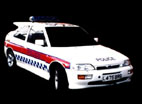
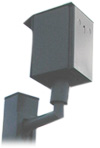


The rules police must follow when nicking you for speeding are complex and thorough.
Our guide to them will equip you to make the most of your rights should that summons come.
TO GET AN ACCURATE SPEED CHECK, YOUR BIKE MUST BE THE ONLY VEHICLE IN THE FIELD OF VIEW: The Association of Chief Police Officers (ACPO) has its own manual on speeding procedures. It states " Radar speed meters are designed to measure the speed of one vehicle at a time. Should there be more than one vehicle present in the radar field of view, it is possible for the device to detect two different signals and alternately display different speeds, in which case the check must be aborted. " That means that if there’s another vehicle around, the speed on the radar may be the speed of that vehicle and not your bike, and the evidence should be scrapped – even if the vehicle was a long way behind you. " It is quite possible for the signal from a large vehicle some distance behind a smaller vehicle to override the signal from the nearer vehicle, " says the manual. The guidelines warn that " an operator must not measure and make detections for prosecution when more than one vehicle is within the radar detection range. " The same rules apply to unmanned speed cameras, including GATSOS. With reference to the photographic evidence these devices rely on, the guide says: " Where there is a suggestion in the negative that two or more vehicles are or may be in the measurement field, the reading should be disregarded. " THE SPEED CHECK MUST BE DONE IN LINE WITH YOUR BIKE’S PATH: This applies to both handheld radars and lasers. It means that the speed check must be done from a position directly in front of your bike, on a straight stretch of road. If it’s not, the reading will be inaccurate and should be scrapped. THERE MUST BE NO LARGE ROAD SIGNS, HOARDINGS, PILLAR BOXES, BUS STOPS OR OTHER LARGE STATIONARY OBJECTS IN THE AREA: According to the manual, objects such as these can reflect and scatter the signal from a handheld radar, making accurate speed measurement impossible. " It is therefore an important requirement to check a site before starting measurements, " it says. " The operator should always select a site with a clear view of the oncoming traffic which is free of any large objects such as bus shelters, large road signs and metal fences or crash barriers which are close to the radar. To avoid multiple reflections, the radar must not be operated under or through bridges or railway arches, " it continues. It goes on to say: " Police radio transmitters, whether handheld or car mounted, must not be used at the moment a vehicle speed is being measured. " The site must also be away from high voltage overhead lines, transmitting masts or towers, airports or harbours, or places where high power radio transmitters may be expected. HANDHELD RADARS MUST BE AIMED AT YOUR BIKE FOR A MINIMUM OF THREE SECONDS FOR A VALID CHECK, WITHIN A DISTANCE OF 200 METRES: Once a reading has appeared on the display, the radar device should be held steady, pointing along the road for a duration of not less than three seconds. During this period a steady reading must be obtained which equates to the observations of the operator. OFFICERS USING HANDHELD DEVICES SHOULD BE CLEARLY VISIBLE AND SHOULD STAND AT THE SIDE OF THE ROAD, NOT ON THE CENTRAL RESERVATION: This applies to both laser and radar equipment. " Handheld radar speedometers should only be operated by an officer on foot, " says the manual, before later stating that " operators of devices should normally do so from positions where they will be clearly visible to the public. "